cc.web.local

twitteryou tubefacebookfacebookacp

Logistics

The inauguration of the headquarters and first manufacturing facility of KERNO Enterprise.

Global utilities and leading power equipment manufacturers have united to address escalating bottlenecks within grid supply chains.

In a joint statement released during London Climate Action Week, industry leaders outlined steps to harmonise fragmented equipment standards and provide enhanced demand visibility, aiming to de-risk international procurement.

By 2030, Utilities for Net Zero Alliance (UNEZA) members will require nearly 90,000 kilometres of transmission cable; enough to wrap around the Earth over twice, alongside 273 high-voltage transformers, 12,000 medium- and low-voltage transformers, and 77 substations.

These requirements severely eclipse current manufacturing capacities, with transformer wait times now exceeding three years. Addressing these material constraints is critical to maintaining the pace of global grid expansion.

Co-led by UK utility SSE and Abu Dhabi-based TAQA, UNEZA operates under the guidance of the International Renewable Energy Agency (IRENA) and the UN Climate Change High-Level Champions, working alongside the UK Government-led Global Clean Power Alliance (GCPA).

UK Climate Minister Katie White stated: “This call from the Utilities for Net Zero Alliance shows that, by working with industry, governments can stop tying themselves in knots and start delivering the infrastructure needed to meet global demand – enough cable to wrap around the Earth more than twice. Through partnerships like the Global Clean Power Alliance, Britain is tackling long-standing barriers to clean energy. That will help us deliver the clean power mission, lower bills for good, and support other countries to reduce emissions and accelerate their own transition.”

Khalifa Al Mheiri, Chief Strategy & Investment Officer at TAQA Transmission, said: "As a utility investing in the next generation of electricity networks, TAQA recognises that delivering the energy transition at the pace the world requires depends not only on investment, but on our ability to strengthen and modernise global supply chains. Through UNEZA, utilities are taking practical action to improve coordination, harmonise technical approaches and explore pooled procurement models that provide greater certainty for suppliers while helping utilities deliver critical infrastructure faster, more efficiently and at lower cost. Collaboration across the value chain will be fundamental to building resilient electricity systems that support long-term energy security and net-zero ambitions.”

Glenn Barber, Director of Corporate Affairs at SSE, said: “We know from our experience in the UK that long-term visibility of demand is vital. It gives supply chain partners the certainty they need to invest in the manufacturing capacity and technical innovation needed to meet the demands of a monumental global energy transition. By bringing global utilities and supply chain partners together, UNEZA is not only helping to provide that visibility but tackling the practical barriers to supply chain development. The focus at London Climate Week on electrification of demand is welcome and necessary; at the same time, electrification will only be possible if grids can keep pace and the steps outlined today can plan an important role in that.”

Francesco La Camera, Director-General of IRENA, said: “We have spent the past decade proving that renewables can be deployed at scale. That case is made. The challenge now is ensuring grids and supply chains keep pace to deliver clean power reliably to homes, industries and communities. As electrification takes center stage in the next phase of the transition, with IRENA calling for a global electrification target of 35% by 2035, resilient supply chains will be essential. Initiatives such as the Utilities for Net Zero Alliance and the Global Clean Power Alliance show the value of governments, utilities and industry working together to accelerate progress while enhancing energy security and system resilience.”

Following a roundtable co-hosted with the GCPA, the alliance underscored massive financial commitments. At COP30, UNEZA members raised their collective annual investment target for renewables, grids, and storage from USD 117 billion to USD 148 billion. Overall clean energy investments between COP28 and 2030 are on course to exceed USD 1 trillion.

To secure supply chain resilience, UNEZA launched a Delivery Mechanism focused on pooled procurement. Members committed to three priority actions: providing annual demand signals to spur capacity growth, advancing harmonised equipment standards to improve interoperability, and scaling coordinated procurement. Now comprising 85 member organisations, UNEZA will continue developing this supply chain roadmap ahead of COP31, driving practical action to build robust electricity systems globally.

The leading logistics, materials, and operations management specialist, ASCO, has officially opened its first corporate office in the Middle East.

The leading logistics, materials, and operations management specialist, ASCO, has officially opened its first corporate office in the Middle East.

Located in the capital city of Doha, this new presence strengthens the company's regional footprint and forms a key part of its broader international growth strategy. The office will support ASCO's expanding client base across the Gulf Cooperation Council (GCC) countries, the wider Middle East, and Asia Pacific regions, bringing its proven international capability directly to customers in vital energy, port, and marine markets.

Through this targeted geographical expansion, ASCO aims to focus on expanding its international footprint, strengthening regional delivery capability, and positioning its business closer to clients in high-growth markets. The company will support operators, contractors, and ports across the Middle East, transforming major infrastructure projects and critical infrastructure into safe, efficient, and scalable day-to-day operations.

Strategic Leadership Appointments

ASCO's Middle East business will be managed by Craig Revie, who possesses more than 30 years of experience across offshore oil and gas, new energy, and defence markets. During his tenure with ASCO, Revie has successfully grown a number of the company's service lines, bringing strong operational and commercial leadership to the region.

Regional growth will be led from Qatar by Lee Vettese, who has transitioned from his role as business development manager in the UK to regional manager, Middle East. Vettese brings over 15 years of international energy experience, with a proven track record in client management, business growth, and driving strategic partnerships. He is supported by Walaa Mroueh, the newly appointed business services manager, who brings over 14 years of experience driving growth for businesses across the KSA, UAE, Egypt, and Iraq.

Meeting Regional Demand

With a strong pipeline of work already in place, ASCO is experiencing growing demand across energy expansion, port activity, marine logistics, materials management, decommissioning readiness, and environmental compliance.

Mike Pettigrew, group chief executive officer at ASCO, said: “The GCC and wider Middle East region is a significant growth area for ASCO, and opening our new office in Qatar is a natural next step for the business. With increasing demand for environmental handling and decommissioning services, our decades of experience across critical industries, combined with deep expertise in supply base management, materials management, lifting assurance and NORM waste management, means we are ideally positioned to partner closely with customers to deliver safe, efficient and sustainable operations across the region."

Lee Vettese added: “The Middle East has invested heavily in world-class infrastructure across energy, ports and marine sectors and our presence in Qatar will ensure we can support this activity and respond quickly to customers in-region. ASCO’s breadth of services means we are equipped to bring a high level of control and traceability into complex operations and help clients maximise the value of those assets, ensuring they operate efficiently and in full environmental compliance.”

Corporate Background and Global Footprint

This latest expansion follows recent contract wins around the globe and the successful rollout of ASCO's refreshed brand identity. Headquartered in Aberdeen, UK, ASCO operates from 70 locations worldwide, employs approximately 1,500 people, and is owned by Endless LLP.

As a full-service specialist, ASCO optimises the movements and operations of the world’s most critical industries. The company goes beyond logistics to make sure materials, resources, and processes are exactly where they need to be, fully managed end to end, so complex, high-value capital projects keep moving without delay. By managing and orchestrating everything from warehousing and global freight to specialist waste handling and safe lifting, ASCO successfully minimises risk and maximises efficiency for its global clients.

The new automotive logistics hub in Dubai is specifically designed to strengthen core industry verticals and effectively expand Hellman's global network capabilities.

The global supply chain landscape is constantly evolving to meet the demands of fast-growing industries. 

On June 8th, 2026, Hellmann Worldwide Logistics officially broke ground on a brand-new, dedicated facility. This new automotive logistics hub in Dubai is strategically located within the highly sought-after Jebel Ali Free Zone (Jafza).

This significant project marks a major milestone in the company's long-term growth agenda. It is specifically designed to strengthen core industry verticals and effectively expand the company's global network capabilities. By establishing this site, Hellmann aims to support the expanding operational needs of its existing automotive customers in the region while creating scalable capacity for future growth.

Strengthening the Middle East automotive logistics market

The decision to invest in dedicated, industry-focused infrastructure allows Hellmann to enhance its ability to deliver highly resilient logistics solutions. These solutions are specifically tailored to the growing Middle East automotive logistics market. Market projections indicate that this sector is expected to expand at an annual rate of around 4% to 6% through the year 2030. The United Arab Emirates plays a strategically vital role in this context. The country serves as a key gateway connecting Europe, Asia, and Africa. Furthermore, the UAE offers strong multimodal connectivity and robust infrastructure for comprehensive global supply chain offerings.

The built-to-suit facility is currently being developed by INDU Logistics to meet these regional demands which is part of the INDU Group. Once completed, it will serve as a dedicated automotive hub seamlessly integrated within Hellmann's Middle East network.

The massive facility, spanning approximately 28,000 square meters is meticulously designed to manage the full spectrum of automotive spare parts logistics. The operational layout includes several specialized zones to maximize efficiency:

  • It utilises high-density bin storage to organize smaller components efficiently and securely.
  • The facility incorporates extensive pallet racking systems for standard freight and inventory management.
  • It features specialised handling areas dedicated entirely to oversized and bulky automotive components.

This site will provide the scalable infrastructure necessary to support efficient, high-volume distribution across the GCC, Africa, and selected international markets.

Delivering high-performance logistics solutions

Industry leaders recognise the immense importance of this strategic development. Lee I'Ons, the regional CEO for IMEA at Hellmann Worldwide Logistics, highlighted the strategic value of the project by stating:

“The UAE is a strategically important market within our global network. By establishing this dedicated automotive hub in Jafza, we are systematically expanding our regional capabilities and creating further scalable, industry-focused infrastructure. This enables us to deliver competitive, high-performance logistics solutions for our customers and to support their long-term growth,”

Similarly, Abdulla Al Hashmi, global chief operating officer for Parks and Economic Zones at DP World, emphasized the broader regional impact:

“Hellman's investment in Jebel Ali Free Zone reflects the rapid pace at which the automotive industry is growing in the Middle East, with customers looking for faster, more reliable access to critical spare parts across multiple markets. By continuing to build specialized infrastructure in Dubai, we are supporting our partners in managing uncertainty and keeping their operations moving,”

The groundbreaking of this new facility represents a forward-thinking approach to modern supply chain management. Hellmann, by combining a prime geographic location with highly specialized storage capabilities, is well-positioned to serve a rapidly expanding market. Businesses looking to optimise their supply chains should continuously monitor these infrastructure developments to stay ahead of industry trends.


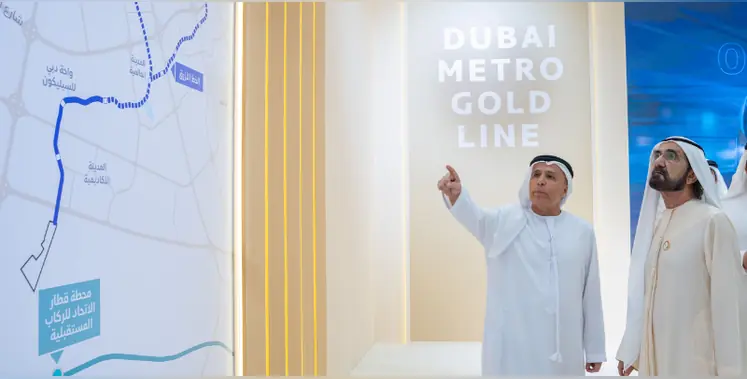
Dubai has announced its most ambitious metro expansion to date with the launch of the Gold Line, a fully underground route that promises to reshape urban mobility across the emirate.

The Dh34 billion project, approved by His Highness Sheikh Mohammed bin Rashid Al Maktoum, Vice President and Prime Minister of the UAE and Ruler of Dubai, represents a significant leap in infrastructure development.

Spanning 42 km and running entirely at a depth of up to 40 m, the Gold Line will be Dubai’s first fully subterranean metro line, marking a departure from the elevated and partially underground designs of the existing Red and Green lines.

Joseph Salem, partner and head of the travel, transportation & hospitality practice at Arthur D. Little Middle East, described the project as “a landmark moment in the emirate’s infrastructure evolution, and arguably the most ambitious urban transport undertaking in the Middle East in a generation.”

He highlighted the engineering challenges and innovations involved, noting that the decision to construct the line entirely underground reflects the maturity of Dubai’s urban fabric and the need to route a major transit artery through dense commercial and residential districts without causing surface disruption.

Utilising the latest tunnel boring machine technology, the Gold Line will pass beneath Dubai Creek and some of the city’s busiest business corridors.

This approach sets a new regional benchmark for underground rail delivery while minimising disruption to daily life and existing infrastructure.The route has been meticulously planned as a genuine urban connector, featuring 18 stations across 15 strategic locations.

It begins at the historic Al Ghubaiba waterfront and threads through areas including City Walk, Business Bay, Mohammed Bin Rashid City, Meydan, Nad Al Sheba, Al Barsha South, and Jumeirah Village Circle, before terminating at Jumeirah Golf Estates.

This alignment directly serves corridors home to 55 mega-development projects currently under construction, addressing long-standing mobility infrastructure deficits in these high-growth zones.

Upon completion, the line is expected to benefit more than 1.5 million residents.

From an intermodal perspective, the Gold Line will integrate seamlessly with the existing Red and Green Metro lines at multiple interchange points.

It will also connect to Etihad Rail at Meydan and Jumeirah Golf Estates, transforming it from a purely city metro into a vital component of a broader national transport network.

This linkage will, for the first time, connect Dubai’s urban core to the wider UAE rail ecosystem, enhancing regional connectivity.

Economically, the project is projected to deliver substantial returns.

Authorities anticipate a daily ridership of 465,000 passengers beyond 2040, with the Dh34 billion investment expected to generate a 430% cumulative economic return over 20 years.

These benefits will stem from time and fuel savings, reduced road accidents, and lower carbon emissions.

The Gold Line is scheduled for inauguration on 9 September 2032 (exactly 23 years after the original Dubai Metro launch in 2009) and is being delivered on a timeline 30% faster than the Blue Line.

Salem emphasised that the Gold Line is as much an economic infrastructure project as a transport one.

By alleviating congestion and supporting sustainable growth, it will reinforce Dubai’s position as a global leader in smart, future-ready urban mobility.

Tenders are expected to be issued later this year, with contract awards anticipated in 2027 and construction commencing shortly thereafter.

On the sidelines of the World Governments Summit (WGS) 2026, Dubai’s Roads and Transport Authority (RTA) has signed a strategic partnership agreement with Elon Musk's The Boring Company to begin implementing an advanced passenger transport tunnel project in the emirate, branded Dubai Loop.

The project will deploy next-generation tunnelling and transport technologies aimed at transforming Dubai’s mobility ecosystem, improving transport efficiency and easing traffic flow in high-density urban areas.

The agreement was signed by Mattar Al Tayer, Director General and Chairman of the Board of Executive Directors of the RTA, and James Fitzgerald, Global Vice President of Business Development at The Boring Company, in the presence of senior officials from both organisations.

Under the agreement, the first phase of the project will involve the construction of a 6.4km pilot route comprising four stations, connecting the Dubai International Financial Centre with Dubai Mall. This initial phase will serve as the foundation for the full project, which is planned to extend to 22.2km with 19 stations, linking Dubai World Trade Centre and the financial district with Business Bay.

The Dubai Loop project will feature tunnels with a diameter of 3.6 metres, dedicated to vehicle transport. Advanced tunnelling technologies will be used to enable faster delivery, lower construction costs and reduced disruption to existing roads and utilities compared with conventional transport systems.

The cost of the first phase is estimated at approximately AED565mn, with an expected delivery period of around one year following the completion of design works and preparatory requirements. The total cost of the full route is estimated at around AED2bn, with an anticipated implementation period of approximately three years.

Al Tayer said the project represents a qualitative addition to Dubai’s transport ecosystem by enhancing integration between different modes of mobility and providing flexible, efficient first- and last-mile solutions. He noted that studies indicate the pilot route is expected to serve around 13,000 passengers per day, while the full network could accommodate approximately 30,000 passengers daily.

He added that the agreement aligns with the leadership’s directives to strengthen strategic partnerships with global innovators in advanced technologies, supporting Dubai’s ambition to remain among the world’s leading cities for future mobility solutions while improving quality of life and supporting rapid urban and economic growth.

Steve Davis, President of The Boring Company, said the company was proud to partner with the RTA, describing it as one of the world’s leading authorities in adopting innovative transport solutions. He said the collaboration aims to deliver safe, efficient and advanced tunnelling systems that support Dubai’s vision for sustainable and future-ready mobility.

The agreement follows a memorandum signed at WGS 2025, under which the RTA and The Boring Company conducted detailed feasibility and technical studies. As part of the study phase, the RTA provided geotechnical data, information on utilities and structures, environmental risk assessments, and relevant transport standards. The company, in turn, submitted technical and safety studies and development proposals in collaboration with international consultancies, under the supervision of financial and legal advisers, to identify the optimal partnership model for the project.

More Articles …