cb.web.local

twitteryou tubefacebookfacebookacp

Dubai Chambers has stepped up efforts to reinforce trade links with Oman following a high-level delegation visit to Sohar aimed at strengthening supply chain resilience and expanding economic cooperation.

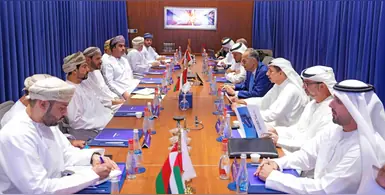
The delegation, led by Mohammad Ali Rashed Lootah, met with representatives from the Oman Chamber of Commerce and Industry in the North Al Batinah Governorate to explore new avenues for collaboration between the business communities of Dubai and Sohar.

Discussions centred on enhancing bilateral trade flows, identifying high-value investment opportunities and deepening engagement across priority sectors. Both sides emphasised the importance of building stronger commercial partnerships to support sustained growth in cross-border trade.

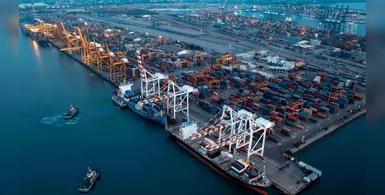
As part of the visit, the delegation toured key industrial and logistics hubs, including SOHAR Port and Freezone and Sohar Industrial City. These engagements provided a platform to examine ways to streamline the movement of goods, improve supply chain efficiency and strengthen logistical integration between the two markets.

Participants highlighted the strategic role of infrastructure connectivity in supporting regional trade, particularly as businesses seek more resilient and flexible supply chains in response to evolving global conditions.

Dubai Chambers noted that closer coordination with Omani partners is expected to unlock new commercial opportunities, while enhancing the overall competitiveness of businesses operating in both markets.

Lootah reiterated the organisation’s commitment to fostering stronger economic ties, pointing to the importance of seamless logistics networks and coordinated trade frameworks in enabling long-term growth. He added that such initiatives are key to reinforcing the resilience of bilateral trade relations and supporting shared development objectives.

The visit reflects ongoing efforts by both sides to deepen economic integration and position Dubai and Sohar as complementary hubs within the wider GCC trade ecosystem.

Saudi Global Ports Group has commenced operations at the Jubail Container Terminal under a long-term concession agreement with Saudi Ports Authority (Mawani), marking a significant step in the Kingdom’s logistics sector development.

The 30-year agreement covers the management and expansion of the terminal at Jubail Commercial Port, a strategic gateway for exports. The move aligns with broader national efforts to strengthen supply chain infrastructure and improve trade connectivity under Saudi Vision 2030.

With operations now underway, the integration of the terminal into SGP’s existing network along Saudi Arabia’s eastern coast is expected to enhance efficiency and coordination across port and logistics activities. The company said this will enable more flexible and responsive services for customers, while improving cargo handling capabilities.

As part of the concession, SGP has committed to investing SAR2bn over the duration of the agreement. The funding will be directed towards upgrading terminal infrastructure and introducing advanced equipment designed to support higher throughput and accommodate larger container vessels.

The development is also expected to strengthen links between maritime and inland logistics systems, supporting smoother cargo flows and reducing bottlenecks. By improving connectivity between ports and supply chain networks, the initiative aims to boost resilience and reliability across the Kingdom’s logistics ecosystem.

Industry observers note that enhancing port capacity and efficiency remains a key priority for Saudi Arabia as it positions itself as a regional logistics hub. The addition of Jubail Container Terminal to SGP’s portfolio is seen as a strategic move to support growing trade volumes and diversify economic activity.

With long-term investment and operational upgrades planned, the terminal is set to play an increasingly important role in facilitating exports and supporting industrial growth in the Eastern Province.

Dubai Taxi Company PJSC has partnered with Baidu Inc. to launch commercial driverless taxi services in Dubai, marking a major step in the emirate’s push towards autonomous mobility.

The service is being deployed through Baidu’s Apollo Go platform, representing the company’s first international app rollout. The initiative combines Apollo Go’s autonomous driving technology with Dubai Taxi Company’s operational expertise, enabling the introduction of driverless ride-hailing services in a live urban environment.

The launch aligns with Dubai’s ambition to transform 25% of all journeys into autonomous trips by 2030, under the emirate’s wider smart mobility strategy. Authorities have been investing heavily in infrastructure, regulation and partnerships to support the safe adoption of self-driving transport systems.

The initial phase will see a fleet of 50 autonomous vehicles introduced over the first year, with plans to scale up to more than 1,000 units in the coming years. Users can book rides via the Apollo Go app, with integration into other ride-hailing platforms expected as the service expands.

Executives from both companies highlighted safety as a central pillar of the rollout. Baidu said its autonomous systems are designed to deliver consistent and reliable performance, supported by extensive testing and real-world data. The company’s global operations have already logged millions of rides and hundreds of millions of kilometres, including a significant portion of fully driverless journeys.

Dubai Taxi Company noted that the vehicles have undergone local trials in recent months, demonstrating strong safety performance and operational readiness. Advanced monitoring systems and data-driven controls will be used to oversee the fleet, ensuring that journeys meet strict safety and reliability standards.

The deployment follows regulatory approval earlier in 2026, when Apollo Go received Dubai’s first permit for fully driverless vehicle testing without a safety driver. This milestone paved the way for commercial operations and reinforced the emirate’s position as a regional hub for autonomous transport innovation.

Dubai Taxi Company’s existing fleet of more than 6,000 taxis and limousines is expected to support the transition towards autonomous mobility, leveraging its experience in fleet management and customer service. The company said the introduction of driverless taxis forms part of a broader strategy to enhance efficiency, sustainability and passenger experience.

Industry observers view the launch as a significant development for the region, where cities are increasingly exploring smart mobility solutions to address urban growth and reduce congestion. By prioritising safety, regulatory oversight and technological innovation, Dubai aims to set a benchmark for autonomous transport deployment.

As the programme expands, further integration with existing transport networks and digital platforms is expected, supporting the gradual shift towards a more connected and intelligent mobility ecosystem.

AD Ports Group has reported continuation of all operations across its clusters without any disruption given current regional developments.

The Group has already taken precautionary measures with the activation of its crisis management and business continuity protocols, as it remains in constant coordination with the authorities concerned in the UAE to safeguard its workforce, partners and stakeholders.

All UAE ports and terminals managed and operated by the Group’s Ports Cluster, in addition to related services, remain fully operational.

While inaccessibility of the Strait of Hormuz will affect vessel calls at Khalifa Port, services at the port will go on uninterrupted.

Closure of the Strait of Hormuz will be compensated by increased volumes from the Group's diversified global maritime network, as it shifts trading routes.

Across the Group’s Maritime & Shipping Cluster, the majority of its 122 shipping vessels, including container, bulk, Ro-Ro, and multipurpose vessels, are operating outside the Strait of Hormuz.

Those currently within the Strait continue to operate intra-Gulf services. Overall, the impact on the Maritime & Shipping Cluster is expected to be limited. The Group’s Economic Cities & Free Zones and Logistics Clusters are likewise expected to experience limited impact.

Captain Mohamed Juma Al Shamisi, Managing Director and Group CEO of AD Ports Group, said, “AD Ports Group remains well positioned to support supply chain stability.”

Saudi Arabia’s Transport General Authority (TGA) has introduced a temporary relaxation of documentation requirements for vessels operating within its territorial waters, granting operators additional flexibility amid evolving conditions in the region.

Under the directive, the authority has suspended the requirement for certain certificates and documents needed to issue or renew navigation licences and work permits for marine units. The measure will remain in place for 30 days and may be extended if necessary, provided that safety standards and environmental protections are not compromised.

The decision applies to both domestic and international vessels currently operating in Saudi Arabia’s waters in the Arabian Gulf. It is designed to ensure continuity across maritime operations while minimising disruptions that could affect logistics, offshore projects, and other marine-based activities.

According to the TGA, the move reflects a broader effort to maintain operational efficiency and support the steady flow of maritime traffic. Authorities noted that some vessels may be unable to leave Saudi waters to complete routine inspections or fulfil technical compliance requirements due to prevailing operational challenges. The temporary exemption is intended to address these constraints without undermining regulatory oversight.

The suspension covers a range of vessels engaged in maritime operations and projects within the Kingdom’s jurisdiction. By easing administrative obligations, the authority aims to reduce bottlenecks and enable operators to maintain schedules, particularly in sectors where delays could have wider economic implications.

Despite the regulatory flexibility, the TGA emphasised that safety remains a top priority. Vessel operators are still expected to adhere to all essential safety protocols and environmental standards throughout the exemption period. The authority reiterated that the measure does not absolve operators from their responsibility to ensure seaworthiness and compliance with applicable maritime regulations.

Industry observers note that such interventions can play a critical role in stabilising maritime supply chains during periods of uncertainty, particularly in strategically significant waterways like the Arabian Gulf. By balancing regulatory requirements with operational realities, Saudi Arabia is seeking to safeguard both economic activity and maritime safety.

The TGA added that it will continue to monitor the situation closely and assess whether further extensions or additional measures are required to support the sector.

More Articles …