








In The Spotlight
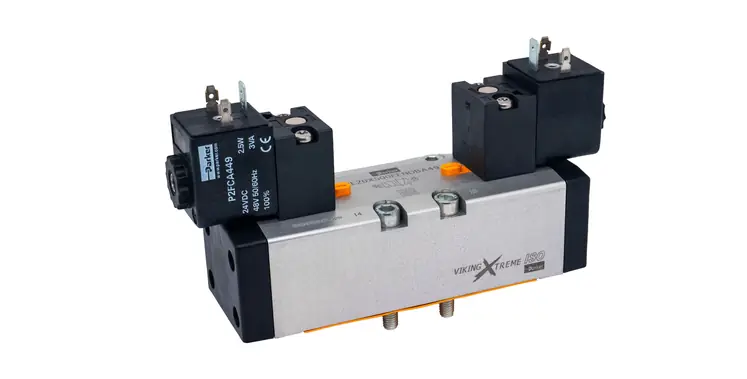
Parker Hannifin, a Fortune 250 global leader specialising in motion and control technologies, has announced the launch of its new Viking Xtreme ISO valve series.
Parker launches Viking Xtreme ISO valves for harsh environments
Industrial automation and mobile electrification require components that can withstand increasingly demanding operational environments.
Across sectors such as railway transit, agriculture, and oil and gas, modern machinery relies on robust pneumatic control systems to ensure consistent, uninterrupted performance. Addressing these complex engineering challenges head-on, Parker Hannifin, a Fortune 250 global leader specialising in motion and control technologies, has announced the launch of its new Viking Xtreme ISO valve series. This compact, ISO-standard subbase valve platform is specifically engineered to handle the rigours of general, mobile-related, and harsh industrial applications.
To maximise installation flexibility and operational performance, engineers can deploy these valves in varied configurations to suit their specific infrastructure. Key installation and operational features include:
-
The ability to install the valve on a single subbase or integrate it into a stackable manifold.
-
Stackable manifold installations that effectively support pressure zoning within centralised applications.
-
Internal or external pilot configurations that can be conveniently adjusted in the field to meet precise application requirements.
Advanced Core Technology for Extreme Conditions
At the core of this newly launched platform is Parker’s advanced over-moulded spool technology. This specific engineering choice supports a long service life, broad operating capabilities, and a reliable, high-performance output even under continuous strain. The bi-directional, over-moulded spool is designed to function seamlessly in extreme temperatures, operating efficiently from -40°C to +70°C (-40°F to +158°F). In addition to its impressive temperature resilience, the system accommodates an operating pressure range that spans from a vacuum up to 10 bar. For pneumatic remote pilot variants, this pressure threshold extends even further to 16 bar. The platform also boasts exceptional flow performance, delivering flow rates ranging from 540 Nl/min (0.55 Cv) up to a substantial 5900 Nl/min (6.01 Cv).
Mobile-related applications and harsh environmental conditions present unique threats to machinery, notably through constant vibration, sudden impacts, and corrosive external elements. To combat these recurring issues, the Viking Xtreme ISO valve series offers various solenoid voltages paired with either standard or mobile-rated coils, alongside remote pilot valve options. The mobile versions of this valve have successfully passed rigorous shock and vibration testing, comprehensively meeting the stringent IEC 6173:1999, category 1, class B standards.
To further protect against corrosion in highly challenging and exposed settings, the valves incorporate durable materials throughout their entire construction. Essential durability features include:
-
The strategic utilisation of stainless steel for end fasteners, internal springs, and solenoid armatures.
-
An impressive salt spray qualification that exceeds 1000 hours of continuous testing.
-
A robust construction that fully supports operation in demanding salt spray applications.
Strategic Consolidation for Machinery Design
These modern advancements allow plant managers and machinery designers to rethink their pneumatic infrastructure entirely. The new series is explicitly designed to help operators consolidate their existing ISO non-plug-in valve inventories. Depending on the specific application, the versatile platform may enable a one-size reduction. This potential downsizing can significantly help to lower overall operational costs, reduce footprint dimensions, and decrease equipment weight, all without sacrificing the required system performance.
Speaking on the strategic launch of this robust new platform, Patrick Berdal, European Product Manager for Controls within the Electric Motion & Pneumatic Division at Parker Hannifin, highlighted the industry's constantly evolving needs.
“Customers are looking for compact, reliable pneumatic valve solutions that help simplify machine design while performing in demanding operating conditions,” said Berdal. “The Viking Xtreme ISO valve series reflects Parker’s commitment to engineering solutions that improve productivity, uptime, and operational efficiency for customers across key industrial and mobile markets.”.
As a fundamental part of the broader Motion Systems Group, Parker's Electric Motion and Pneumatic Division continues to design and manufacture components that actively improve system safety, efficiency, and performance across both heavy industrial applications and modern mobile electrification.
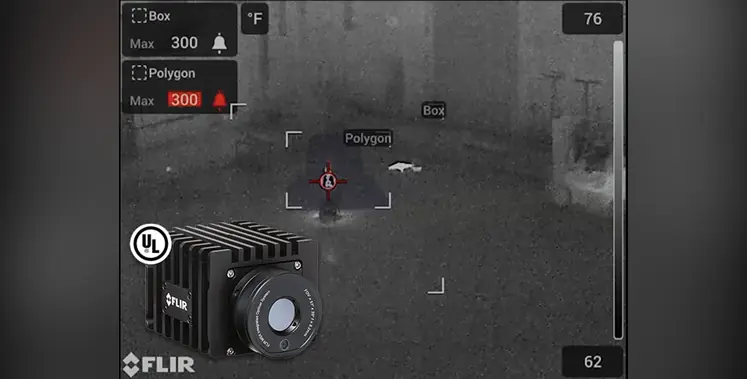
Teledyne FLIR has introduced the first thermal imaging cameras to achieve the ANSI/CAN/UL 2684 listing, providing an independently evaluated benchmark for thermal image fire detection to support resilient industrial operations.
Pioneering early fire detection in gulf infrastructure
Industrial fire safety across the Gulf Cooperation Council (GCC) is shifting from reactive emergency response to proactive risk management.
Traditional fire detection technologies have long relied on identifying products of combustion, like smoke or flame, meaning a fire has already begun before an alarm triggers. In critical infrastructure, an abnormal temperature rise often provides the earliest indication of an emerging hazard. Addressing this, Teledyne FLIR has introduced the first thermal imaging cameras to achieve the ANSI/CAN/UL 2684 listing, providing an independently evaluated benchmark for thermal image fire detection to support resilient industrial operations.
Elevating Standards for Gulf Infrastructure
The recent UL 2684 listing of Teledyne FLIR's A40 and A70 (Axx-Series) models marks a watershed moment for fire engineers and asset owners. This aligns with the 2025 edition of NFPA 72, the National Fire Alarm and Signaling Code. Under Section 17.12, NFPA 72 includes a dedicated category requiring thermal image fire detection systems to be explicitly listed.
For the GCC, where established fire protection frameworks lean heavily on NFPA codes and UL-listed equipment, this establishes a clearer pathway for specifying early detection solutions. While this benchmark does not replace local Civil Defence approvals, it offers stakeholders objective, laboratory-tested equipment rather than relying solely on manufacturer claims. The standard sets strict requirements for environmental performance, durability, and fire testing.
Key Applications in Critical Assets
The relevance to Middle Eastern markets is driven by the rapid expansion of high-value infrastructure. Thermal imaging provides early warnings where equipment degradation can smoulder long before ignition. Crucial applications include:
- Data Centres: Identifying anomalies like a busbar joint heating whilst under load.
- Solar Installations: Detecting faults in rooftop arrays, specifically within DC connectors or inverters where conventional detectors are absent.
- Heavy Industry: Safeguarding continuous-process manufacturing and refining operations.
- Energy Storage: Monitoring battery energy storage systems and electrical utilities.
The Mechanics of Proactive Visualisation
Unlike standard cameras used merely for general visualisation, a calibrated thermal image fire detector continuously measures absolute temperatures across every pixel. Operators can establish measurement regions to monitor precise temperature differentials, absolute thresholds, and rates of temperature increase.
This capability is vital because industrial equipment naturally fluctuates in temperature. A transformer running warm during standard operations is not a fire condition; however, if that component begins climbing in temperature whilst its operational load is falling, it provides a crucial early warning.
By identifying thermal anomalies before smoke is generated, organisations can transition from crisis management to planned maintenance. Teams can isolate a battery module or tighten a loose connection before operations are disrupted. Axx-Series cameras enhance this by combining thermal detection with visible imaging, allowing operators to verify alarms swiftly. Analytics are processed on the camera, minimising reliance on external servers and enabling devices to initiate events directly through compatible control systems.
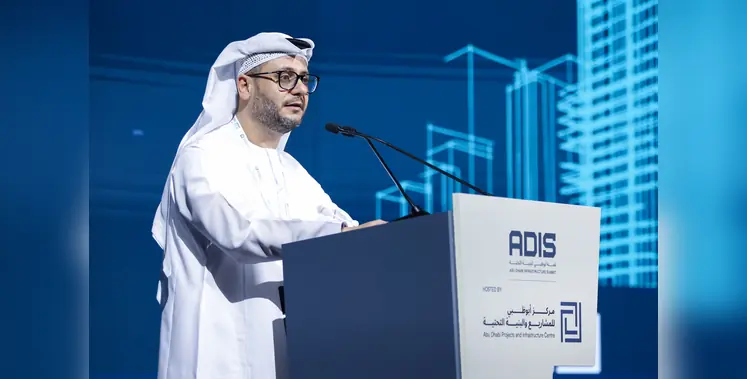
Abu Dhabi Projects and Infrastructure Centre (ADPIC) is bringing the ADIS International Roadshow 2026 to EXPO REAL in Munich, running from 5 to 7 October.
Global capital unlocks Abu Dhabi's US$5bn infrastructure boom
As mega-scale urban development accelerates across the globe, the integration of cross-border capital and advanced engineering expertise has become essential for delivering sustainable, future-proof cities.
One of the most significant focal points for this global investment is the emirate of Abu Dhabi, which is currently showcasing an infrastructure opportunity valued at more than US$56bn. To connect these immense capital projects with the necessary technological and financial frameworks, the Abu Dhabi Projects and Infrastructure Centre (ADPIC) is bringing the ADIS International Roadshow 2026 to EXPO REAL in Munich, running from 5 to 7 October.
To capitalise on these diplomatic foundations, ADPIC is leading a high-level Abu Dhabi delegation designed to unite the emirate's delivery expertise and capital project pipeline with global capital and urban innovation.
A Focused Pipeline for Urban Innovation
The delegation encompasses a broad spectrum of the emirate's institutional and corporate leaders. Alongside ADPIC, the unified Abu Dhabi Pavilion features government officials from the Department of Municipalities and Transport (DMT), the Abu Dhabi Housing Authority (ADHA), and the Abu Dhabi Investment Office (ADIO). These public entities are joined by prominent ADIS Roadshow partners, including:
-
Bloom Holding
-
Modon
Together, this formidable coalition is tasked with presenting live projects to international investors, financiers, developers, and contractors. Their portfolio targets critical sectors supporting the region's next phase of demographic expansion, notably housing, transport, culture, education, and vital social infrastructure.
Integrating Advanced Technologies
The Munich event aligns perfectly with EXPO REAL's expanded 2026 focus, which introduces the new InfrastructureNow platform. This specific initiative connects public-sector decision-makers with operators and developers around investable infrastructure.
- Smart infrastructure frameworks
- Digital twins
His Excellency Eng Maysarah Mahmoud Salim Eid, Director General of Abu Dhabi Projects and Infrastructure Centre, noted: “EXPO REAL gives us an important opportunity to take Abu Dhabi’s infrastructure priorities directly to the international organisations that can help deliver them. ADPIC’s role is to provide a clear, coordinated framework for capital projects and create the conditions for effective private-sector participation.”
His Excellency Eng Maysarah Mahmoud Salim Eid stated: “Through the ADIS International Roadshow, we want to build qualified relationships with investors, developers, engineering firms, technology providers, and construction leaders, and translate those conversations into practical opportunities that support Abu Dhabi’s next phase of infrastructure development.”
A Proven Framework for Execution
Through the Abu Dhabi Pavilion, the delegation will highlight their deep experience in large-scale programme execution, coordinated government delivery, and integrated urban planning to structure effective public-private partnership models.
This European expansion builds on the overwhelming momentum of the Abu Dhabi Infrastructure Summit (ADIS) 2026, which successfully convened more than 17,500 participants, 100-plus speakers, and 650 government officials and VIPs. By extending ADIS beyond its annual flagship summit, ADPIC’s ongoing roadshow programme which has already facilitated over 30 curated meetings and secured strategic agreements across Singapore, Shanghai, and Turkey, ensures that the emirate remains at the forefront of global infrastructure development.

UK-based wastewater treatment specialist Bluewater Bio has secured a contract to upgrade and expand the MODON Industrial Wastewater Treatment Plant (IWWTP) at Jeddah 1st Industrial City, lifting capacity by 60 per cent whilst maintaining continuous operations for local manufacturers.
Jeddah industrial wastewater plant secures 60% capacity upgrade
Industrial wastewater management across the Middle East is rapidly moving towards circularity, and Saudi Arabia is reinforcing this transition with a critical infrastructure expansion in Jeddah.
UK-based wastewater treatment specialist Bluewater Bio has secured a contract to upgrade and expand the MODON Industrial Wastewater Treatment Plant (IWWTP) at Jeddah 1st Industrial City, lifting capacity by 60 per cent whilst maintaining continuous operations for local manufacturers.
The project forms an integral component of a 20-year Rehabilitate-Operate-Transfer (ROT) concession awarded by the Saudi Authority for Industrial Cities and Technology Zones (MODON) to water management firm Miahona. Engineering, procurement, and construction contractor SUECO has been appointed to deliver the works, with Bluewater Bio supplying the core biological and tertiary treatment technologies.
Relieving flow pressures in Jeddah’s industrial hub
As the Kingdom broadens its manufacturing base, treating effluent at source has become an operational and environmental imperative. Jeddah 1st Industrial City represents one of Saudi Arabia’s most vital manufacturing centres, housing more than 1,100 factories across multiple sectors. Continued industrial expansion has driven daily wastewater flows and contaminant loadings beyond the plant’s original design limits. Consequently, modernising the treatment infrastructure has become essential to guarantee operational reliability, environmental compliance, and high-quality reclaimed water for local industry.
Crucially, the engineering design guarantees that the facility will remain fully operational throughout the upgrade, preventing any disruption to manufacturing tenants.
Core technologies and project delivery
To achieve the required capacity uplift without extensive site redevelopment, Bluewater Bio will deploy its proprietary modular treatment systems. The upgrade will expand the plant's overall processing capacity from 25 million litres per day (MLD) to 40 MLD, alongside supplying polished effluent suitable for reverse osmosis (RO) intake.
The scope of supply comprises:
-
Fourteen SMART™ units driving the proprietary HYBACS® biological treatment process.
-
Six FilterClear® tertiary filtration systems producing 24 MLD of treated water.
-
Integration with a downstream reverse osmosis plant to enable high-grade industrial water reuse.
-
Complete project delivery executed under live operational conditions to ensure zero plant downtime.
Fergus Rooksby, Commercial Director of Bluewater Bio, commented: “HYBACS was selected because it delivers a significant increase in biological treatment capacity without the need for major new civil structures. Combined with FilterClear for RO feedwater production, it provides a cost-effective, low-footprint solution that is straightforward to operate and minimises ongoing service and maintenance costs.
The ability to add further modules in the future also gives Miahona a flexible route to increase RO-treated water reuse, making this a highly compelling and future-ready solution.”
Daniyar Seipoldin, General Director of SUECO, said: “As an EPC contractor, SUECO is committed to implementing modern technological solutions that respond to the evolving needs of the industry — including energy efficiency, sustainable operation, effective use of existing infrastructure, and minimizing the need for additional civil construction.
It is in these principles that we see a strong strategic alignment between SUECO and Bluewater Bio. We value the professional collaboration between our teams and look forward to working together to successfully integrate the selected technologies and deliver the required project outcomes for Miahona and MODON.”
Aligning with regional infrastructure goals
The scheme is scheduled for completion in the third quarter of 2027, directly supporting the Kingdom’s Vision 2030 targets for sustainable water stewardship and industrial resource recycling. For Bluewater Bio, the contract solidifies an expanding Middle Eastern portfolio that already includes landmark installations in Saudi Arabia and Bahrain.
Richard Haddon, CEO of Bluewater Bio, added: “This award reflects the strength of our technology offering in addressing complex industrial wastewater challenges. The MODON facility presents a highly demanding treatment environment, and the selection of HYBACS and FilterClear highlights their proven ability to deliver robust, reliable solutions under challenging conditions.”
Richard Haddon concluded: “This contract award further strengthens our presence in the Middle East and reinforces our position as a trusted provider of advanced water and wastewater treatment solutions across the region.”
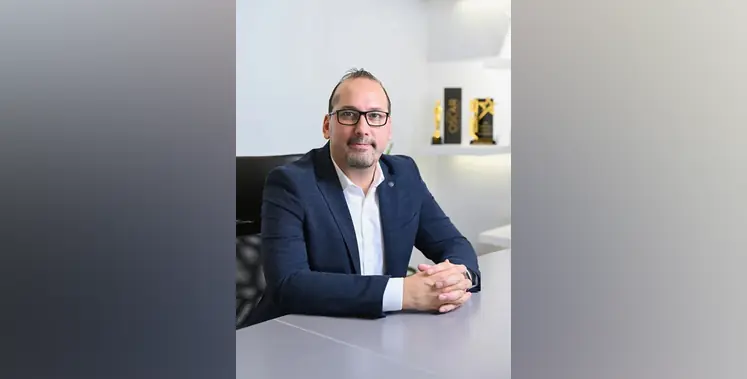
ASUS is set to showcase its latest AI-enabled commercial solutions at the upcoming AI Everything Abu Dhabi event, ensuring that the main announcement takes centre stage right away.
The rise of ubiquitous AI in commercial enterprise
Artificial intelligence has rapidly transitioned from a theoretical concept to an operational necessity for modern enterprises.
Across the globe, businesses are seeking out computing solutions that can support complex AI-enabled workloads, aiming to catalyse productivity and fortify security. In the Middle East, this technological evolution is moving at an unprecedented pace, with the United Arab Emirates positioning itself as a central hub for digital transformation. Addressing this growing demand, ASUS is set to showcase its latest AI-enabled commercial solutions at the upcoming AI Everything Abu Dhabi event, ensuring that the main announcement takes centre stage right away.
Embracing 'Ubiquitous AI'
The overarching theme for the upcoming showcase is “Ubiquitous AI. Incredible Possibilities”, a concept that reflects the pervasive nature of machine learning and advanced data processing in today’s corporate environment. No longer relegated to isolated departments or experimental projects, artificial intelligence is now being integrated into the very fabric of commercial IT infrastructure. This integration is essential for creating smarter, more efficient, and highly secure ways of working.
Tolga Özdil, Regional Commercial Director, Middle East, Turkey and Africa (META) at ASUS, highlighted the significance of this shift within the corporate landscape. “AI is becoming a fundamental part of how organisations work,” he stated, underscoring the reality that businesses must adapt their hardware and software capabilities to remain competitive. The drive towards ubiquitous integration means that every facet of an organisation—from data analytics to endpoint security—can benefit from intelligent automation and enhanced computational power.
Delivering practical value for organisations
While the theoretical applications of artificial intelligence are vast, the primary focus for enterprise leaders remains on practical implementation. Decision-makers are actively looking for commercial portfolios that can seamlessly handle the demanding processing requirements of AI tools without compromising on reliability. At AI Everything Abu Dhabi, the focus will firmly be on AI business solutions that are specifically designed to support these evolving organisational requirements. By providing robust computing frameworks, technology providers aim to bridge the gap between abstract AI concepts and day-to-day business operations.
“We are pleased to be back at AI Everything and to contribute to the conversation around how AI can deliver practical value for organisations,” said Tolga Özdil. This practical value is realised through devices and systems that enhance workflow efficiency, protect sensitive corporate data against sophisticated threats, and empower employees to focus on strategic tasks rather than routine administrative duties.
Prioritising sustainable tech hardware
As the computational demands of artificial intelligence increase, so too does the need for environmentally responsible technology. The modern commercial portfolio must balance high performance with rigorous sustainability standards. The technology sector is increasingly adopting eco-friendly practices to minimise the carbon footprint associated with manufacturing and operating advanced computing hardware. Key sustainability initiatives embedded within these modern commercial solutions include:
-
Eco-Friendly Manufacturing: A dedicated shift towards the use of more sustainable materials in the production of hardware components and protective packaging.
-
Energy Efficiency: Strict compliance with globally recognised standards, including ENERGY STAR 8.0, ensuring that devices consume less power during operation without sacrificing performance capabilities.
-
Environmental Certifications: Adherence to the Electronic Product Environmental Assessment Tool (EPEAT) standards, which evaluate the environmental impact of technology products over their entire lifecycle.
Fostering industry collaboration
Events such as AI Everything serve as critical touchpoints for the technology ecosystem, bringing together hardware manufacturers, software developers, and enterprise end-users. The opportunity for face-to-face engagement remains vital for understanding the nuanced challenges that different industries face when deploying artificial intelligence.
The event, which is taking place from the 6th to the 7th of October 2026 at the ADNEC Centre, will feature dedicated spaces for these crucial industry dialogues. Key executives, representatives, and stakeholders will be present throughout the exhibition at Hall 2, Booth B40. Their presence is designed to facilitate meaningful conversations with customers, partners, and industry professionals, fostering a collaborative approach to digital transformation.
As artificial intelligence continues to reshape the commercial landscape, the focus on practical, secure, and sustainable business solutions will only intensify. The developments showcased in Abu Dhabi will likely set the tone for enterprise technology investments across the region in the coming years.

El Gouna Red Sea, the flagship year-round destination developed by Orascom Development Egypt, which has officially announced the opening of its latest green infrastructure project, Solarize-2.
El Gouna advances sustainable tourism with Solarize-2 power plant
The global hospitality sector is undergoing a profound transformation, with green energy integration moving from a niche consideration to a core operational strategy.
In Egypt, the push for sustainable tourism and urban development is taking significant strides forward. Leading this shift along the coast is El Gouna Red Sea, the flagship year-round destination developed by Orascom Development Egypt, which has officially announced the opening of its latest green infrastructure project, Solarize-2.
This new solar power facility marks a pivotal milestone in the resort town’s long-term sustainability journey, cementing its position as a pioneer in eco-friendly coastal development. By investing heavily in renewable energy, the destination is not only reducing its carbon footprint but also setting a formidable benchmark for the broader regional tourism industry.
Scaling renewable capacity: The Solarize Projects
At the heart of El Gouna’s green transition is a phased approach to solar energy expansion. The newly commissioned Solarize-2 facility represents a substantial upgrade to the town’s local energy grid. Developed in strategic partnership with SolarizEgypt, this facility adds significant capacity to the existing infrastructure.
Key project details and figures include:
-
An impressive 8.6 megawatts (MW) of new solar capacity added through the Solarize-2 facility.
-
A foundational 7.2 MW of capacity already established by the initial Solarize-1 project.
-
A cumulative installed solar capacity of 15.8 MW now powering the integrated resort town.
-
A strategic target for El Gouna to source more than 15 per cent of its total local energy requirements from renewable sources throughout 2026.
These capacity increases are essential for a rapidly expanding destination. As El Gouna continues to attract more residents and tourists, its overall electricity demands will inevitably grow. Consequently, the town has already outlined plans for additional solar installations in the future, ensuring that the share of renewable energy scales harmoniously with the town's physical expansion.
Strategic partnerships and private investment
The transition to renewable energy relies heavily on robust collaboration between developers, energy specialists, and equity investors. The delivery of Solarize-2 is a testament to this collaborative model. Ayman Waheed, CEO of SolarizEgypt, noted that the successful operation of the second solar plant reflects the strength of the companies' long-standing partnership and demonstrates the potential to scale privately financed renewable-energy infrastructure.
Furthermore, Energya Industries played a critical role as a major equity investor and owner in the Solarize-2 asset. Representatives from Elsewedy added that Energya Industries aims to expand its presence across the energy value chain while investing in technologies and infrastructure for Egypt and the region. This private-sector involvement is crucial for delivering the large-scale capital required to transition entire resort towns away from fossil fuels.
Financing the sustainability journey
Behind the physical solar panels and operational milestones lies a sophisticated green financing strategy. Funding such ambitious infrastructure requires significant capital backing, and Orascom Development Egypt has actively sought out sustainable finance mechanisms to support its long-term vision.
Recently, this long-term investment strategy has included a $155 million sustainability-linked loan from the International Finance Corporation (IFC). This substantial financial package incorporates stringent environmental and resource-efficiency targets, ensuring that the developer remains accountable to its ecological commitments. By aligning its financial obligations with its sustainability goals, the organisation is ensuring that environmental stewardship is embedded at the highest corporate level.
Setting a regional benchmark for green tourism
The broader implications of the Solarize-2 launch extend beyond the borders of El Gouna. As the global climate crisis intensifies, holidaymakers and property investors are increasingly prioritising destinations that demonstrate a genuine commitment to the environment. The Red Sea region, renowned for its fragile marine ecosystems, requires particularly sensitive development strategies.
By generating 15.8 MW of clean energy locally, El Gouna is actively reducing its reliance on traditional power grids and minimising greenhouse gas emissions. This proactive approach to eco-tourism proves that luxury travel and environmental responsibility can coexist. As the resort town continues to pioneer solar integration, it offers a replicable blueprint for other coastal developments. Ultimately, the successful commissioning of Solarize-2 serves as a powerful reminder that the future of travel and urban living must be fundamentally green.

Global trade disruptions are reshaping supply chains, but the UAE’s industrial sector is capitalising on the shift with record investments.
UAE logistics market thrives amid supply chain shifts
As global trade faces mounting pressures, the United Arab Emirates is aggressively reshaping its industrial and logistics landscape to cement its status as a premier global distribution hub.
Driven by a pressing need for supply chain diversification and a widespread push for manufacturing localisation, the broader market is demonstrating remarkable resilience while attracting substantial capital. This structural transformation is detailed in the latest UAE Industrial and Logistics Review, published by the commercial real estate firm CBRE Middle East. Released on 28 September 2026, the extensive report highlights strong occupier demand, major government infrastructure investments, and the rising prominence of alternative trade routes.
Navigating supply chain shifts
Recent disruptions to traditional maritime routes, particularly through the Strait of Hormuz, have catalysed swift and strategic adaptation. Rather than retreating, the nation is actively transitioning towards a more flexible and highly diversified logistics network. This strategic pivot relies heavily on an increased dependence on east coast gateways, specifically the vital ports of Fujairah and Khor Fakkan.
Furthermore, the rapid expansion of both rail and road freight infrastructure has notably bolstered the country's long-term logistics capabilities, systematically reducing its reliance on conventional maritime shipping lanes. By prioritising these overland logistics corridors, the UAE ensures that critical trade flows remain largely uninterrupted.
Government action and record capital
The industrial sector's continued strength is not merely an organic market reaction; it is fundamentally supported by targeted, government-led initiatives. These proactive measures help maintain operational efficiency across complex supply chains. Notable interventions driving this growth include:
-
Comprehensive customs relief programmes aimed at easing the financial burden on regional traders.
-
Dedicated support packages tailored specifically for small and medium-sized enterprises.
-
Attractive domestic manufacturing incentives designed to stimulate local production.
-
Strategic investments directed into overarching, long-term logistics infrastructure projects.
Investor confidence remains resolutely strong throughout the year, underscored by a series of high-profile transactions. A prime example of this robust appetite is the AED 48.5 billion in industrial investments unveiled during the "Make it in the Emirates 2026" forum. This massive capital injection sits alongside major new warehousing and logistics developments across key industrial zones, including KEZAD, Jafza, and the National Industries Park.
Surging demand across key emirates
The market's structural fundamentals—fuelled by a prevailing shortage of high-quality warehousing stock available for lease—have triggered significant rental growth. Both Abu Dhabi and Dubai have experienced a notable surge in pricing power for asset owners.
In Abu Dhabi, the industrial property market registered a 6.0% year-on-year increase in average rental rates during the third quarter of 2026. This upward trajectory is underpinned by sustained occupier demand colliding with tightly constrained supply. Leasing activity was especially fervent within KEZAD and ICAD, where businesses competed heavily to secure limited quality stock. The capital continues to reap the rewards from expanding foreign direct investment and ongoing industrial expansion programmes.
Dubai demonstrated an even stronger performance, with average industrial rental rates rising by a remarkable 12.3% year-on-year. Occupiers seeking strategically positioned distribution and warehousing facilities drove exceptional rental growth in sought-after areas. The districts witnessing notable activity include Dubai Investments Park, Dubai Industrial City, the National Industries Park, and Dubai South.
The limited availability of premium Grade A space across the emirate's core hubs continues to anchor strong pricing strategies for landlords.
A long-term vision
Matthew Green, Head of Research at CBRE MENA, outlines the impact of these developments: “The past year has underscored the strategic importance of the UAE's industrial and logistics sector. While regional disruptions have created operational challenges for many businesses, they have also accelerated investments, effectively reshaping the country's logistics landscape. From expanded port and rail infrastructure to new manufacturing capacity and logistics developments, we are seeing long-term structural shifts that continue to strengthen the UAE's position as a leading trade, distribution and industrial hub.”
Looking ahead, the market outlook is focused entirely on sustained expansion. Green adds: “Many of the investments we are seeing today extend well beyond the current geopolitical environment and reflect the long-term confidence in the UAE. As infrastructure capacity expands and supply chains continue to evolve, the market remains well positioned to benefit from the next phase of economic growth and diversification.”