cc.web.local

twitteryou tubefacebookfacebookacp

Expo City Dubai has issued the first Expo Green Licences to six pioneering businesses.

Expo City Dubai has issued the first Expo Green Licences to six pioneering businesses, ranging from small social enterprises to multinational organisations, as the city builds momentum as the United Arab Emirates’ first Green Innovation District.

The landmark licensing product is designed to connect environment-conscious enterprises under a shared goal of driving sustainable innovation to maximise environmental and economic impact.

A joint initiative with the UAE Ministry of Economy and Tourism, the green licence addresses a critical gap in the market by providing sustainability-led firms with comprehensive benefits valued at upwards of AED 400,000. These incentives cover discounted setup fees, sustainability services, and promotional support. To ensure high standards, the qualification benchmark requires applicants to demonstrate verified environmental, social, and governance (ESG) credentials.

Her Excellency Reem Al Hashimy, UAE Minister of State for International Cooperation and CEO of Expo City Dubai Authority, highlighted the significance of the milestone, stating: “Attracting, enabling and scaling sustainability-focused business, innovation and talent is integral to the Green Innovation District’s mission to deliver measurable environmental, economic and social impact and directly aligns with an enhanced nationwide focus on strengthening local industry. We are proud to advance the District’s mission as we grant the first green licences – entrusted to these pioneering organisations that now form part of a collaborative, solutions-driven ecosystem that will contribute to UAE’s net zero and economic diversification ambitions, helping to create a brighter future for generations to come. ”

The project directly aligns with the country's strategic clean energy goals. His Excellency Abdulla Bin Touq Al Marri, UAE Minister of Economy and Tourism, added: “The UAE has made great strides in developing an integrated national system to promote the transition towards a circular economy model and enable the growth and competitiveness of sustainable and advanced industries. As we work to advance the UAE’s long-term economic and climate ambitions, the Expo Green Licence is a powerful tool to encourage innovation and support green business growth. The companies receiving their licence today are frontrunners in the ongoing evolution of the Green Innovation District, and we look forward to welcoming more innovative organisations that will drive the objectives of the ‘We the UAE 2031’ vision to diversify the national economy, accelerate the transition to clean energy sources, and enhance the country's competitiveness in the areas of sustainability and environmental innovation.”

The first cohort of licensees features businesses specialising in waste management and climate technology. These include AirJoule, WAT (We Are Tech), Polygreen, Carbon Assurance, Carbon Standard, and RBT Collective. To remain inclusive, the framework offers two distinct pathways to qualification. While established firms with accredited ESG ratings qualify directly, small and medium-sized enterprises are evaluated individually based on their scalable products or services related to circular economies and climate action.

Ramdas M. Rao, President – International at AirJoule Technologies, remarked on the commercial significance: “Receiving the UAE's first green licence and joining the Green Innovation District with its pertinent benefits is a meaningful step in AirJoule's commercial journey. The key pillars of the UAE's economic strategy include sustainability and resiliency, two deliverables that are central to AirJoule's value proposition. Using advanced materials and leveraging both our global and local partners, we are scaling our atmospheric water harvesting platform to deliver water security and energy efficiency in the UAE, and from this launchpad to the Global South. We look forward to building alongside our Expo City Dubai community, because collaboration is the only way climate technologies reach the scale required.”

Licensees gain invitation to local and international business missions, participation in the Green Majlis leadership forum, and fast-track access to an upcoming on-site Green Intellectual Property office to protect sustainable innovations.

The inaugural edition of ACHEMA Middle East has been officially rescheduled to take place from the 11th to the 13th of October 2027.

The inaugural edition of ACHEMA Middle East has been officially rescheduled to take place from the 11th to the 13th of October 2027.

The major industry event will be hosted at the Riyadh Front Exhibition & Conference Center in Saudi Arabia. This decision stems from a strategic review of regional business environments and market conditions, conducted jointly by the organisers, Messe Frankfurt Saudi Arabia and DECHEMA. The timeline adjustment is designed to facilitate stronger international participation, foster enhanced business opportunities, and ensure a highly impactful launch for the regional process industries.

By moving to 2027, the organisers aim to reinforce Saudi Arabia’s expanding role as a global hub for sustainable industrial development, advanced manufacturing, and innovation. The event supports the economic diversification and manufacturing growth objectives outlined in Saudi Vision 2030. Moving the exhibition follows extensive discussions with key industry partners and confirmed exhibitors. Furthermore, ACHEMA Middle East has secured the full support of the Ministry of Industry and Mineral Resources, cementing its alignment with the Kingdom’s long-term agenda for industrial transformation.

Many international brands, specialised country pavilions, and regional industrial buyers have already confirmed their participation in the upcoming exhibition. This early commitment is establishing a powerful meeting point for organisations that are actively looking to strengthen their market presence within the Kingdom and its growing neighbouring markets.

Alesya Deyanova, Show Manager for ACHEMA Middle East, stated: “Following consultation with our exhibitors, partners, government stakeholders and industry leaders, we have made the decision to move ACHEMA Middle East to October 2027. The revised dates will allow us to maximise industry participation and deliver the strongest possible debut edition from day one.”

She further noted: “Saudi Arabia is undergoing a remarkable period of industrial growth and transformation, and ACHEMA Middle East will play an important role in connecting global expertise with the opportunities emerging across the Kingdom and the wider region. We remain fully committed to delivering a world-class event that serves the long-term interests of the process industries and supports the ambitions of Vision 2030.”

Driving Innovation in the MEASA Region

The event is powered by DECHEMA, a non-profit association with over 5,500 members that promotes scientific exchange across chemical engineering, process engineering, and biotechnology. DECHEMA aims to facilitate the transfer of emerging technological trends into practical industrial applications. It is co-organised by Messe Frankfurt Saudi Arabia, a subsidiary of the Messe Frankfurt Group. The parent company recorded preliminary group sales of over €766 million in the financial year 2025 and boasts a global workforce of approximately 2,700 people. The organisers emphasise sustainability as a central pillar of their corporate strategy, striving to balance economic and ecological interests alongside diversity and social responsibility. Together, they aim to attract up to 400 local and international brands, making it the premier meeting place for the process industries across the Middle East, Africa, and Southern Asia (MEASA) region.

To enrich the experience for both visitors and exhibitors, the selected venue features state-of-the-art facilities situated conveniently near King Khalid International Airport, which will enable highly efficient logistics. The exhibition and its accompanying conference programme will be anchored by six core themes:

  • Process Innovation
  • Pharma Innovation
  • Lab Innovation
  • Digital Innovation
  • Green Innovation
  • Energy Innovation

These thematic pillars will delve into crucial developments that are actively shaping the industrial landscape. Key topics will include artificial intelligence, industrial digitalisation, laboratory automation, pharmaceutical technologies, advanced manufacturing, and clean energy solutions such as hydrogen, carbon management, and circular economy initiatives.

Expanding Collaborative Business Opportunities

In addition to the vast exhibition floor, attendees will benefit from CPD-accredited conferences. These sessions will gather global experts, technology leaders, and industry pioneers to deliberate on technical challenges, emerging trends, and future sector opportunities. The event is designed to foster face-to-face business engagement opportunities, connecting international solution providers directly with regional decision-makers and vital project stakeholders. Alongside this extensive programme, visitors will gain access to immersive exhibition experiences and live technology demonstrations.

The rescheduled 2027 edition aims to provide a comprehensive platform that spans the entire process industry value chain. The strategic gateway will create critical opportunities for technology sourcing, procurement, investment, and collaborative business development. By connecting international solution providers directly with project owners, industrial buyers, EPC contractors, manufacturers, and government stakeholders, ACHEMA Middle East is uniquely poised to facilitate supply chain engagement and participation in some of the region's most significant manufacturing projects.


Bentley Systems, the infrastructure engineering software company, shared vital findings from a commissioned study conducted by the independent research firm Verdantix.

As industry leaders and policymakers gathered for the recent London Climate Action Week, the urgency to protect global infrastructure from climate-related threats took centre stage.

Amidst this crucial dialogue, Bentley Systems, the infrastructure engineering software company, shared vital findings from a commissioned study conducted by the independent research firm Verdantix. The comprehensive report, titled Beyond Reactive: How Digital Intelligence Is Enabling Infrastructure Resilience for a Climate-Disrupted World, exposes a significant execution gap between the strategic resilience goals of the infrastructure sector and its practical ability to operationalise them.

The study draws on detailed insights from senior executives across large-scale energy, mining, transportation, and water organisations worldwide. It highlights that infrastructure resilience is unequivocally recognised as a top strategic priority. Impressively, more than 80% of the surveyed infrastructure organisations report having mature or developing resilience strategies. However, despite this strong commitment, translating strategy into tangible action remains a formidable challenge. The primary culprits hindering progress are persistent technology and data limitations. More than two-thirds of the respondents cited fragmented data and disconnected digital systems as their top two technical barriers to improving resilience. This digital fragmentation severely limits visibility across complex assets, interconnected networks, and climate-related risks, directly preventing organisations from developing a unified operational view.

Amit Prothi, Director General of the Coalition for Disaster Resilient Infrastructure (CDRI), who authored the foreword for the report, underscored this critical transition. He stated: "As climate-driven disruptions become more frequent and interconnected, infrastructure resilience must move from policy ambition to operational reality. Investments in risk-informed planning, data systems, and digital capabilities can significantly reduce the cascading impacts of infrastructure disruptions. Building resilience requires a system-wide approach."

Overcoming Barriers with Digital Intelligence

The Verdantix research indicates that more than 70% of organisations plan to increase their spending on digital twins over the next 24 months. Simultaneously, AI is already delivering measurable value across the sector. Currently, half of the respondents utilise AI for routine infrastructure inspections, and more than 40% have implemented AI-powered failure prediction capabilities. This robust technology adoption signals a decisive industry shift away from reactive maintenance and toward sophisticated predictive operations.

Adding essential context to these empirical findings, Priyanka Bawa, Principal Analyst at Verdantix, explained the core issue facing operators: "The research highlights a fundamental operational challenge. While most organisations have a resilience strategy in place, their digital systems are rarely integrated enough to execute it. When critical information remains siloed, infrastructure owners cannot accurately assess complex network vulnerabilities or demonstrate the clear return on investment necessary to secure future funding."

Moving Beyond Reactive Operations

The report highlights the pressing need for infrastructure owners to move beyond monitoring individual, isolated assets. Instead, they must pivot toward the holistic management of interconnected systems and networks. To effectively support this transition, open digital twins serve as a critical enabler. These advanced platforms uniquely bring together operational, environmental, and risk data, vastly improving visibility and generating the predictive insights necessary to proactively reduce infrastructure vulnerabilities against environmental threats.

Speaking during a prominent panel discussion at London Climate Action Week, Chris Bradshaw, Bentley’s Chief Sustainability and Education Officer, noted: "Infrastructure professionals already collect much of the data needed to understand climate-related risks. The biggest barrier is fragmentation. Open digital twins help address this challenge by bringing disparate data sources into a single, accessible environ ment. This integration enables engineering teams to move from reactive maintenance toward predictive insights and more proactive, long-term resilience planning.

As a member of the IDEA Board of Directors, Bin Shafar joined global industry leaders and representatives from various nations and international organisations to sign a strategic Memorandum of Understanding (MoU).

During the 117th International District Energy Association (IDEA) Conference and Exhibition 2026, a significant milestone was reached for the global sustainable energy sector.

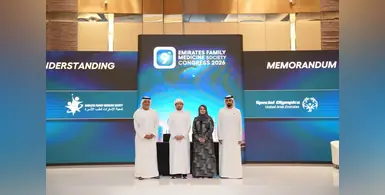
His Excellency Ahmad Bin Shafar, the Chief Executive Officer of Emirates Central Cooling Systems Corporation PJSC (Empower) participated in a pivotal international agreement. As a member of the IDEA Board of Directors, Bin Shafar joined global industry leaders and representatives from various nations and international organisations to sign a strategic Memorandum of Understanding (MoU). This agreement is designed to accelerate the deployment of district cooling systems worldwide.

The strategic MoU arrives at a critical juncture for climate action. Its primary objective is to strengthen international cooperation and hasten the widespread adoption of district cooling systems. These systems are increasingly acknowledged as a proven, practical solution to pressing environmental challenges. By implementing district cooling, cities can substantially improve energy efficiency, enhance energy security, support local economies, and drastically reduce carbon emissions.

To achieve these ambitious goals, the MoU emphasises the necessity of robust international collaboration. The signatories have committed to facilitating the active exchange of industry expertise and promoting technological innovation across borders. Furthermore, the agreement outlines critical support for the development of modern policies and regulatory frameworks. Establishing these foundations is essential to help accelerate the seamless implementation of district cooling systems in cities around the globe. Ultimately, the document reflects a shared commitment among signatories to advance the transition towards energy systems that are highly sustainable and resilient.

This strategic alliance aligns perfectly with the overarching objectives of the 2015 Paris Climate Agreement. It also serves as a direct reflection of the parties' mutual dedication to advancing the critical climate and sustainability goals set forth by the United Nations Framework Convention on Climate Change. For Empower, the signing of this MoU underscores the organisation's rapidly growing role in supporting major international initiatives. The company is actively working to accelerate the global transition to a low-carbon economy through the cultivation of strategic partnerships, the open exchange of vital knowledge, and enhanced collaboration among key stakeholders operating across the sustainable energy sector. Furthermore, Empower's proactive participation in this global event reinforces its position as a leading global player in the district cooling industry and an active contributor to shaping the future of sustainable urban energy systems.

Highlighting the importance of this global collaboration, H.E. Ahmad Bin Shafar stated:

“This agreement reflects a growing international commitment to strengthening cooperation and knowledge exchange to accelerate the development and wider adoption of district cooling systems as a practical and effective solution for advancing sustainability, improving energy efficiency, and reducing carbon emissions. At Empower, we are proud to represent the UAE in this important initiative, which reflects the country's leading position in supporting climate solutions and advancing the transition to a low-carbon economy, guided by our visionary leadership and its steadfast commitment to sustainability, innovation, and strategic partnerships. We believe that district cooling and district energy play a pivotal role in building more efficient, resilient, and future-ready cities, and that expanding international cooperation will help accelerate the transition to more sustainable urban energy systems, while supporting local economic growth and strengthening communities' resilience to the challenges of climate change,” said H.E. Ahmad Bin Shafar.

Empower’s prominent role at the event extended beyond the MoU signing. The company participated as a Diamond Sponsor of the IDEA Conference and Exhibition 2026, which was meticulously organised under the central theme of ‘Connecting Networks’. The international conference took place from 23 to 26 June 2026 in Ottawa, Canada. Empower's participation featured several key engagements that cemented its industry leadership. This included Bin Shafar's active participation in high-level keynote sessions, as well as a comprehensive series of strategic meetings with senior government officials and respected industry experts. These discussions were designed to explore new opportunities to further strengthen international cooperation and facilitate the exchange of best practices within the district cooling industry.

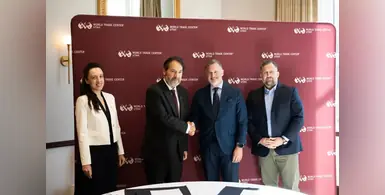
The contract was signed at BEEAH Headquarters by H.E. Sultan Mohammed Al Ketbi, Chairman of the Department of Municipalities Affairs, and Khaled Al Huraimel, Group CEO and Vice Chairman of BEEAH, alongside key municipal delegates.

Sharjah’s Department of Municipalities Affairs signed a landmark contract with BEEAH to establish an integrated waste management project in Al Dhaid City.

Spanning 430,000 square metres in the Maghsa area, this cutting-edge complex is designed to centralise sustainable, end-to-end waste management. The contract was signed at BEEAH Headquarters by H.E. Sultan Mohammed Al Ketbi, Chairman of the Department of Municipalities Affairs, and Khaled Al Huraimel, Group CEO and Vice Chairman of BEEAH, alongside key municipal delegates.

The expansive complex will host a variety of specialised facilities to champion the circular economy. These include designated areas for material recovery, construction and demolition waste, industrial wastewater, and animal byproducts, alongside a fully engineered sanitary landfill. The site will address hard-to-recycle materials through advanced waste-to-energy conversion and the production of refuse-derived fuel. By aligning with international best practices, the initiative optimises resource efficiency, maximises recyclable material recovery, and significantly reduces landfill dependency across Sharjah.

Expanding Regional Impact Through Strategic Phases

Strategically positioned to serve seven municipalities, the project covers the central and eastern regions. The central zone operations accommodate Al Dhaid, Al Madam, Maliha, and Al Batayeh. The eastern region network encompasses Kalba, Khor Fakkan, and Dibba Al Hisn. The infrastructure is structured across three successive implementation phases. Phase one establishes vital transfer stations, primary treatment facilities, and engineered landfills. Phase two introduces specialised systems for processing municipal and industrial waste, paving the way for the third phase of total integration, ensuring strict environmental sustainability.

The collaboration underscores a major push toward environmental integration. Commenting on the agreement, H.E. Sultan Mohammed bin Huwaiden Al Ketbi stated: "Guided by the strategic vision of Sharjah’s leadership to enhance the emirate’s infrastructure and municipal services, signing this contract with BEEAH to establish an integrated, centralized complex in the Maghsa area of Al Dhaid City represents a pivotal strategic milestone in our efforts to complement our municipal offering efforts with the cutting-edge expertise of BEEAH." He further emphasised the long-term community benefits, adding: "The project will provide a state-of-the-art environmental engineering ecosystem that serves seven municipalities across the emirate, directly contributing to national sustainability agenda, enhancing the integrated waste management ecosystem, and ensuring a healthy and sustainable environment for future generations."

Advancing Toward a Zero-Waste Future

Echoing this sentiment, H.E. Sheikh Engineer Mohammed bin Abdullah Al Qasimi, Director of the Department of Municipalities Affairs, remarked: "This pioneering project reflects the department’s unwavering commitment to adopting the latest innovative engineering and environmental solutions in Sharjah. The development of such an integrated, centralized waste management complex in the Maghsa area of Al Dhaid City represents a fundamental transformation in our efforts to develop a collaborative municipal ecosystem, through the establishment of an advanced infrastructure that would serve municipalities across the central and eastern regions of the emirate." Highlighting the operational goals, he noted: "Our strategic partnership with BEEAH aims to facilitate the adoption of highest international standards and best practices in waste sorting, treatment, as well as safe and sustainable disposal. It will help us achieve tangible environmental and economic results, that contribute to enhancing quality of life and supporting our journey toward comprehensive sustainable development."

The project aligns perfectly with the emirate’s broader ecological ambitions. Khaled Al Huraimel articulated the significance of this expansion, stating: "We are proud to partner with the Department of Municipalities Affairs to advance Sharjah’s circular economy ambitions across the Central and Eastern regions. This project marks a significant milestone in delivering pioneering, sustainable waste management solutions for all municipalities in the emirate. Building on the 93% landfill diversion rate we have already achieved in Sharjah City, this project will accelerate progress towards a zero-waste-to-landfill future." Finally, Fahad Shehail, CEO – Environment at BEEAH, highlighted the technological mechanics driving these goals: "Using state-of-the-art technology to track material recovery rates and resource efficiency, the 430,000-square-metre integrated complex in Al Dhaid will serve seven municipalities through advanced recycling, waste-to-energy conversion, and material recovery. We are committed to advancing circular economy solutions that not only enhance the environment and elevate quality of life for societies but also supports Sharjah’s ambition to become the Middle East’s first zero-waste-to-landfill city."

More Articles …