vb

twitteryou tubefacebookfacebookacp

Power Generation

Abu Dhabi Future Energy Company PJSC, widely known as Masdar, has officially announced the successful financial close for the world’s first gigascale 24/7 renewable energy project.

Abu Dhabi Future Energy Company PJSC, widely known as Masdar, has officially announced the successful financial close for the world’s first gigascale 24/7 renewable energy project.

This landmark achievement marks a defining milestone in the commercialisation of the next generation of clean energy infrastructure. The announcement reinforces that large-scale renewable energy projects capable of delivering round-the-clock power have successfully evolved from a technical ambition into completely bankable infrastructure.

Representing a total capital investment of US$6.1 billion, the Round-the-Clock (RTC) project is being developed in Abu Dhabi through a close collaboration between Masdar and the Emirates Water and Electricity Company (EWEC). As part of the funding structure, Masdar is providing US$1 billion of direct equity, while the remaining balance is covered by a massive US$5.1 billion financing package. Backed by a prominent consortium of 13 leading international and local banks, this significant financing package demonstrates strong market confidence in both the commercial viability of the project and Masdar’s operational ability to deliver complex energy infrastructure at scale.

A historic financing package

The extensive financing package was provided by a diverse consortium comprising Abu Dhabi Commercial Bank, Abu Dhabi Islamic Bank, BNP Paribas, Bank of China, and Crédit Agricole Corporate and Investment Bank. The group of lenders also includes Dubai Islamic Bank, First Abu Dhabi Bank, the Hongkong and Shanghai Banking Corporation (HSBC), KfW IPEX-Bank, Natixis, Sumitomo Mitsui Banking Corporation, Standard Chartered Bank, and Societe Generale.

From a technological perspective, the pioneering RTC project stands as the largest and most advanced system of its kind anywhere in the world. It beautifully integrates a massive 5.2GW solar photovoltaic (PV) plant with a monumental 19 gigawatt-hour (GWh) battery energy storage system (BESS). By combining utility-scale solar generation with unprecedented battery capacity, the project directly addresses the historic challenge of intermittency that has long affected renewable power.

Technological innovation and scale

As global electricity demand accelerates rapidly, driven by the expansion of artificial intelligence (AI), data centres, and advanced manufacturing—the project establishes an important new benchmark for financing reliable, utility-scale clean energy systems. For the organisation, this financial milestone demonstrates its continued capability to attract and mobilise global institutional capital. It also highlights its expertise in delivering increasingly complex renewable infrastructure projects in close partnership with governments, utilities, and financial institutions.

Mazin Khan, Chief Financial Officer at Masdar, expressed his pleasure regarding the funding milestone, stating: “We are pleased to have secured funding from such a broad and highly respected group of local and international banks in support of this pioneering project.”

He added: “This significant financing commitment demonstrates the confidence of the international banking community not only in a landmark project but also in Masdar's financial strength, disciplined execution and long-term growth strategy. This milestone further demonstrates our ability to mobilize global capital at scale while delivering innovative renewable infrastructure that supports long-term economic growth and energy security. We now look forward to advancing the project to deliver reliable, affordable, clean energy around the clock.”

Securing the global energy supply

Masdar originally broke ground on this clean energy project in October 2025, and the entire system is fully expected to be operational in 2027. The 24/7 renewable energy project remains a core cornerstone of the UAE’s overarching clean energy strategy, contributing significantly to national energy security and broader economic diversification goals.

Masdar currently possesses a highly diversified portfolio of more than 65GW, spanning both established and high-growth renewable energy markets worldwide. Its operations cover the full spectrum of clean technologies, including solar, onshore wind, offshore wind, battery energy storage, and hybrid solutions. With a clear strategic pathway to reach 100GW of renewable energy capacity by 2030, Masdar continues to expand its global platform through disciplined growth across priority markets, delivering reliable, affordable clean power to meet the world's growing demand.
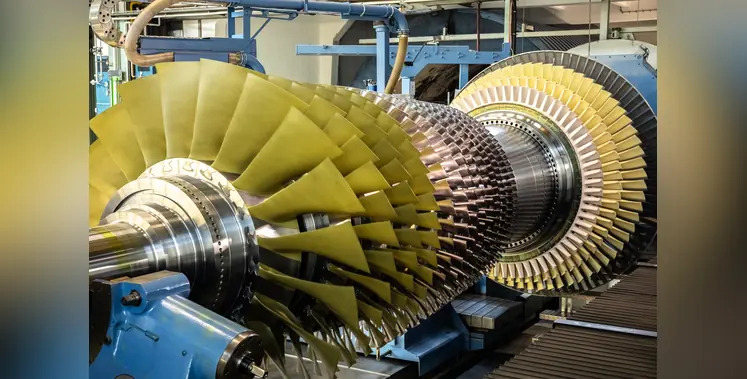
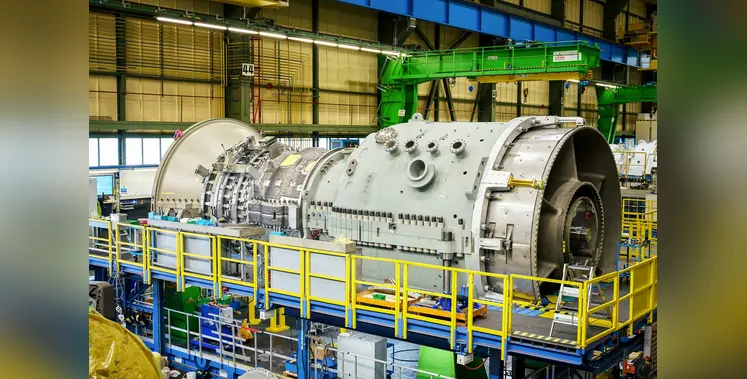
Siemens will provide comprehensive long-term service agreements for both the Misfah and Duqm Independent Power Producer (IPP) projects.

The Sultanate of Oman is poised to take a significant leap forward in its electricity generation capabilities.

In a major development announced on June 30, 2026, Siemens Energy secured a pivotal role in supplying vital power generation technology for two new facilities. The company will provide comprehensive long-term service agreements for both the Misfah and Duqm Independent Power Producer (IPP) projects.

With a planned capacity reaching nearly 2.6 gigawatts, these combined-cycle power plants are projected to increase Oman’s total electricity capacity by almost 20 percent. Once operational, this infrastructural expansion will deliver a reliable power supply to more than two million people. The core of Siemens Energy’s technological scope incorporates the delivery of six advanced F-class gas turbines alongside six accompanying generators. To ensure ongoing reliability, the agreement also includes corresponding long-term service contracts spanning twenty years.

The manufacturing of these critical components will take place within Siemens Energy’s dedicated production sites in Germany. The SGT5-4000F gas turbines will be manufactured at the facility in Berlin, whereas the SGen5-2000P generators will be produced in Muelheim.

These plants have been strategically sited to support rapidly escalating capacity needs in two important locations. The Misfah plant is situated within the Muscat Governorate, which represents one of the Sultanate’s largest centres for electricity demand. The Duqm facility is positioned inside the Special Economic Zone at Duqm in the Al Wusta Governorate. This zone serves as a key industrial and logistics hub situated directly on the Arabian Sea coast.

The development of these projects is spearheaded by a multinational consortium. The group comprises the Etihad Water and Electricity Company PJSC, Nebras Power Investment Management B.V., Bahwan Infrastructure Services LLC, and Korea Western Power Co.,Ltd. Doosan Enerbility, acting in a consortium with SEPCO-3, has been tasked with the engineering, procurement, and construction (EPC) responsibilities. Nama Power and Water Procurement Company will serve as the official offtaker for the electricity generated.

The strategic importance of this initiative was underscored during a visit to Siemens Energy’s Berlin factory by H.E. Salim Al Aufi, Oman’s Minister of Energy and Minerals. He stated: "The Misfah and Duqm projects reflect Oman's commitment to building a resilient and future-ready energy system. By working with leading technology providers such as Siemens Energy, and deploying advanced gas turbines with hydrogen co-firing capabilities, we are strengthening the reliability of electricity supply while supporting our long-term strategy to diversify the Sultanate's energy mix. This will help create the flexibility to increase the use of hydrogen over time as our energy transition progresses. This collaboration will further set the foundation for a lower-carbon power system, enhance energy security, and support the goals of Oman Vision 2040."

Karim Amin, Member of the Executive Board of Siemens Energy, stated: “As the Sultanate continues to expand its industrial base and electricity infrastructure, flexible and reliable power will be critical in this next chapter, supporting grid stability and enabling greater integration of renewables in the system. We are proud to support this journey, and build on a strong legacy in Oman, by providing our cutting-edge gas turbines, expertise, and service capabilities to the flagship Misfah and Duqm power plants to deliver highly efficient energy and add a significant 2.6 GW to Oman’s power system, helping meet evolving demand and ambitious energy targets.”

Siemens Energy, employing roughly 105,000 individuals across more than 90 countries, reported revenue of €39.1 billion during the 2025 fiscal year. An estimated one-sixth of all globally generated electricity relies upon technologies provided by Siemens Energy, whose extensive international expertise will now play a foundational role in driving Oman’s future energy transition.

Siemens Energy has secured a major contract to supply advanced turbine and generator technology for the 2.6 gigawatt (GW) Taweelah C independent power producer (IPP) project in Abu Dhabi, UAE.

Siemens Energy has secured a major contract to supply advanced turbine and generator technology for the 2.6 gigawatt (GW) Taweelah C independent power producer (IPP) project in Abu Dhabi, UAE.

Karim Amin, a member of the executive board of Siemens Energy, noted that the project will feature the first 'HL-class' gas turbine in the UAE.

Driving grid stability and sustainability

The project represents the third power plant on the Taweelah site to be equipped by Siemens Energy. The combined-cycle facility is designed to deliver critical operational flexibility and strengthen grid stability,  and will play a pivotal role in enabling large-scale renewable energy integration across the Emirate of Abu Dhabi.

Also, the plant’s design allows for the future utilization of carbon capture and storage units. This aligns directly with the UAE’s broader strategic goal to achieve climate neutrality by 2050.

Global supply chain and project partners

The comprehensive scope of supply features:

  • Three SGT5-9000HL gas turbines, manufactured in Berlin, Germany
  • Two SST5-5000 steam turbines, manufactured in Muelheim, Germany
  • Five generators, comprising SGen5-3000W and SGen5-2000P models, manufactured in Charlotte, USA
  • Associated auxiliary systems

The project is being developed by the Abu Dhabi National Energy Company (TAQA) alongside an international consortium that includes Saudi Arabia’s Al Jomaih Energy and Water Company and Singapore’s Sembcorp Industries. Engineering, procurement, and construction duties are being handled by the contractor, China Energy Engineering Group Corporation, while the Emirates Water and Electricity Company (EWEC) will serve as the sole procurer of the generated electricity.

Siemens Energy’s global footprint

As a major force in global energy technology, Siemens Energy accounts for an estimated one-sixth of the electricity generated worldwide. Covering almost the entire energy value chain, from conventional gas and steam turbines to hydrogen-operated hybrid power plants and wind energy through its subsidiary Siemens Gamesa—the company supports the transition to a sustainable energy future.

The company employs approximately 105,000 people across more than 90 countries. In the 2025 fiscal year, it generated €39.1 billion in revenue.

Siemens Energy continues to cement its role as a key architect of the global energy transition by combining cutting-edge German and American engineering with localized strategic partnerships. The Taweelah C project not only underscores the company's commitment to the UAE's economic development but also serves as a vital blueprint for balancing immediate grid reliability with long-term de-carbonization objectives.


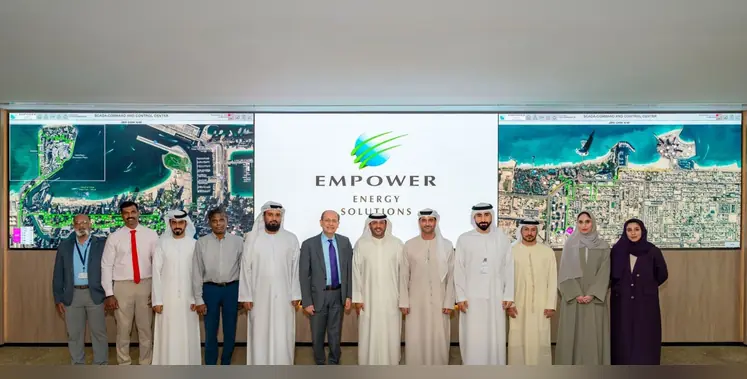
Emirates Central Cooling Systems Corporation PJSC (Empower) has inaugurated an advanced Command Control Centre (CCC) at its new headquarters in Dubai.

Emirates Central Cooling Systems Corporation PJSC (Empower) has inaugurated an advanced Command Control Centre (CCC) at its new headquarters in Dubai, revealing that the district cooling provider is leading regional efforts to implement digital transformation initiatives and advanced industrial technologies

The launch represents a key component of the company's technological ecosystem, designed to support round-the-clock operations and ensure an impressive 99.99% network reliability. Findings from the inauguration indicate that Empower is moving beyond traditional management, with a growing focus on deploying digital technologies at scale to improve operational performance across the emirate.

According to the announcement, the new facility reinforces Empower’s pioneering position in adopting smart systems. This commitment is reflected in its operational priorities, heavily utilising advanced predictive capabilities that identify potential malfunctions before they occur, thereby minimising unplanned downtime and enhancing service reliability for customers.

“The new Command Control Centre represents a significant step forward in Empower’s journey towards establishing a smarter, more efficient and flexible operating model that keeps pace with the rapidly increasing demand for district cooling services in Dubai. The centre reflects the company’s commitment to employing the latest digital solutions and smart systems in managing its operations, enhancing real-time monitoring capabilities, improving response efficiency, and supporting service continuity in line with the highest standards of reliability and dependability. This step is an extension of Empower’s approach to strategic investment in digital infrastructure, ensuring network readiness and operational efficiency, while further strengthening its network reliability, which has reached 99.99%.” said H.E. Ahmad Bin Shafar.

AI drives operational transformation

Artificial intelligence continues to play a central role in the company's operational evolution. The centre operates through an integrated platform leveraging advanced artificial intelligence (AI), big data analytics, and Internet of Things (IoT) technologies.

Rather than being limited to isolated applications, these technologies are seamlessly integrated into Empower’s various operational technology environments, including energy management systems, SCADA (Supervisory Control and Data Acquisition) systems, and security and safety networks. Operators are using these systems to provide a comprehensive, real-time view of all processes, monitoring and managing plants across Dubai 24x7 through interactive screens that deliver accurate data and enable faster responses to operational changes.

“The centre provides an integrated operational system that supports proactive, data-driven decision-making, enables the prediction of operational challenges before they occur, reduces unplanned outages, and improves energy efficiency, positively impacting both organisational performance and environmental sustainability. At Empower, we continue to embrace innovation as a fundamental pillar in advancing our operations and enhancing our ability to meet the needs of our customers and major urban development projects in the emirate, thereby increasing customer satisfaction and supporting Dubai’s journey towards greater sustainability and global leadership in district cooling,” added Bin Shafar.

Sustainability and innovation remain priorities

As digital adoption accelerates, Empower is prioritising technologies capable of delivering measurable environmental and business outcomes. Advanced analytical dashboards are actively supporting strategic decision-making, allowing management to monitor key performance indicators and analyse operational trends. Furthermore, the proactive nature of the centre contributes directly to improved energy efficiency and reduced carbon emissions, keeping the organisation firmly aligned with the UAE’s sustainability goals.

The Command Control Centre represents a significant addition to the broader portfolio of advanced technologies embedded across Empower's operations. As the sector becomes increasingly advanced, Empower is expanding its use of automated digital systems, smart metering, operational databases, and thermal energy storage (TES) solutions across its 90 plants, highlighting a clear strategic intent to future-proof its industrial infrastructure.

Innovation showcase highlights Oman’s energy transition.

AtkinsRéalis, a leading global engineering and nuclear services company, in collaboration with Oman’s Ministry of Energy and Minerals, hosted the “Powering the Future: Oman Electricity Innovation Showcase” on December 10, 2025

The event convened senior leaders from government, utilities, regulators, and the private sector to explore strategies for meeting Oman’s rapidly growing electricity demand driven by AI-enabled economic development. Discussions focused on a balanced energy mix incorporating nuclear power, renewables, AI-ready grids, and storage solutions, all aligned with the nation’s goal of achieving net zero emissions by 2050.

H.E. Mohsin Hamed Saif Al Hadhrami, Undersecretary at the Ministry of Energy and Minerals, commented, “A secure and sustainable power system is central to our industrial strategy and economic ambitions, which includes recently announced initiatives like the Oman Digital Triangle, a gigawatt scale group of three AI superclusters under the National Digital Infrastructure Roadmap. This collaboration highlights technologies and delivery models that can help Oman diversify its energy mix, enhance grid resilience, and accelerate progress toward our national targets.”

The showcase featured sessions on decarbonisation pathways, grid resilience for AI-intensive economies, economic growth opportunities, and the complementary role of reliable nuclear energy alongside intermittent renewables. Lightning talks highlighted the importance of regional grid interconnections, hydrogen, financing, and policy frameworks. Participants engaged in interactive simulations to explore managing a diverse electricity supply mix and examined global case studies on nuclear project delivery and refurbishment.

Todd Smith, vice-president of marketing and business development at CANDU Energy Inc., added, “Reliable, clean, baseload power is the anchor for a modern grid, serving both people and a data-driven economy. Nuclear provides the dispatchable, low-carbon capacity that helps Oman scale renewables without sacrificing stability or affordability. The question is how to design the right mix, attract and sequence investments, drive new industry capacity and growth, and build the institutional capability to deliver at pace.”

The event was timely as Oman’s electricity demand grows at 6.1% annually, with MENA-wide consumption projected to increase by 50% by 2035. Data centre expansion, with installed capacity potentially tripling to 3.3 GW in the next five years and market growth expected to reach US$9.5bn by 2030, underscores the need for scalable, practical solutions to ensure energy security, economic competitiveness, and climate resilience.

Matthew Tribe, global market lead, buildings & places at AtkinsRéalis, said, “Our ambition with this showcase was to rise above the noise and illuminate innovative pathways grounded in evidence, strategic choices, and informed trade-offs. Today, cities, industries, and digital ecosystems converge on a singular imperative: abundant, resilient, and clean energy. In partnership with the Ministry, we have articulated a forward-looking roadmap that harmonises renewables, advanced storage, and grid-forming technologies with proven nuclear solutions, empowering Oman to accelerate near-term growth while steadfastly advancing toward a net-zero future.”

AtkinsRéalis combines extensive global nuclear and grid design expertise with a strong regional presence, drawing on decades of experience delivering CANDU reactors and managing a 7,000-person nuclear workforce. CANDU technology provides Oman and the broader region with a proven pathway to secure, low-carbon baseload power, supporting both grid stability and large-scale renewable integration. AtkinsRéalis remains committed to partnering with governments and industry stakeholders across the Middle East to identify opportunities and co-develop solutions that promote sustainable growth and deliver resilient, future-ready energy and infrastructure systems.

More Articles …