Construction machinery is no longer just about the brute force required to complete strenuous labour.
Today, intelligent construction equipment possesses the technological 'brains' to help work crews operate more efficiently and safely. This advancement significantly relieves the immense pressure often placed on stressed or inexperienced workers.
Dana Wuesthoff, show director for CONEXPO-CON/AGG, highlighted, “The amount of equipment that's designed to be more intuitive and easier to operate, and sometimes even capable of thinking and acting on its own, continues to grow at a rapid pace,”
This evolution extends far beyond core machinery like excavators and wheel loaders. Specialised plant such as pavers, support equipment like mobile generators, and safety systems are now being engineered with smart features to make daily operations smoother.
Adapting to changing conditions on site
One of the most significant challenges construction crews face is managing constantly fluctuating jobsite environments. Paving contractors, for instance, require highly adaptable machinery to keep up with shifting operational parameters.
As one industry expert noted regarding the demands placed on paving machinery:
“Paving contractors need a machine that will stand up to the rigorous demands of their projects, and also be capable of meeting the strict concrete consolidation specs demanded by owners.”
To address varying owner specifications, Metal Forms has developed a roller screed featuring hydraulic vibrators. This innovation makes it remarkably easy to adjust spacing on the fly. A digital display allows operators to closely monitor vibrator output and depth, ensuring proper concrete consolidation throughout the programme.
Similarly, mobile generators are deeply impacted by changing power demands throughout the day. Frequent periods of underloaded operation mean the generator fails to run at its optimum capacity.
To combat this, Echo Industrial Power Equipment has developed Smart Emissions Technology (S.E.T.). Ryan Fredrickson, senior product marketing manager at Echo IPE, explained the mechanism:
“S.E.T. adds a small electrical load to the generator during light and underloaded operating conditions,”
“This assures that the generator and emission control equipment run efficiently at proper operating temperature.”
The rise of smarter jobsite safety systems
When construction schedules are tight, deploying the latest safety technology is highly advantageous for reinforcing site protocols. Vehicle safety technology is a primary focus for modern developers.
Akvile Willmore, group marketing communications lead for Brigade Electronics, stated that new technologies are actively solving major site risks. Key risks mitigated by these systems include:
- Blind spots and poor visibility for operators.
- Excessive noise pollution that hinders communication.
- The theft of vehicles, tools, and crucial fuel supplies.
Enhancing visibility with AI-powered cameras
Modern safety tech now includes obstacle detection systems, reversing alarms, and mobile digital recorders (MDRs). Furthermore, AI-powered cameras can now determine whether vehicles and objects are stationary or actively moving. These advanced systems can even specifically recognise when nearby obstacles are human beings, dramatically reducing the risk of collisions.
Automating emergency lighting for protection
Emergency lighting manufacturers are also taking significant steps to make vehicles safer.
Chris Watkins, technology sales manager at Whelen Engineering, detailed their automated approach:
“Lighting adjustments are then made automatically based on what will be the most effective in a given situation,”
“The operator doesn't have to fool with pressing buttons all the time. All they have to do is activate the lighting system, and automation handles the rest to keep that vehicle and those around it as safe as possible.”
Intelligent construction equipment: brawn and brains on jobsites
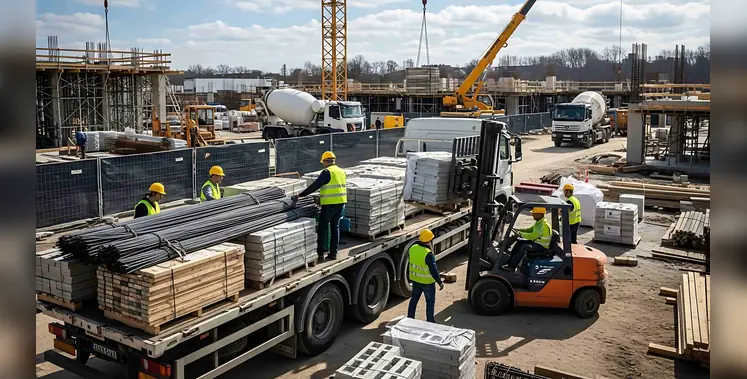
Modern safety tech now includes obstacle detection systems, reversing alarms, and mobile digital recorders (MDRs).