Iraq has successfully secured a series of landmark energy agreements with the United States.
During a highly significant diplomatic visit to Washington by Prime Minister Ali Al-Zaidi, the Iraqi government cemented deals estimated to be worth US$200bn. These comprehensive contracts are set to revitalise the country’s foundational oil and gas industries. According to Iraqi Oil Minister Bassem Mohammed Khudair, who detailed the outcomes of the talks, this massive injection of capital will serve as the cornerstone of Iraq's strategic vision. The scale of this international commitment underscores a renewed focus on expanding a sector that remains the lifeblood of the Iraqi economy. This historic bilateral alignment is expected to reshape the trajectory of the nation's economic recovery.
Expanding Production and International Co-operation
The newly minted partnership encompasses seven key agreements designed to upgrade Iraq's extraction and processing capabilities. Minister Khudair noted that these deals will substantially increase the nation's oil and gas reserves while boosting day-to-day production. At present, Iraq’s total oil production capacity has already surpassed 4.8 million barrels per day. The administration views this capacity as a robust foundation upon which the new US agreements will build.
Furthermore, Iraqi oil fields are already a hub of global enterprise, with 22 international companies currently operating within the country. The presence of these foreign entities demonstrates the vast, untapped potential still present within the region. The integration of the Washington-backed agreements will harmonise with these operations, creating a more dynamic extraction environment. By expanding capacity through these frameworks, Iraq aims to solidify its position as a global energy supplier.
Advancing Towards Domestic Self-Sufficiency
While exports remain a primary focus, the government is equally dedicated to fulfilling domestic energy requirements. Minister Khudair highlighted that Iraq is firmly on track to achieve complete self-sufficiency in natural gas by the year 2030. This ambitious target represents a critical shift for the nation, which has historically faced complexities in capturing its own gas resources.
Remarkable progress has already been recorded in other areas. Iraq has successfully achieved full self-sufficiency in the provision of gas oil, commonly known as diesel, and kerosene. Additionally, domestic facilities are generating approximately 30 million litres of gasoline daily to meet local demand. However, the minister acknowledged that the journey is not without hurdles. Despite the impressive production figures, persistent challenges remain within the country’s fuel distribution mechanisms. Addressing these logistical distribution roadblocks is essential to ensure that this newly harnessed energy reliably reaches consumers across all provinces.
Catalysing Socio-Economic Growth
Beyond the immediate metrics of barrels and litres, the US$200bn investment strategy is heavily oriented towards generating tangible benefits for the Iraqi populace. The government anticipates that the revitalisation of the energy sector will serve as a massive engine for job creation, offering new employment avenues for a growing workforce.
These contracts are also structured to deliver broader social benefits that extend into the educational sphere. Notably, the agreements include provisions for scholarship opportunities, linking industrial growth directly with human capital development. By investing in education, Iraq is laying the groundwork for a future where its own professionals can lead the management of the nation's infrastructure.
Navigating OPEC Quotas and Looking Ahead
As production capacities expand, the Iraqi government is simultaneously addressing the diplomatic complexities of global oil markets. Minister Khudair revealed that officials are engaged in serious and constructive dialogue with the Organisation of the Petroleum Exporting Countries (OPEC). The primary objective of these talks is to negotiate an increase in the country’s official oil export quota, allowing Iraq to capitalise on its enhanced capabilities.
Addressing the historical context of these negotiations, the oil minister was explicit about the nation's stance. "The government remains committed to securing the export share Iraq deserves, while taking into account the exceptional circumstances the country has endured as a result of wars and the destruction of its infrastructure," he said. Through massive international investment and assertive diplomacy, Iraq is charting a highly resilient energy future.
Iraq secures US$200bn in US energy deals
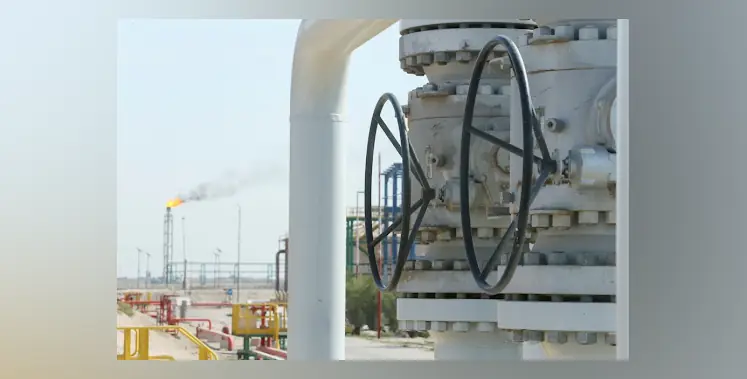
Iraq has successfully secured a series of landmark energy agreements with the United States.