The Middle East is on the cusp of a significant shift in its medium-voltage infrastructure.
According to new research by IDC, nearly half of the region's organisations are either already transitioning away from SF₆ or planning to do so within the next two years.
WETEX serves as a crucial platform for discussing the future of utility infrastructure, and this year, the spotlight is firmly on the move towards SF₆-free technologies. The newly published IDC White Paper, titled "SF₆-Free MV Switchgear: Industry Readiness, Decision Drivers, and the Way Forward", surveyed 700 medium-voltage infrastructure decision-makers globally.
Readiness and regulatory expectations
The survey, spanning electric utilities, data centres, electro-intensive industries, and physical infrastructure sectors, paints a clear picture of a region anticipating swift regulatory changes.
In the Middle East, the findings reveal a strong appetite for modernisation:
14% of organisations have already commenced their transition to SF₆-free equipment.
32% anticipate beginning this transition within two years.
Nearly all remaining respondents expect to make the change within five years.
99% consider it likely that SF₆ regulations will be introduced in their countries within the next half-decade.
Despite this forward-looking approach, there are hurdles to overcome. Decision-makers in the Middle East pointed to several barriers:
Technical readiness (58%)
Supply chain availability (47%)
Product availability (46%)
Cost (42%)
Interestingly, the perception of cost is heavily influenced by how lifecycle expenses are calculated. At present, only 29% evaluate the full lifecycle cost of their equipment, which includes the complex end-of-life handling of SF₆. However, across the entire global sample, 92% rate the management of SF₆ at the end of its lifecycle as a major or moderate cost. Factoring these long-term expenses into initial procurement decisions substantially narrows the perceived cost gap between traditional and SF₆-free alternatives.
The pivotal role of national utilities
Utilities are undeniably setting the pace. Globally, 73% of survey participants stated that guidance from utilities or grid operators directly influences their own procurement strategies. Furthermore, IDC identifies national utilities within the Gulf Cooperation Council (GCC) as being among the markets expected to transition most rapidly once clear guidance is established.
Electric utilities are leading across every readiness metric measured in the study. Currently, 79% express a willingness to adopt SF₆-free equipment, and 62% are proactively piloting new technologies ahead of formal regulations.
The IDC study was sponsored by Schneider Electric. Emphasising the importance of these trends:
“Utilities across the Gulf are making decisions today about how their grids will run for decades to come,” said Amel Chadli, Gulf Cluster and Countries President at Schneider Electric. “This research tells us the region is ready to move, and that it is looking to its utilities to set the direction. WETEX brings those decision-makers together in one place, which is why we chose to share these findings here, alongside the technology that makes the transition practical.”
Practical solutions across the asset lifecycle
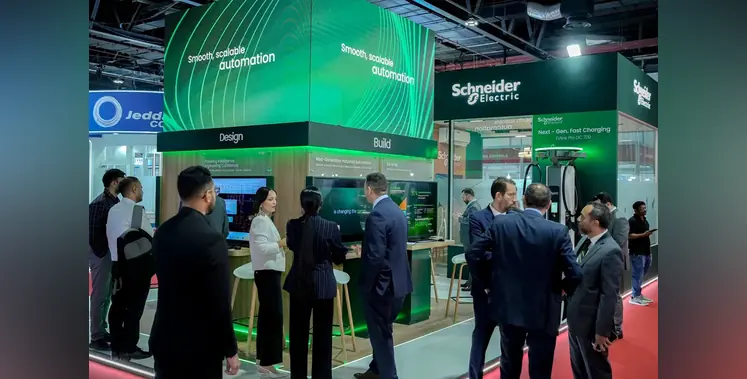
At WETEX, the practical application of this transition is being showcased comprehensively. Demonstrations follow the complete lifecycle of energy and water assets, moving seamlessly from the initial design phase through to building, operation, and maintenance.
Organisations can deploy proven SF₆-free medium-voltage ranges that utilise pure air and vacuum interruption, enhanced with digital monitoring. Modern switchgear solutions, including RM AirSeT, GM AirSeT, and MCSET with EvoPact, are proving their viability, with over 150,000 similar functions active worldwide.
Alongside switchgear, the transition to smarter grids is supported by an array of digital technologies:
ETAP’s electrical digital twins tailored for grid design.
The One Digital Grid Platform and EcoStruxure Power Automation System for real-time grid operation.
EcoCare, EcoFit, and EcoConsult services for the maintenance and modernisation of installed assets.
For water operators facing similar modernisation challenges, new digital twin tools allow for the comprehensive planning of networks before any capital is committed. Smart pumping stations, built on Altivar Process drives and EcoStruxure Automation Expert, alongside the AVEVA Digital Water Platform, offer in-depth smart water network analytics. This enables the operation of an entire water system from a single, unified digital environment. With technology now running in over 40,000 water and environment installations across more than 150 countries, and partnerships with ten of the world’s largest electric grid operators, the pathway to sustainable, efficient infrastructure is clearer than ever.
Middle East grids embrace SF₆-free infrastructure
According to new research by IDC, nearly half of the region's organisations are either already transitioning away from SF₆ or planning to do so within the next two years.