The Middle East has emerged as the world's most cost-competitive region for data centre construction, offering a critical advantage as global demand for artificial intelligence (AI) infrastructure surges.
According to the 10th edition of Turner & Townsend's Data Centre Construction Cost Index for 2026, the region's average build cost stands at $9.93 per watt, undercutting major markets across Europe, Asia, and North America.
The index, evaluating 62 international markets based on a standard 60-megawatt (MW) facility design, highlights a stark contrast in construction expenses. Tokyo remains the most expensive market to build a data centre, commanding $18.28 per watt. It is closely followed by Zurich at $15.93, Singapore at $15.39, and Silicon Valley at $15.01 per watt. Conversely, the United Arab Emirates (UAE) ranks among the top five most affordable markets globally, sitting at 58th place with an average cost of $9.20 per watt. While cities like Shanghai ($5.79) and Mumbai ($6.83) offer lower pricing, the Middle East as a wider region averages out as the most financially viable hub for hyperscale development.
Driving sovereign AI and digital capacity
The data centre sector has evolved from a niche commercial real estate segment into a dominant driver of global construction activity. This growth is heavily fuelled by AI, requiring gigawatt-level power and advanced liquid cooling systems to support high-density racks. This exponential demand is drawing massive capital investment into the Middle East, where government-backed initiatives actively support digital expansion.
Alan Coary, Director and Data Centre lead for the Middle East at Turner & Townsend, highlighted the strategic moves across the region. "Saudi Arabia's HUMAIN initiative and the UAE's continued investment in AI and hyperscale data centre development through G42 and Khazna are transforming the region's computing capacity and positioning it as a globally competitive AI hub," he stated.
Overcoming global supply chain and power constraints
While the Middle East enjoys a cost advantage, the broader global market is grappling with escalating expenses and delivery hurdles. The Turner & Townsend report notes that 52 per cent of survey respondents experienced cost increases of over 6 per cent this year, while 20 per cent reported inflation exceeding 15 per cent. With more than half of respondents anticipating their 2027 projects will be dedicated to AI workloads, pressure on supply chains and skilled labour is intensifying.
"However, rising material and labour costs continue to create challenges globally, while access to power, specialist equipment and skills continue to create bottlenecks," the report noted. "Data centres are also subject to increasing scrutiny, with political and community consent essential to delivery."
Power availability remains the most critical barrier to entry worldwide. Globally, 56 per cent of industry respondents identified securing sufficient power as the primary obstacle to delivery.
Connection delays: 52 per cent of respondents revealed utility connections typically take one to two years to establish.
Severe backlogs: 32 per cent reported waiting periods stretching beyond two years.
The push for larger, gigawatt-scale facilities has only amplified these delays, adding a cost premium to complex mega-projects.
Navigating interconnected industry challenges
Global capital expenditure on data centres has already reached an estimated $800 billion annually, with forecasts suggesting it could climb to $1.8 trillion by 2050. As operators race to build complex facilities, success requires a holistic development approach extending beyond individual construction sites.
Paul Barry, Data Centre Construction Cost Index Lead at Turner & Townsend, emphasised the need for strategic collaboration. "Success will ultimately depend on the industry's ability to think beyond the boundaries of a single project," Barry explained. "Power, water, supply chains, labour, planning, sustainability and data sovereignty are becoming interconnected challenges that require coordinated solutions."
By maintaining its competitive build costs, the Middle East is well-positioned to capitalise on this global digital boom. However, sustaining this momentum depends on effectively managing universal challenges surrounding power supply and specialised labour.
Middle East ranked most cost-competitive for data centre builds
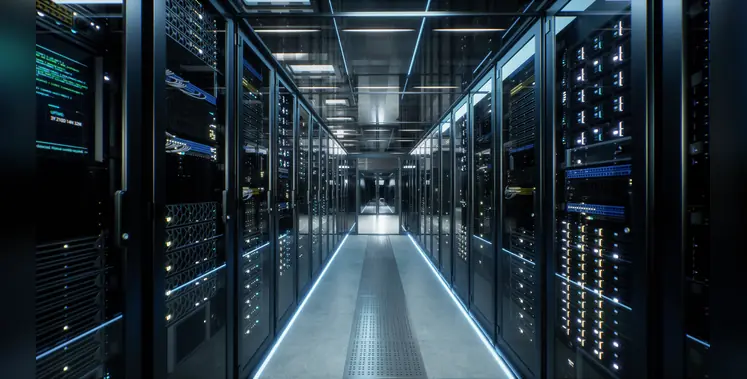
The Middle East has emerged as the world's most cost-competitive region for data centre construction, offering a critical advantage as global demand for artificial intelligence (AI) infrastructure surges.