cc.web.local

twitteryou tubefacebookfacebookacp

Logistics

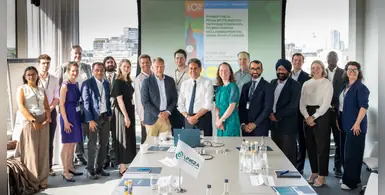
At Dubai Airshow 2025, sustainability stepped firmly into the spotlight as three of Dubai’s leading aviation figures unveiled an initiative poised to redefine how the industry approaches environmental responsibility.

Paul Griffiths, CEO of Dubai Airports, Steve Allen, CEO of dnata and Ghaith Al Ghaith, CEO of flydubai came together to introduce the world’s first Sustainability Showcase, a groundbreaking demonstration of how a fully sustainable aircraft turnaround can be achieved through innovation, technology and cross-sector collaboration.

More than a display of equipment, the showcase presents a complete reimagining of what an aircraft turnaround can look like when every component is optimised for environmental performance. Conceived by Dubai Airports, dnata and flydubai in partnership with more than 30 industry collaborators, the project offers a tangible snapshot of aviation’s journey towards net zero. From advanced electric ground support equipment to energy-efficient operational processes, the Showcase demonstrates how coordinated industry action can drive meaningful, measurable progress.

Visitors to Dubai Airshow are invited to walk through the Sustainability Showcase themselves, with guided tours hosted daily by Dubai Airports. Running from 10 AM to 1 PM between 17 and 21 November at the Dubai Airshow Site in the Static Park, the experience gives attendees a close look at the technologies and solutions shaping the future of greener aviation. No pre-booking is required, ensuring accessibility for all.

For Paul Griffiths, the Showcase represents both a milestone and a message. “Dubai Airshow has long been a global stage for innovation, and this year’s theme, ‘The Future is Here’, perfectly captures the spirit of what we’re unveiling,” he said. “The world’s first Sustainable Turnaround Showcase is a real-world example of progress in action and symbolises what can be achieved when we align ambition with collaboration. Sustainability is not an individual pursuit – it is a shared responsibility.”

That philosophy is echoed by Steve Allen, who emphasises the importance of partnership and technology in accelerating change. “We’re proud to present the latest generation of our advanced ground support equipment fleet in a unique display,” he said. “Our approach is clear: green first. Innovation and sustainability advance together.”

For Ghaith Al Ghaith, the initiative reinforces the airline’s role within the oneDXB alliance and its long-term sustainability goals. “A sustainable future is a shared goal, one that requires collaboration, innovation and collective action,” he said. “Together with our partners, we are focused on exploring how investing in technology and operational efficiency can support a greener tomorrow.”

Hitachi Rail will deliver an advanced suite of systems. (Image source: Hitachi Rail)

Hitachi Rail has secured a major contract from the Hassan Allam Construction and Arab Contractors joint venture to modernise and upgrade the historic Alexandria Raml Tram, transforming it into a modern, efficient and digitally connected transport system.

Under the agreement, Hitachi Rail will deliver an advanced suite of systems designed to enhance safety, reliability and operational performance. These include state-of-the-art signalling and communications technologies (both fixed and wireless), an Operational Control Centre, Supervisory Control and Data Acquisition (SCADA) systems, security solutions with CCTV and access control, as well as passenger information and on-board equipment.

This comprehensive modernisation aims to bring Alexandria’s tram system in line with Egypt’s Vision 2030 for sustainable development by significantly improving efficiency, reducing emissions and enhancing passenger comfort.

The Alexandria El Raml Tram, the oldest in both the Middle East and Africa, first began operations in 1863 and was last upgraded in the 1960s. Despite its age, it remains one of the few tramways in the world that still operates double-deck trams in regular service.

The current rehabilitation project will include the reconstruction of 24 stations and 13.2 km of tram track. Once completed, the upgraded line is expected to reduce travel time from 60 to 35 minutes, double the operating speed from 11 km/h to 21 km/h, and decrease headway from nine minutes to just three. Passenger capacity will also triple from 4,700 to 13,800 passengers per hour per direction, easing congestion and contributing to a greener, more efficient public transport network across Alexandria.

The Alexandria El Raml Tram Rehabilitation marks a significant milestone for Hitachi Rail, further solidifying its position in the region’s growing metro and railway markets. The project follows a contract signed earlier this year between Hassan Allam Construction, Arab Contractors JV, and the National Authority for Tunnels for the tram’s rehabilitation.

Investing in digital innovation

Hitachi Rail continues to deepen its presence in Egypt through strategic localisation and technological investment. The company has developed local teams across engineering, finance, legal, and other disciplines to deliver projects and support customers effectively. Its Communications-Based Train Control (CBTC) systems now include local Integration, Verification, Validation, and Qualification (IVVQ) activities, while its Automated Fare Collection (AFC) initiatives are creating high-tech jobs and promoting workforce diversity. These efforts align with Egypt’s national development strategy and strengthen the country’s role as a regional hub for rail innovation.

Through its digital solutions, Hitachi Rail is focused on improving the passenger journey by integrating public information systems and AFC platforms that facilitate seamless travel across metro, LRT, and monorail networks. In Alexandria, the Abu Qir Metro will feature Hitachi’s TRANSCITY AFC technology, enabling multiple payment options such as QR codes, contactless cards, EMV bank cards, and NFC mobile payments.

Joaquim Santos, Signalling and Rail Solutions (SRS) OPPS – ICS, said, “Hitachi Rail has a long-standing presence in Egypt, built on trust, collaboration and shared ambition. Our commitment goes beyond delivering advanced technologies—we are deeply invested in developing local capabilities, supporting innovation, and contributing to the country’s sustainable mobility goals.”

Carlo PiacenzaSignalling and Rail Solutions (SRS) MEA Regional Director, said, “We are proud to announce that we have been awarded a contract by Hassan Allam joint venture and The Arab Contractors (Osman Ahmed Osman & Co.) to modernise and upgrade the oldest electric tram system in Africa, transforming it into a reliable, efficient, and digitally enhanced transportation system. This contract marks an important milestone, showing the capacity of Hitachi Rail technologies in the rehabilitation and modernisation of tramway systems.”


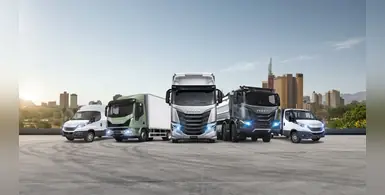
IVECO and its long-term partner MTT, through EuroMT Srl bodybuilder, have begun delivering 20 Eurocargo units to the Directorate of Civil Defense in Iraq.

The first batch of Eurocargo ML180E28 4x2 models marks the debut of firefighting water tankers in Iraq. Each vehicle is equipped with a EuroMT Srl 10,000-litre water tank and a high-performance firefighting pump system, designed to offer flexibility, efficiency, and rapid emergency response capabilities.

Machine Technology Trading Co. (MTT), an official IVECO dealer for several years, is headquartered in Baghdad with a secondary branch in Erbil, Kurdistan Region. The company provides full coverage across Iraq, offering the complete range of IVECO trucks.

Khalid O. Mawlood, general manager of MTT, said, "We are proud that our local Governorate has chosen our company together with IVECO brand for the fleet of firefighting vehicles and we hope to serve this mission as always we did in the past and we will continue to do."

Ali Sheikholmoloki, IVECO business manager for Iraq, added, “In this special year, which IVECO is turning to 50 years, we are celebrating together with our historical partner MTT the delivery of 20 Eurocargo units firefighting water tankers equipped to Al Diwanya Governorate in Iraq. I can proudly say that Eurocargo is the most versatile vehicle in its category which surely will bring us many more achievements in this market for different segments.”

Eurocargo: a multi-mission truck

Eurocargo stands out as a symbol of reliability, flexibility, and versatility. Designed for a fast-changing and competitive market, the model combines strength and agility with a refreshed design that enhances both aesthetics and performance.

Available in over 11,000 variations, the Eurocargo range includes seven gross vehicle weight options, four power ratings, seven gearboxes, and three cab types to meet any operational requirement. Its bumper design allows easy access to the windscreen, while LED Daytime Running Lights and optional Xenon headlights ensure safer night driving. Every design detail, from the reshaped deflector to the UV-filtered windscreen, improves aerodynamics and comfort.

Cab options for every mission

Eurocargo offers three cab types — Day, Sleeper, and Crew — each available with two roof heights. The Day cab is suited for urban use, balancing width and length for ease of manoeuvrability. The Sleeper cab, available in standard or high roof versions, offers overnight accommodation with one or two bunks and up to 260 litres of internal storage. The Crew cab, ideal for construction and emergency services, carries up to six passengers plus the driver, along with essential tools and equipment.

The inauguration was attended by Siemens Mobility leadership and Saudi government representatives. (Image source: Siemens Mobility)

Siemens Mobility has opened a new office in Riyadh, strengthening its long-term commitment to advancing smart and sustainable mobility in Saudi Arabia and the wider region.

The expansion supports the Kingdom’s goals of developing a resilient and climate-friendly transportation network in line with Vision 2030 and the Saudi Green Initiative (SGI).

The inauguration was attended by Siemens Mobility leadership, senior Saudi government officials, and key executives from customers and partners. Notable guests included a delegation from the Embassy of the Federal Republic of Germany in Riyadh, ambassador H.E. Michael Kindsgrab, Ms. Julia Nordmann, Head of Economic Affairs, and Ali Dulaim, CEO of E.A. Juffali & Brothers Co.

The new office is part of Siemens Mobility’s broader strategic expansion in the region, following the 2024 appointment of Frank Hagemeier as CEO of Siemens Mobility for Saudi Arabia. Strengthening its local presence is expected to generate in-country value, create jobs, and develop homegrown expertise.

“At Siemens Mobility, we are building on years of transformative contributions globally and since our first contract in Saudi Arabia in 2005 till today in Saudi Arabia’s transportation infrastructure to make mobility in Saudi Arabia faster, safer, and more efficient,” said Frank Hagemeier.

GCC projects

He added, “The opening of our new office in Riyadh will bring us closer to our customers and strategic partners in Saudi Arabia while making us ideally positioned to expand our operations in Saudi Arabia and support key mega projects. It will also enable us to fast-track our growth and reaffirm our position as a crucial player on the region’s mobility landscape.”

Siemens Mobility has developed a significant footprint in the Kingdom. The company implemented the first European Train Control System (ETCS) in the GCC on the East-West Rail Line, connecting Riyadh and Dammam for passenger and freight transport. Its work on the Haramain High-Speed Railway, linking Mecca and Medina, highlights its expertise in high-speed rail solutions, while the Al Mashaaer Al Mugaddassah Metro Line project demonstrates its contribution to electrification and transportation for pilgrims.

The company also recently delivered the Riyadh Metro, the region’s largest greenfield metro project and the longest driverless metro system in the world. As part of the BACS consortium, Siemens Mobility provided 67 Inspiro trains, integrated the latest Communications-based Train Control System (CBTC), and delivered the Red and Blue Lines as a turnkey solution. Since December 2024, the metro has transported 100 million passengers, and Siemens Mobility continues to maintain its systems and track infrastructure under a service contract.

Siemens Mobility has further supported knowledge transfer and localisation in the Kingdom through partnerships with institutions such as the Saudi Railway Polytechnic (SRP). This dual education programme combines classroom learning with practical training in rail signalling, electrification, and communication systems, equipping students to maintain advanced digital rail infrastructure.

The bonded rail corridor will enable seamless goods movement. (Image source: Etihad Rail)

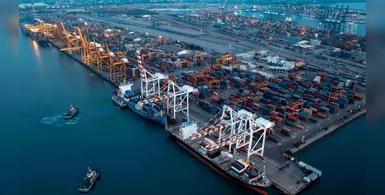
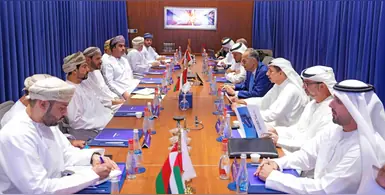
His Highness Sheikh Theyab bin Mohamed bin Zayed Al Nahyan, Member of the Executive Council and Chairman of Etihad Rail, has witnessed the signing of a preliminary agreement to establish a new bonded rail corridor between Khalifa Port in Abu Dhabi and Fujairah Terminals.

The agreement, signed by Etihad Rail, Abu Dhabi Customs, Fujairah Customs, Abu Dhabi Ports Group, Fujairah Terminals, and Noatum Logistics, was announced during the second edition of Global Rail 2025. The initiative is set to enhance the efficiency, safety, and integration of rail transport across the UAE.

Sheikh Theyab welcomed the project as a milestone in strengthening the nation’s logistics and trade infrastructure. He said the corridor would reinforce the UAE’s position as a global trade gateway, while also supporting the country’s Net Zero 2050 commitments.

The bonded rail corridor will enable seamless goods movement between Khalifa Port, Fujairah Terminals, and their adjacent free zones. By streamlining customs procedures, the initiative will reduce clearance times, ensure smoother entry and exit processes, and complete final formalities at the destination.

Looking ahead

Through the collaboration, Etihad Rail aims to provide secure, safe, and sustainable cargo transport via the national rail network. Goods shipped through the corridor will also benefit from priority clearance, giving customers a competitive advantage for transit shipments, exports, and domestic trade between Abu Dhabi and Fujairah.

Pilot operations are scheduled to begin in the fourth quarter of 2025. Ahead of the launch, Etihad Rail and its partners are working with authorities and customers to formalise cooperation frameworks, roll out services, and establish performance monitoring mechanisms to guarantee efficiency and quality.

Looking ahead, the corridor will be expanded to additional stations across the network, with new services and technologies introduced to deliver further efficiencies. The project aligns with the UAE’s strategy to modernise customs procedures, improve transport safety, and advance sustainability goals, cementing the country’s role as a hub for regional and global trade.


More Articles …