Rockwell Automation has released the Middle East results of its 11th annual State of Smart Manufacturing Report, revealing that manufacturers across the region are leading global efforts to implement digital transformation initiatives and advanced industrial technologies
The report draws on research conducted with manufacturing executives worldwide, including a representative sample from the Middle East. Findings indicate that manufacturers in the region are moving beyond planning and experimentation, with a growing focus on deploying digital technologies at scale to improve operational performance.
According to the study, the Middle East has emerged as the world's most committed region when it comes to digital transformation. Nearly all respondents, 98%, consider digital transformation essential to their business, placing the region ahead of Europe, the United States and the global average. This commitment is reflected in spending priorities, with manufacturers dedicating close to 30% of their operating budgets to industrial technology investments.
“Manufacturers in the Middle East are not just adopting digital technologies, they are scaling them at pace,” said Ediz Eren, regional vice-president, Middle East, Africa and Türkiye, Rockwell Automation.
“What sets the region apart is the combination of strong investment, clear strategic intent and a willingness to embed advanced technologies directly into operational environments.”
AI drives industrial transformation
Artificial intelligence continues to play a central role in the region’s manufacturing evolution. The report shows that AI adoption has reached near-universal levels, with almost every manufacturer either already using AI technologies or planning to do so. Generative AI has also gained widespread acceptance, becoming integrated across industrial operations throughout the region.
Rather than being limited to experimental applications, AI is increasingly being incorporated into operational technology environments. Manufacturers are using it to enhance quality management, strengthen cybersecurity measures and optimise production processes.
The study found that organisations are prioritising technologies capable of delivering measurable business outcomes. AI and machine learning were identified as the technologies generating the highest return on investment, reinforcing the region’s focus on practical and performance-driven digital transformation strategies.
Workforce and cyber security remain priorities
As digital adoption accelerates, manufacturers are facing new organisational challenges. Workforce readiness has become a major concern, with change management emerging as the leading challenge as companies introduce advanced technologies throughout their operations.
To address these issues, manufacturers are expanding reskilling initiatives and increasing efforts to recruit employees with expertise in digital technologies and artificial intelligence. The report highlights a growing recognition that future manufacturing competitiveness will depend heavily on workforce capabilities.
Cybersecurity continues to rank among the highest priorities for industrial organisations. As operational environments become more connected, manufacturers are investing heavily in protecting digital systems while managing the risks associated with increased connectivity.
The report also highlights growing interest in simulation technologies such as digital twins. Adoption plans in the Middle East exceed those seen in other regions, with many organisations preparing to invest in these technologies over the coming year. Digital twins are increasingly being used to model production environments, test operational changes and improve efficiency before implementation.
Despite strong progress in digitalisation, the research indicates that many manufacturers still struggle to maximise the value of their operational data. While significant volumes of data are being collected, a substantial proportion remains underutilised, highlighting the need for stronger data-driven decision-making capabilities.
Overall, the findings suggest that manufacturers in the Middle East are pursuing a distinctive approach to digital transformation characterised by significant investment, widespread technology adoption and a strong emphasis on operational outcomes. The report concludes that the region is not only keeping pace with global manufacturing trends but is increasingly helping shape the future direction of industrial transformation.
The State of Smart Manufacturing Report captures perspectives from manufacturing leaders across a range of sectors, including automotive, life sciences, consumer goods and industrial manufacturing. The research examines how organisations are adopting technologies such as artificial intelligence, cybersecurity solutions, digital twins and workforce development strategies as they respond to growing operational complexity and competitive pressures.
Is the Middle East redefining smart manufacturing today?
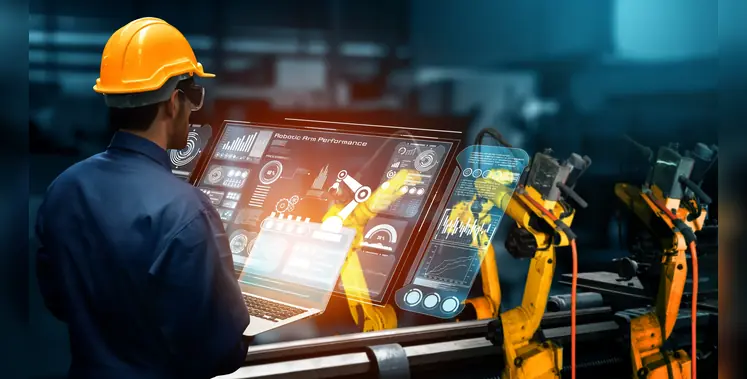
Middle East dominates industrial AI shift. (Image source: Adobe Stock)