Once overshadowed by hydrocarbons, the UAE’s manufacturing sector has now become a driving force for innovation, investment, and sustainable growth across the country. Without a doubt, manufacturing is poised to take centre stage in the country’s long-term aspirations for economic growth and resilience.
Various initiatives from the UAE’s visionary leaders all point towards continuously building, enhancing and reinforcing conditions that will further encourage investments and enable industrialisation to thrive and prosper.
Among them is Operation 300bn, the UAE’s national industrial strategy launched in 2021 which aims to more than double the industrial sector’s GDP contribution from AED133 billion in 2021 to AED 300 billion by 2031.
In addition, programmes, projects and initiatives by the Ministry of Industry and Advanced Technology (MoIAT) such as the National In-Country Value Program (ICV), ‘Make it in the Emirates’, the Technology Transformation Program (TTP), and the Industrial Technology Transformation Index (ITTI) have all been designed and geared towards pro-actively pushing forward the UAE’s manufacturing and industrial ambitions.
Clearly, the UAE is well on track on achieving its industrialisation objectives and its relentless pursuit of economic diversification have already produced remarkable results.
In the first quarter of 2025, non-oil GDP grew 5.3% , reaching AED 352 billion, according to the UAE's Ministry of Economy and Tourism (MOET). The ministry also identified manufacturing as the fastest growing economic activity, registering 7.7% growth in Q1 2025.
According to the latest report by Abu Dhabi Customs, Abu Dhabi's non-oil foreign trade grew by 34.7% in H1 2025, reflecting a thriving manufacturing industry and a key source of UAE exports.
Driven by visionary leadership
It is quite evident that the vision of the UAE’s leadership for the future of this great nation is fuelled by a determination to thrive, succeed and lead.
Not only are they aiming and enabling the manufacturing sector to grow, but they also implement a deliberate governmental policy and strategy that focuses on strengthening the adoption of advanced manufacturing, sustainability, and Industry 4.0 technologies including artificial intelligence, the Internet of Things (IoT), and 3D printing.
Over the years, the UAE's manufacturing sector has continuously demonstrated its resilience. In 2022, manufacturing GDP growth surpassed pre-pandemic levels by tallying 8.75% growth.
With Abu Dhabi leading the way with a growth of 9.7% , the emirate even further sharpened its focus on manufacturing with the launch of the Abu Dhabi Industrial Strategy (ADIS) in the same year. As a result, in the first half of 2025, Abu Dhabi's non-oil GDP grew 6.37% year-on-year, according to the Statistics Centre - Abu Dhabi
The attractiveness and pull for foreign investment into the UAE’s manufacturing sector have also remained strong. At the fourth edition of 'Make it in the Emirates', a 122,000-strong participation of delegates from across the world was a clear indication of the global attention to the sector’s growing appeal.
With US$11bn committed to advanced manufacturing over five years, the UAE is sending a clear message: it is open for industrial business, and it is serious about reducing its reliance on oil.
Innovation and sustainability at the core
Recognising the need to catch up with countries with larger and more advanced manufacturing sectors in a globalised market, the UAE is not just building factories – it's building smart factories.
Industry 4.0 technologies are being integrated into production lines, making UAE manufacturing globally competitive. Sustainability is also a priority, with circular economy models becoming standard practice.
Solar-powered facilities take advantage of the abundant sunshine, while water recycling systems ensure efficient use of water in a desert climate.
These are supported by the MoIAT's ITTI, which measures the digital maturity and sustainability practices of factories, provides a roadmap for their digital transformation and encourages the adoption of Industry 4.0 solutions and sustainability best practices.
Turning challenges into opportunities
While there are indeed challenges in the UAE’s journey towards economic diversification and industrialisation, the country’s leaders have cleverly manoeuvred around them and have instead focused on capitalising on the opportunities presented by these challenges. An uneven manufacturing growth among the emirates is being addressed by the federal government through Operation 300bn, with a focus on equitable development.
Among its goals is to create 13,500 new industrial facilities and 25,000 specialised jobs, many of which are being directed toward less industrialised regions.
For instance, MoIAT is working to ensure that Northern Emirates like Ras Al Khaimah, Fujairah and Umm Al Quwain benefit from industrial expansion through tailored support and infrastructure upgrades.
Additionally, the ICV program provides incentives for companies sourcing locally, further benefiting the economy. These initiatives create numerous opportunities for businesses and individuals to widen their reach in the burgeoning manufacturing sector.
In line with the rapid adoption of Industry 4.0 technologies, the UAE is also strengthening partnerships among industry, academia and various vocational training programmes, in collaboration with global tech companies, to help bridge any skills gap and ensure a seamless transfer of the latest technological knowledge to the UAE workforce.
Today, the UAE’s manufacturing sector stands at a pivotal juncture. With the UAE's emphasis on attracting investments and prioritising inclusivity, innovation, and sustainability, the country is laying the foundation for long-term industrial leadership.
Alongside policy support, the UAE's strategic location and rapidly improving infrastructure position it as a rising global manufacturing hub.
Manufacturing is no longer just a supporting act in the UAE’s economic story. It’s now a lead character that plays a vital role in shaping a resilient, innovative, and sustainable future for the country.
By Noritsugu Mifune, CEO, Al Gharbia Pipe Company
Op-ed: Manufacturing takes centre stage in the UAE
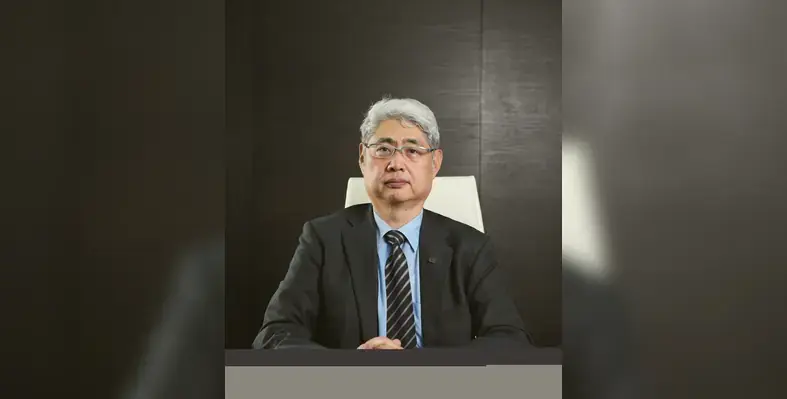
Noritsugu Mifune, CEO, Al Gharbia Pipe Company. (Image source: Al Gharbia Pipe Company)