Safeguarding critical infrastructure has never been more vital for the global energy sector.
From onshore processing plants to isolated offshore rigs and renewable energy installations, operators face immense pressure to maintain safe, resilient operations. A core component of this resilience is operational visibility. Achieving comprehensive oversight in harsh, hazardous, and constantly evolving environments, however, presents significant technological hurdles.
Energy facilities are notoriously complex. Operators must navigate the challenges of securing reliable imagery in low-light conditions, identifying safety breaches without relying on continuous manual observation, and extending surveillance to locations where new data cabling is financially prohibitive. Addressing these pain points requires a shift towards intelligent, easily deployable technology.
Overcoming visibility hurdles with adaptive infrared
A primary difficulty in industrial surveillance is capturing clear footage at night. Industrial scenes are filled with reflective pipework, metallic surfaces, and equipment positioned at varying distances. Traditional fixed infrared (IR) illumination frequently struggles in these settings, overexposing nearby objects and creating glare whilst leaving crucial background details obscured in darkness.
Modern surveillance systems overcome this through adaptive IR technology. By automatically adjusting illumination in response to specific scene conditions, subject distance, and surface reflectivity, these systems deliver consistent imagery. This is crucial for offshore facilities. Clearer visual evidence facilitates reliable remote verification, allowing teams to assess a situation and determine whether a physical intervention is necessary before committing resources to a site visit.
Enhancing site safety through edge-based analytics
The days of relying solely on personnel to monitor screens are fading. Edge analytics are transforming cameras from passive recorders into proactive safety tools. By processing video data directly at its source, these intelligent cameras reduce bandwidth demand and alleviate the load on central servers.
More importantly, edge analytics automatically identify specific events and generate instant alerts. Key capabilities include:
Personal protective equipment (PPE) detection, ensuring staff are wearing hard hats, goggles, gloves, and high-visibility clothing.
Intrusion and perimeter breach detection in restricted zones.
Identification of abandoned objects or the unauthorised removal of critical assets.
Wrong-direction monitoring to control traffic flow.
Automated counting of people and vehicles to monitor site occupancy.
Configured for specific zones, PPE detection alerts operators when a safety protocol is breached. This reduces reliance on manual monitoring, generates data for rapid safety reviews, and provides visual evidence to complement established site procedures.
Leveraging private 5G for flexible deployment
As energy facilities evolve and temporary work areas are established, surveillance coverage must adapt. Historically, expanding a network meant installing costly fixed data cabling. Today, integrating private 5G connectivity into surveillance networks provides operators with unprecedented flexibility.
Cameras equipped with 5G can be deployed rapidly, offering a practical solution for difficult-to-cable locations. This ensures comprehensive coverage as site requirements change and allows operators to maximise returns on existing private 5G network investments.
Showcasing surveillance innovations at ADIPEC 2026
These critical advancements in operational visibility are taking centre stage at ADIPEC 2026, where Synectics is demonstrating its latest COEX camera innovations. With over four decades of engineering expertise for harsh environments, Synectics is highlighting how targeted technology investments strengthen resilience across the energy sector.
Darren Alder, Head of Global Energy at Synectics, comments: “More resilient energy operations start with a clearer picture. Operators need reliable information about what is happening across their facilities, including locations where monitoring has been difficult or costly to establish.”
He further notes the practical implications of these upgrades: “That means improving image quality, drawing attention to potential safety issues and making cameras easier to deploy where they are needed. Improvements in these areas help teams make informed decisions sooner and reduce manual effort. At ADIPEC, we’ll show operators what that looks like in practice and how to get more value from their surveillance and network investment.”
Industry professionals can view these COEX developments first-hand by visiting Synectics at ADIPEC from 2-5 November 2026 in Abu Dhabi on Stand 8438.
Advancing energy sector resilience with smart surveillance
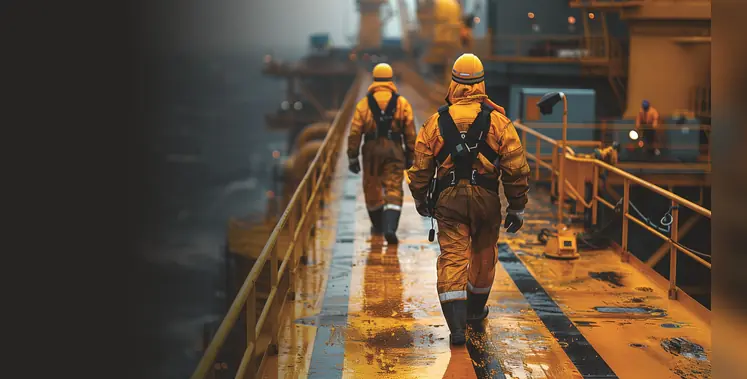
Critical advancements in operational visibility are taking centre stage at ADIPEC 2026.