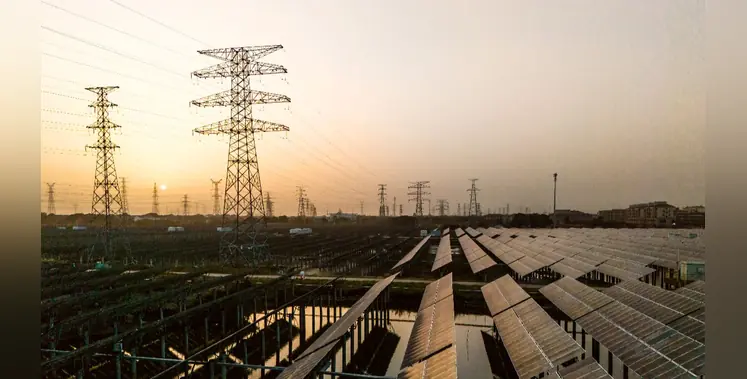
Global renewable energy capacity reached a record 5,149 GW in 2025, driven by unprecedented annual additions of 692 GW, according to the latest report from International Renewable Energy Agency.
The Renewable Capacity Statistics 2026 report highlights a 15.5% year-on-year increase, with renewables accounting for 85.6% of all new power capacity installed worldwide. The findings underline a continued shift away from fossil fuel-based generation, particularly as geopolitical tensions heighten concerns around energy security and price volatility.
Rising instability in key regions, including the Middle East, has placed energy resilience firmly on the global agenda. IRENA noted that renewable energy sources, being locally generated and cost-effective, offer a strategic advantage by reducing reliance on imported fuels and exposure to global market fluctuations.
Francesco La Camera, director-general of IRENA, said the sustained growth of renewables demonstrates both market momentum and their role in strengthening energy systems. He emphasised that decentralised energy models, supported by diverse renewable sources, are better equipped to withstand economic and geopolitical shocks.
Solar power continued to dominate capacity additions, contributing 511 GW in 2025, or around three-quarters of the total increase. Wind energy followed with 159 GW, meaning the two technologies together accounted for nearly 97% of all new renewable installations. Their dominance reflects continued cost reductions and scalability compared to other technologies.
Bioenergy saw modest growth, expanding by 3.4 GW, while hydropower added 18.4 GW, largely driven by developments in China. Other renewable sources, including geothermal and off-grid systems, recorded smaller but steady increases, highlighting the diversification of clean energy solutions.
Regional disparities, however, remain a key challenge. Asia led global growth, contributing more than 74% of new renewable capacity, with total additions exceeding 513 GW. The region also holds the largest installed base at 2,891 GW, reinforcing its position as the global leader in renewable deployment.
Africa recorded its strongest annual increase, with capacity rising by 15.9%, supported by projects in countries such as Ethiopia, South Africa and Egypt. The Middle East also posted significant growth of 28.9%, led by Saudi Arabia, reflecting accelerating investment in clean energy infrastructure.
In contrast, regions such as Central America and the Caribbean continue to lag, with total capacity remaining comparatively low. IRENA warned that such imbalances could leave certain economies more vulnerable to energy supply disruptions and price shocks, underscoring the need for broader adoption of renewables.
The report concludes that while progress is accelerating, achieving global climate and energy security goals will require more balanced growth across regions and sustained investment in renewable technologies.
Global renewable capacity surges to record 5,149GW