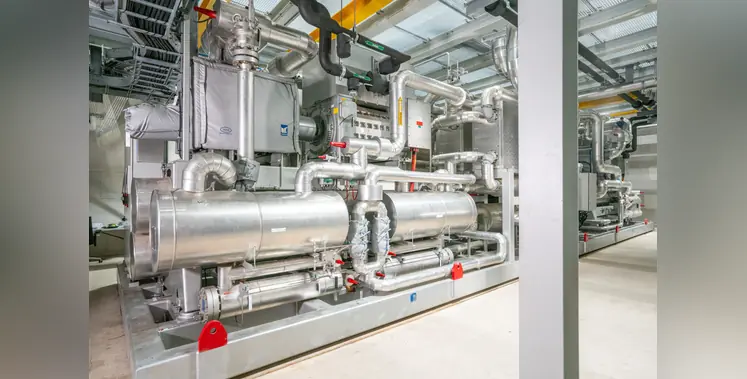
Industrial heat pumps are emerging as a cornerstone of the global energy transition, offering manufacturers and utilities a highly efficient alternative to fossil fuel-based heating systems as pressure mounts to cut carbon emissions and improve energy security.
More than 70% of industrial process heat worldwide is still generated using fossil fuels, making industrial heating one of the largest contributors to global energy consumption and greenhouse gas emissions. However, the growing adoption of electrified heat technologies is beginning to reshape the sector.
Industrial heat pumps can upgrade ambient and waste heat into usable temperatures of up to 150°C, enabling factories and district heating networks to reduce reliance on conventional gas and coal-fired systems. Because heat pumps generate several times more thermal energy than the electricity they consume, they are considered among the most efficient technologies for industrial decarbonisation.
When powered by renewable electricity, the systems can virtually eliminate CO2 emissions linked to industrial heating operations.
German drive technology specialist Innomotics is expanding its role in the sector by supplying high- and low-voltage motors alongside medium-voltage drives for industrial heat pump compressors. The company says its systems are engineered for continuous operation of up to five years without scheduled shutdowns, while delivering system availability rates of up to 99.9%
The technology is already being deployed in several landmark European energy projects.
In the Netherlands, a major district heating scheme operated by Eneco uses heat recovered from 65 million litres of treated wastewater daily to provide sustainable heating to approximately 20,000 households in Utrecht and Nieuwegein. The system generates 27 MW of thermal energy, covers around 15% of Utrecht’s heating demand and cuts annual CO2 emissions by roughly 30,000 tonnes.
Meanwhile, at BASF’s Ludwigshafen site in Germany, Innomotics is supplying key drive technology for what is described as the world’s most powerful industrial heat pump. The installation is expected to generate up to 500,000 tonnes of steam annually, helping reduce industrial emissions while supporting large-scale electrification of manufacturing processes.
Further projects include wastewater-powered district heating in Amiens, France, where nearly 26,800 households are supplied with renewable heat, and an industrial paper mill installation in Finland designed to recover and reuse process heat to improve operational efficiency.
Michael Reichle, chief executive officer of Innomotics, said industrial heat pumps were becoming “a key technology for the energy transition”, enabling industries to lower emissions while maintaining cost-effective and reliable operations.
Industrial heat pumps drive Europe’s low-carbon future