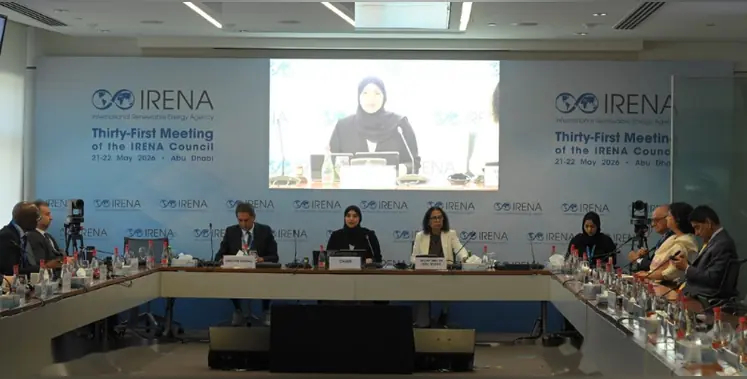
More than 300 government representatives gathered in Abu Dhabi and online for the 31st Council meeting of the International Renewable Energy Agency (IRENA), where discussions centred on energy security, renewable energy deployment and the growing influence of artificial intelligence and digitalisation on the global energy transition.
Held over two days in a hybrid format, the meeting reviewed progress on the agency’s ongoing programmes and explored priorities for the next stage of renewable energy development worldwide. Delegates also examined how electrification and emerging technologies could help accelerate the transition to cleaner energy systems.
Francesco La Camera said the global energy landscape was undergoing rapid change, affecting economies and communities across the world.
“Changes in today’s global energy landscape are affecting not only the energy sector, but entire economies, particularly in the world’s most vulnerable communities,” he said. “This Council convenes at a critical moment as IRENA’s Membership discusses priorities for the next phase of the transition, from energy security and resilience to electrification of end-use sectors and the growth of digital economies.”
The meeting also highlighted the increasing connection between renewable energy, economic stability and food security.
Serving as chair of the 31st IRENA Council, Amna bint Abdullah Al Dahak stressed the importance of strengthening renewable energy systems amid global uncertainty.
“The current global landscape clearly demonstrates that energy security, economic stability, and food security are inextricably linked,” she said. “Now, more than ever, the world must double down on renewables.”
She added that IRENA’s role remained critical in helping countries navigate the changing energy environment while supporting long-term sustainability and resilience goals.
Delegates also reviewed the implementation of IRENA’s 2026-2027 work programme and budget, while beginning discussions on the agency’s medium-term strategy for 2028-2032.
The council meeting comes as governments worldwide continue increasing investments in renewable energy infrastructure, low-carbon technologies and grid modernisation to strengthen energy resilience and reduce emissions.
IRENA council focuses on energy security and AI