Across West Africa, abundant sunshine has long contrasted sharply with unreliable electricity grids and steep fuel costs.
Now, a major new capital injection aims to narrow that gap. Dubai-headquartered investment group Mars Capital AE has pledged US$150mn towards green energy and solar technology projects across the region, deploying the funds through its renewable energy company, LumiVolt Energies.
The commitment lands at a pivotal moment for Africa's renewable energy transition. Rising energy consumption, climate change, global warming and strain on natural resources have turned clean power into an environmental and economic necessity. Despite vast solar potential, millions of people and businesses across the continent still face inadequate infrastructure and high energy costs. Mars Capital AE views this shift not just as an environmental duty, but as a major economic development opportunity.
Bridging West Africa's clean energy gap
Through LumiVolt Energies, the UAE-based group plans to roll out scalable solar technologies and renewable power infrastructure that curb reliance on conventional fossil fuels. The broader objective is to boost energy efficiency, strengthen local industries and promote lasting environmental sustainability across emerging African markets.
Mr Mohammed Adil Shaikh, Chief Executive Officer of Mars Capital AE, framed the initiative around practical impact rather than financial return alone. He said: "We are not looking at renewable energy merely as an investment opportunity. We see it as an opportunity to create a meaningful difference in people's lives." He added: "Africa has extraordinary potential in solar energy, yet many communities, businesses and farmers continue to struggle with access to reliable and affordable power. We believe technology can bridge this gap."
Transforming agriculture with solar-powered irrigation
A substantial share of the USD 150 million pledge is earmarked for modernising agricultural infrastructure. Farming remains a cornerstone of West Africa's economy, underpinning millions of livelihoods and regional food security. Yet growers routinely battle unpredictable rainfall, patchy grid access, costly diesel-powered water pumps and a shortage of affordable irrigation systems.
LumiVolt Energies plans to tackle these bottlenecks with a suite of solar-powered agricultural technologies:
Solar irrigation systems: Infrastructure that lets farmers water crops without depending wholly on grid electricity or expensive fuel-powered generators.
Solar water pumps: Energy-efficient units engineered to extract and distribute groundwater for farming.
Smart agricultural technology: Monitoring and automation tools designed to sharpen irrigation efficiency and optimise water consumption.
Off-grid solar solutions: Independent power systems tailored for farms and agricultural communities in areas with limited electricity infrastructure.
Sustainable water management: Technologies built to improve water distribution, cut energy use and support responsible agricultural practices.
Cutting out heavy diesel overheads can help growers raise agricultural output and run more economically sustainable farms. Dependable irrigation also lessens reliance on seasonal rainfall, improving crop resilience and bolstering regional food security.
Mr Shaikh noted: "One of our key priorities through LumiVolt Energies will be to bring solar-powered irrigation systems and water pumping technologies to the agricultural sector. Farmers should not have to depend entirely on expensive diesel generators or unreliable electricity to irrigate their fields." He continued: "By making solar-powered water solutions more accessible, we can help reduce farming costs, improve productivity, strengthen food security and create more resilient agricultural communities."
Building a wider renewable energy ecosystem
The investment programme reaches beyond installing solar panels. Mars Capital AE aims to foster a broader renewable energy ecosystem across West Africa, encouraging clean power uptake among agricultural businesses, commercial enterprises, industrial operators and rural communities. Central to this approach are local partnerships, technical knowledge transfer and employment generation, ensuring solutions are commercially viable, environmentally responsible and accessible to those who need them most.
To build a lasting regional presence, LumiVolt Energies intends to explore collaborations with local governments, agricultural organisations, private-sector businesses, infrastructure developers and international technology partners. The group sees public-private partnerships and international investment as essential to accelerating renewable energy adoption.
Mr Shaikh concluded: "We strongly believe that Africa should not simply participate in the global green energy transition; it should become one of its major growth engines." He added: "This USD 150 million commitment is a reflection of our confidence in Africa, its people and its future."
Solar power and green energy in West Africa get US$150mn boost
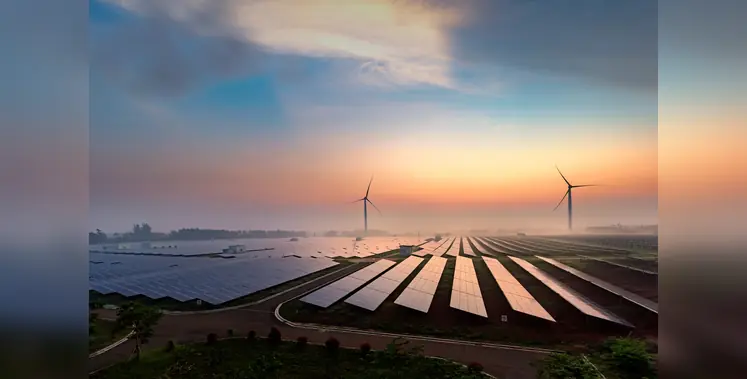
Dubai-headquartered investment group Mars Capital AE has pledged US$150mn towards green energy and solar technology projects across the region, deploying the funds through its renewable energy company, LumiVolt Energies.