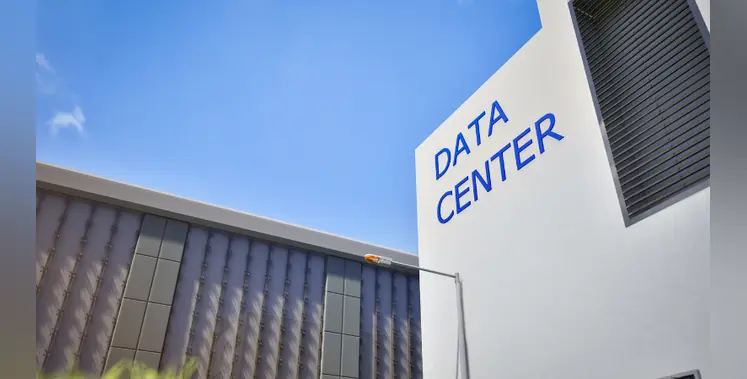
Recent geopolitical developments in the Middle East have brought data centres under scrutiny, as a number of facilities were targeted in strikes over the past few days.
Analysts at DC Byte have assessed how the sector may be affected in the coming weeks and months, emphasising that immediate impacts are expected to remain limited.
The region remains a strategically important digital infrastructure market. Gulf states including the UAE, Saudi Arabia and Qatar continue to attract significant investment from cloud providers and hyperscalers, driven by demand for low latency, local data storage and digital transformation initiatives.
Most large-scale data centres in the Middle East are built with resilience in mind. Hyperscale facilities are designed with redundant power, cooling and network systems, controlled perimeters and environmental protections.
Workloads are often distributed across multiple availability zones and regions, allowing operations to continue even if one facility experiences disruption. Analysts note that such resilience has minimised service interruptions in recent weeks.
Nevertheless, the conflict has highlighted the need for ongoing risk assessment. Operators may increasingly consider proximity to potential strategic targets, military infrastructure and airspace coverage when planning new sites.
Emphasis on distributed infrastructure design, cross-country failover and hybrid cloud architectures is expected to grow, though major shifts in resilience strategy are unlikely.
Connectivity remains a key consideration. Network routing constraints can temporarily increase latency during high-traffic periods, prompting stakeholders to prioritise diversified cable routes and network redundancy alongside facility robustness.
Cybersecurity is another focus area, with modern conflicts often incorporating cyberattacks. Operators may now accelerate integration between cyber defence, physical security and operational monitoring to minimise potential disruption.
Supply chains are facing short-to-medium term challenges, with shipping delays and higher costs, particularly through the Strait of Hormuz. Scott Roots, Sales Director EMEA at DC Byte, warns that resource scarcity and alternative routing may affect project timelines and costs.
Despite these pressures, the GCC data centre market remains confident. The region currently has around 2.4GW of qualified capacity, with over 2GW in early stages, and investors have not paused development.
DC Byte CEO Bernard Johnson concludes that the sector’s exposure is largely to operational and planning risks, rather than a fundamental vulnerability, with affected sites representing only 1–2% of the regional market.
Middle East data centres face uncertainties amid rising tensions