Without water and power, the machinery of modern civilisation halts. As global conditions grow increasingly volatile, safeguarding these essential utilities demands proactive, intelligent adaptation
Addressing this imperative, the Abu Dhabi Department of Energy hosted the third Water and Energy Majlis on 5 June 2026, operating under the theme 'From National Readiness to Smart Resilience'.
Serving as a precursor to the Abu Dhabi Water & Power Week, the summit marked the official launch of the pioneering Abu Dhabi Water and Energy Resilience Framework. Constructed upon three pillars—infrastructure, human capital and governance, and technology and innovation—the strategy outlines 15 core measures. These protocols aim to guarantee supply security, enhance emergency preparedness, diversify resources, and deploy centralised assets to meet fluctuating demands.
The majlis attracted ministers and corporate leaders from over thirty countries to discuss hardening utility networks against future shocks. Delegates explored avenues for enhanced disaster readiness, digital crisis response, and building a cooperative regional roadmap based on the United Arab Emirates’ expertise.
During a paramount dialogue, H.E. Dr. Abdulla Humaid Al Jarwan, chairman of the Abu Dhabi Department of Energy, highlighted the pressing need for integrated regional systems and a shared regulatory foundation. Emphasising this immense responsibility, he stated:
“The water and energy sectors are vital pillars of the national security system, and safeguarding them is the responsibility of every official and decision-maker. What we have witnessed recently has been a practical demonstration of the efficiency and resilience of our infrastructure and a test of our ability to protect our national resources. The efforts we are advancing today reflect Abu Dhabi’s ambitions and the vision of its wise leadership to ensure the prosperity of our communities, protect the future of our children, enable economic growth, and safeguard the stability of our nations.”
His Excellency added: “today, we stand at a pivotal moment for the water and energy sectors. We have come together to help shape their future by strengthening partnerships, aligning efforts, and expanding cooperation at both the national and regional levels. More than ever, we must work towards shared goals, guided by a common vision and clear priorities, to safeguard our collective resources and build a resilient, interconnected framework that strengthens systems, supports collaboration, and enhances our ability to respond effectively to any crisis.”
Providing a crucial perspective on environmental stewardship, H.E. Dr. Amna bint Abdullah Al Dahak, the UAE Minister of Climate Change and Environment, engaged in the high-level talks. She stated:
“In the UAE, we view water, energy, and food security as an interconnected resilience system. Our national strategies integrate these sectors into a single developmental pathway, aligned with our ambitious target to achieve net-zero emissions by 2050. Within this framework, we are enhancing local food production by deploying climate-smart agricultural technologies that maximise water and energy efficiency while minimising our carbon footprint. We are equally committed to transforming the entire food value chain to be more efficient and sustainable.
“To secure our water future, we are pursuing the ambitious goals of the UAE Water Security Strategy 2036. This includes optimising water and energy demand through sustainable desalination, particularly through the widespread adoption of advanced reverse osmosis systems. On the global stage, the UAE is fostering international cooperation to address water scarcity, as demonstrated by the launch of the Mohamed bin Zayed Water Initiative (MBZI). This December we will convene global players to the UN Water Conference in Abu Dhabi, which we are hosting in partnership with Senegal. We aim to transform global water challenges into collaborative opportunities, treating water as a shared global resource.”
Her Excellency added: “Our resilience model extends beyond infrastructure; its strategic core is rooted in the community. Empowering individuals as active partners is essential to fostering a conscious, responsible approach to environmental challenges. In parallel, we are accelerating our transition towards a circular economy driven by innovation. By powering water production with clean energy, optimising its use in agriculture, and scaling up water recycling, we are building a sustainable development model that protects our environment, strengthens national resilience, and ensures prosperity for generations to come.”
Further enriching the discussion, H.E. Dr. Abdulla Ahmed Al Mandous, president of the World Meteorological Organization and director general of the National Center of Meteorology, asserted that securing resources is fundamentally tied to precise atmospheric tracking. He explained how the UAE’s early warning systems, bolstered by global data exchange and radar integration, shield critical infrastructure from severe weather. Furthermore, he detailed the incorporation of artificial intelligence into forecasting models and the deployment of cloud-seeding techniques to augment water reserves.
The summit concluded with a commitment to establish specialised task forces. By maintaining strategic collaboration, Abu Dhabi and its regional partners are actively securing operational dependability and supply stability for the future.
Abu Dhabi launches new water and energy resilience framework
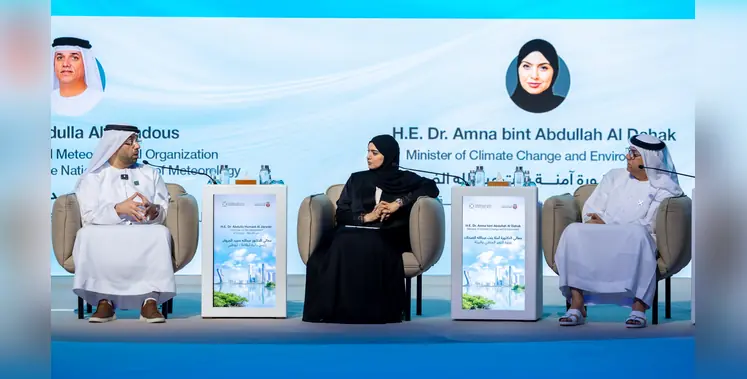
Abu Dhabi Department of Energy hosted the third Water and Energy Majlis on 5 June 2026.