The Jordanian Cabinet, during a high-level session chaired by Prime Minister Jafar Hassan on Monday, officially approved a crucial financing agreement with the French Development Agency (AFD).
This strategic partnership is designed to help finance the ambitious National Water Carrier Project, featuring an initial financial contribution of US$97mn. This monetary injection comes as the government actively moves to complete the mega-project’s financial closure and begin implementation. According to a formal Prime Ministry statement, this approval marks another monumental step towards advancing the Kingdom’s largest water infrastructure project, which is expected to cost approximately US$5.8bn in total.
The foundational groundwork for this colossal undertaking was solidified earlier in the year. The government signed the project’s final technical and legal agreement in April, successfully paving the way for the completion of financing arrangements and the start of construction works. The National Water Carrier Project is considered the very first project of its immense scale in Jordan’s history. It operates as a structured Public-Private Partnership, driven by a special purpose vehicle known as the National Carrier Project Company. This consortium is spearheaded by major international stakeholders, with Meridiam holding a 90 per cent stake and Suez holding the remaining 10 per cent.
Engineering the Future of Water Supply
From an engineering perspective, the sheer scale of the operation is absolutely unprecedented for the nation. The core infrastructure will involve the large-scale desalination of 300 million cubic metres of seawater annually, drawn directly from the Red Sea near Aqaba. Transporting this vital volume of water requires a remarkable feat of engineering. The comprehensive plans detail the construction of robust pumping systems capable of transporting water to staggering elevations of up to 1,100 metres above sea level. This is supported by a pipeline network extending approximately 450 kilometres to deliver potable water directly to Amman and surrounding areas.
Crucially, the project will rely heavily on renewable energy and advanced environmentally friendly technologies to actively offset the immense power demands typically associated with desalination. Upon its completion, the network is expected to reliably meet around 40 per cent of Jordan’s total drinking water needs. This represents a major, transformational boost to the country’s long-term water security efforts, helping to alleviate extreme stress on over-extracted groundwater resources in one of the world’s most highly water-scarce regions.
Modernising the Natural Resources Sector
Beyond the focus on national water security, the Cabinet session also yielded significant legislative developments. The Cabinet approved the validating reasons for the 2026 amendments to the Natural Resources Law, which will now be referred to the Legislation and Opinion Bureau for rigorous review and the completion of legal procedures. The proposed amendments are part of intensive efforts to modernise domestic investment legislation and create a significantly more attractive environment for investors within the natural resources sector, the Prime Ministry statement detailed.
These strategic legal updates are perfectly aligned with Jordan’s overarching Economic Modernisation Vision, an ambitious national blueprint which explicitly identifies mining as a key driver of “high-value industries.” The statement confirmed that the newly drafted legislation was developed following extensive consultations with public and private sector partners, aiming to bring Jordan’s regulatory framework perfectly in line with the best international practices. Under the draft law, the Ministry of Energy and Mineral Resources would continue to seamlessly oversee policy development for the sector.
To further stimulate economic growth, the amendments are carefully designed to encourage robust investment in petroleum, natural gas, oil shale, and critical minerals. This will be achieved by allowing investors the flexibility to enter into production-sharing agreements or mining agreements immediately once the economic feasibility of their projects has been established, according to the statement. The proposed changes would also expand investment incentives, including specific exemptions aimed at encouraging exploration activities, while drastically simplifying procedures for allocating land for natural resource projects. Finally, the legislation proposes the establishment of an exploration and community development support fund. This initiative would powerfully support mineral exploration projects across Jordan, help update essential geological and petroleum data maintained by the ministry, and directly contribute to local communities graciously hosting mining, petroleum, and oil shale operations.
US$97mn financing secured for Jordan’s Mega Water Project
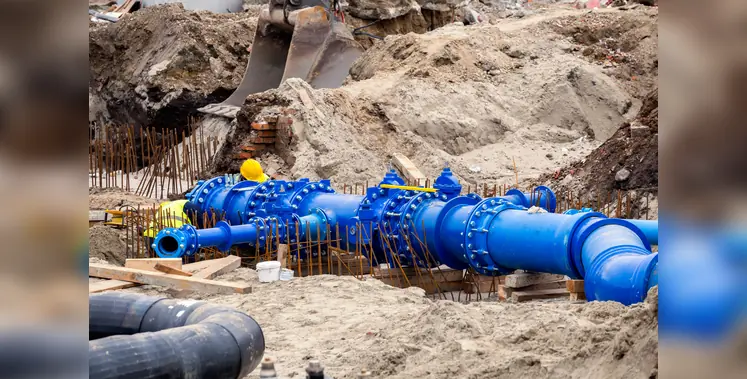
The Jordanian Cabinet, during a high-level session chaired by Prime Minister Jafar Hassan on Monday, officially approved a crucial financing agreement with the French Development Agency (AFD).