Modern infrastructure development is undergoing a profound transformation.
It is no longer sufficient merely to transition away from fossil fuels; the new mandate requires that renewable energy projects themselves harmonise seamlessly with the natural world. In the United Arab Emirates, this holistic philosophy is rapidly becoming the cornerstone of urban planning and utility generation. By intertwining large-scale power production with stringent ecological preservation, the region is pioneering a blueprint for sustainable mega-cities that respect their surrounding ecosystems.
At the forefront of this green revolution is the Dubai Electricity and Water Authority (DEWA), which has recently reaffirmed its commitment to aligning its extensive portfolio of clean energy projects with comprehensive environmental stewardship. This strategy ensures that resource conservation, emissions reduction, and biodiversity enhancement remain central to the Emirate’s infrastructure masterplan. In doing so, it firmly supports Dubai's standing as a global model for smart, sustainable urban environments.
The driving force behind this dual-focus strategy is deeply rooted in national policy and leadership. Speaking on the authority's strategic direction, a spokesperson stated: “At DEWA, we draw our inspiration for environmental protection and sustainability enhancement from the directives of our wise leadership, whose vision has established the UAE as a global model in climate action, sustainable development and the preservation of natural resources for future generations.”
To execute this vision, the organisation is aggressively pursuing rigorous long-term targets, refusing to compromise on environmental integrity. As noted in their recent public statement: “We are advancing the objectives of the Dubai Clean Energy Strategy 2050 and the Dubai Net Zero Carbon Emissions Strategy 2050 by delivering transformative energy projects that support Dubai's goal of providing 100% of its total power production capacity from clean sources by 2050.”
Scaling Solar and Hydroelectric Infrastructure
Embedding sustainability across all project phases—from initial design and careful planning to active construction and daily operation—is a foundational requirement for these mega-projects. To maintain these standards, the authority relies heavily on environmental monitoring programmes that regularly assess air, water, and soil quality, alongside ambient noise levels. This continuous feedback loop ensures rapid corrective actions and drives continuous improvement.
A prime example of this methodology is the Mohammed bin Rashid Al Maktoum Solar Park, the largest single-site solar park globally, operating under an independent power producer model. Key figures regarding this landmark project include:
- Current Capacity: The facility currently operates with a massive energy capacity of 3,860 megawatts (MW).
- Future Expansion: The park is expected to exceed 8,000 MW by 2030, significantly surpassing its initial target of 5,000 MW.
- Energy Mix Impact: This expansive growth is projected to increase the share of clean energy within Dubai’s overall energy mix to 36%, up from the original goal of 25%.
Beyond solar technology, the organisation is breaking new ground in energy storage and grid resilience. The pumped-storage hydroelectric power plant situated in Hatta highlights how clean energy generation can be carefully balanced with the preservation of a region's natural topography. Key specifications of the Hatta project encompass:
- Regional First: It stands proudly as the GCC’s first pumped-storage hydroelectric initiative.
- Production and Storage: The facility features a production capacity of 250 MW alongside an impressive storage capacity of 1,500 megawatt-hours.
- Longevity: The plant is engineered with a projected operational lifespan of up to 80 years.
Summarising the ethos behind these physical assets, the official release affirmed: “Our projects reaffirm that developing future infrastructure is driven by a comprehensive vision that accounts for environmental protection, resource preservation and biodiversity enhancement, aligning with the UAE's sustainability legacy and Dubai's ambition to build a greener, more resilient and prosperous future,”
Fostering Biodiversity and Community Action
Crucially, this environmental commitment extends far beyond the construction of concrete and steel infrastructure. The organisation places a heavy emphasis on community-driven initiatives designed to protect terrestrial and marine habitats. Guided by strict circular economy principles, they prioritise rationalising resource use, promoting material recovery, and minimising waste generation.
Mangrove forests have become a central focus of these conservation efforts. Revered for their unique ability to absorb carbon emissions, provide vital wildlife habitats, and protect fragile coastlines, mangroves are indispensable to the local ecosystem. Working in tandem with environmental partners, extensive conservation drives have been launched. Recent biodiversity achievements include:
- Targeted Plantings: Between 2023 and 2026, a remarkable 14,650 mangrove trees were planted at the Jebel Ali Marine Sanctuary.
- Recent Campaigns: In 2026 alone, dedicated planting and beach-cleaning events engaged 254 volunteers who planted 700 mangroves, contributing 508 volunteer hours.
- Waste Removal: Over the same three-year period, robust beach clean-ups removed 3,546 kilograms of waste—predominantly plastics—with the assistance of 2,154 community volunteers.
By formally embedding priorities such as climate change mitigation, circular economy practices, and biodiversity protection into its core corporate governance framework, the authority ensures long-term accountability. This holistic strategy proves that the ambitious expansion of clean energy networks need not come at the expense of the natural world, paving a genuinely sustainable path forward for future generations.
Balancing clean energy ambitions with environmental stewardship
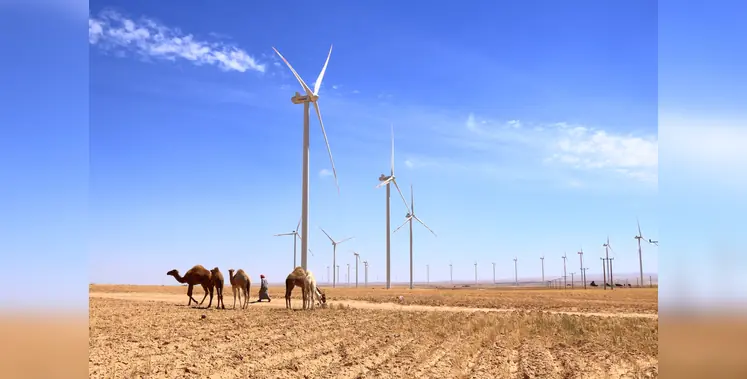
Dubai Electricity and Water Authority (DEWA) has recently reaffirmed its commitment to aligning its extensive portfolio of clean energy projects with comprehensive environmental stewardship.