Casablanca is accelerating its transition towards sustainable urban development with the announcement that engineering and contracting group BUTEC, in partnership with waste-to-energy specialist Kanadevia Inova, has secured a major engineering, procurement and construction (EPC) contract for the city's monumental waste-to-energy project.
This milestone initiative is set to fundamentally reshape waste management and energy generation across Greater Casablanca, addressing long-standing environmental challenges while supporting Morocco's ambitious nationwide decarbonisation objectives and renewable energy targets.
The project represents a vital leap forward in replacing traditional landfill disposal methods with advanced circular economy practices. By harnessing cutting-edge waste-to-energy technology, the initiative will efficiently process colossal volumes of non-recyclable municipal waste, converting an environmental liability into a reliable source of baseload electricity for local communities.
Project Scope and Key Infrastructure Details
Positioned northwest of the Mediouna landfill within the Casablanca-Settat region, the landmark facility involves extensive multi-sector engineering and infrastructural development. Key project figures, operational specifications, and contractual frameworks include:
Processing Capacity: Designed to handle approximately 1.5 million tonnes of non-recyclable municipal waste annually, ensuring comprehensive coverage for the entire metropolitan area.
Power Generation: Projected to generate roughly 126 megawatts (MW) of baseload electricity, alongside complementary renewable generation components designed to meet substantial local demand.
Population Served: Set to reliably supply power and modern waste treatment infrastructure for more than 4.2 million residents across Greater Casablanca and surrounding districts.
Concession Framework: Operating under a substantial 33.5-year concession agreement secured by the consortium, ensuring long-term operational stability and robust regulatory oversight.
Emissions Reduction: Expected to avoid significant greenhouse gas emissions through systematic methane capture, reduced landfill dependency, and future-proof design readiness.
Collaborative Expertise and Strategic Responsibilities
The success of such a complex, large-scale undertaking relies heavily on precise division of labour among world-class technical partners. Under the EPC framework, Switzerland-based Kanadevia Inova is responsible for delivering the specialised waste-to-energy technology and core process systems, in addition to supporting operations, long-term maintenance and financial backing.
Meanwhile, BUTEC's comprehensive scope encompasses all civil construction across the entire site, alongside managing the engineering, procurement and building of non-process structures, essential amenities and associated infrastructure. This heavy-duty remit includes civil, structural, architectural, mechanical, electrical, and plumbing (MEP) tasks, as well as extensive external site work.
Commenting on the landmark agreement, Raymond Daou, Senior Vice President of Strategy and Business Development at BUTEC, emphasised the strategic significance of the venture for the region:
“Building on our affiliates' long-standing presence in Morocco, where BUTEC has established itself as one of the country's leading players in Electromechanical Solutions, the Group is reinforcing, through this landons.”
Daou further highlighted the company's rising prominence within the global environmental engineering sector, noting:
“With three consecutive large-scale Waste-to-Energy projects across the geographies in which it operates, BUTEC is establishing itself as the generalist EPC contractor of choice in this strategic sector.”
Strengthening Morocco's Green Transition
The Casablanca initiative arrives at a crucial time as urban centres across North Africa grapple with escalating municipal waste volumes and the heavy environmental footprint of traditional open dumping. Mediouna landfill, which has served the region for decades, has long faced criticism regarding odours, contaminated groundwater risks, and unmanaged methane releases that accelerate global warming. By introducing advanced incineration, strict emissions controls, and modern leachate treatment, the new facility establishes an exemplary gold standard for urban sanitation and municipal waste recovery.
Furthermore, the project unites international expertise from Morocco, Switzerland, and Japan—collaborating seamlessly with entities such as Nareva and Itochu Corporation—reflecting the sophisticated, borderless nature of modern green infrastructure finance and execution. Power purchase agreements secured with state utility ONEE and regional services company SRM Casablanca-Settat further anchor the venture's financial security. As construction milestones approach, this transformative venture promises to deliver enduring environmental relief, cleaner energy generation, and a resilient framework for future urban growth across the Kingdom.
Casablanca secures major waste-to-energy EPC contract
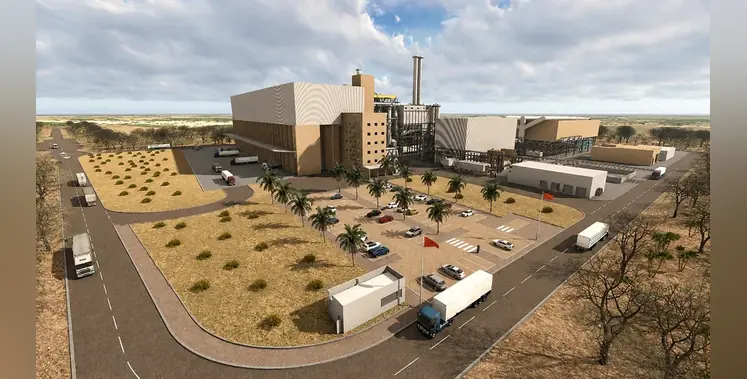
BUTEC and Kanadevia Inova secured a major EPC contract for Casablanca's new waste-to-energy project.