Hosting large displaced populations places an immense, long-term strain on municipal grids and public budgets, prompting local authorities to look towards renewable energy as a permanent solution.
In the Republic of Turkey, a new Solar Power Plant Project has officially been inaugurated in Kahramanmaraş Province, bringing 6 megawatts of clean generation capacity online to power refugee camps and temporary accommodation facilities. Built with the participation of the Kuwait Fund for Development through a US$4mn allocation, the facility directly addresses the energy demands of humanitarian shelters while easing the wider economic and environmental pressures faced by the local municipality.
Rather than relying on short-term emergency relief, regional response strategies to the Syrian crisis are increasingly anchoring their efforts in permanent, sustainable infrastructure. When municipalities absorb thousands of displaced residents, the basic costs of heating and cooling temporary shelters can quickly drain civic resources. By generating electricity directly from renewable sources in the Pazarcık district, the Kahramanmaraş facility lowers everyday municipal energy consumption and cuts carbon emissions. More importantly, it establishes a self-sustaining model that strengthens the resilience of host communities as they navigate ongoing social and economic challenges.
Key Specifications and Grant Allocation
Delivered through a partnership between the Kuwait Fund for Development and the Republic of Turkey—represented locally by the Kahramanmaraş Metropolitan Municipality—the initiative forms part of a broader financial package designed to upgrade both physical utilities and community infrastructure. The key operational and financial details include:
Project Location: Pazarcık district, Kahramanmaraş Province, Republic of Turkey.
Generation Capacity: A maximum output of 6 megawatts derived from renewable solar energy.
Solar Plant Funding: US$4mn allocated specifically for the construction of the solar power plant.
Total Grant Value: US$10mn extended by the Kuwait Fund to support the Turkey refugee and resilience plan in response to the Syrian crisis.
Core Energy Objectives: Meeting the heating and cooling requirements of camps and temporary accommodation facilities, lowering overall energy consumption, reducing carbon emissions, and promoting sustainable energy adoption.
Complementary Social Projects: Alongside the solar facility, the USD 10 million grant finances three community-focused developments: the Children’s Library and Arts Centre, the Guidance, Counselling and Career Planning Centre, and the Youth and Sports Centre.
Balancing Clean Utilities with Social Infrastructure
What makes the Kahramanmaraş programme particularly noteworthy for regional urban planning is how it pairs utility-scale renewable generation with civic amenities. While the 6-megawatt solar array tackles the immediate physical demand for climate control inside temporary accommodation facilities, the remaining US$6mn of the grant targets human development.
Investing in a Children’s Library and Arts Centre, a dedicated Guidance, Counselling and Career Planning Centre, and a Youth and Sports Centre ensures that the host municipality receives lasting educational and recreational assets. By improving the quality of public services available to residents, these combined initiatives work to raise living conditions and foster long-term stability across the affected areas.
Municipal Leadership and Diplomatic Backing
The official inauguration ceremony highlighted the role of international cooperation in delivering municipal infrastructure. Held under the patronage and in the presence of Mr. Fırat Gorgel, Mayor of Kahramanmaraş Metropolitan Municipality, the event was attended by a visiting delegation from the Kuwait Fund for Development alongside H.E. Ambassador Mohammed Marzouq Al-Shabou, Ambassador of the State of Kuwait to the Republic of Turkey.
Addressing attendees during the ceremony, Mr. Fırat Gorgel emphasised that the Kahramanmaraş Solar Power Plant represents a substantial addition to the city’s sustainable development efforts. The Mayor expressed his appreciation for the financial support provided by the Kuwait Fund for Development, noting that the funding was instrumental in bringing the vital project to fruition. He further observed that the initiative reflects the depth of friendship between the Republic of Turkey and the State of Kuwait, demonstrating the value of international partnerships in backing development projects that leave a lasting local impact.
Speaking at the event, Ambassador Al-Shabou stated that the facility embodies the commitment of the State of Kuwait, acting through the Kuwait Fund for Development, to supporting sustainable development projects that bolster the resilience of host communities in addressing local challenges and contribute to improving the overall quality of services provided to them.
A Long-Standing Mandate for Development Finance
The completion of the Pazarcık solar array aligns with a six-decade history of international development financing in the region. Established in 1961, the Kuwait Fund for Arab Economic Development was the first institution in the Middle East to take an active role in international development efforts. Operating through concessionary loans and targeted grants, the organisation finances essential infrastructure across developing countries, continuing its ongoing efforts to support stability and sustainable recovery in areas affected by the Syrian refugee crisis.
Clean energy powers refugee resilience in Turkey
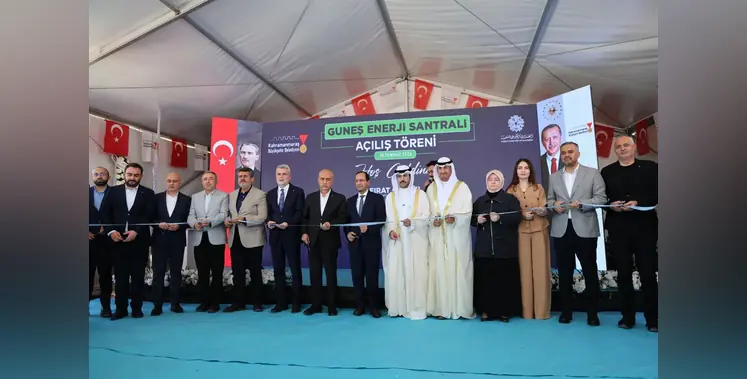
The project was inaugurated under the patronage and in the presence of Mr. Fırat Gorgel, Mayor of Kahramanmaraş Metropolitan Municipality.