As Egypt accelerates its transition towards a low-carbon economy, the nation’s renewable energy landscape has achieved a monumental milestone.
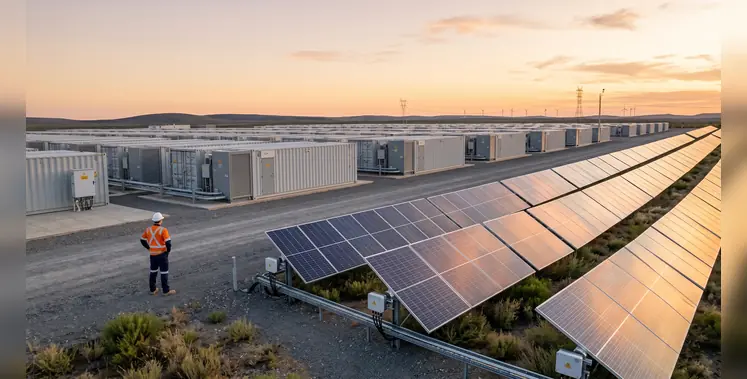
Infinity Power and HAU Energy have successfully secured a debt financing package of up to US$566mn. This capital is dedicated to the development of the Nefer Minya Solar PV Project, an endeavour poised to become the largest solar power plant in Egypt and the African continent.
The transition to green energy across North Africa is increasingly focused on ensuring electricity remains available long after the sun sets. The Nefer Minya development addresses this challenge directly. Located in Minya, the pioneering project pairs immense solar generation capabilities with cutting-edge battery technology to strengthen national energy security.
Unprecedented scale and storage capabilities
To understand the scale of the Nefer Minya facility, it is essential to look at the core specifications that distinguish it from previous infrastructure developments in the region:
Massive solar capacity: The site will boast 1.2 GWp of solar photovoltaic generation capacity.
Advanced battery storage: The project integrates a colossal 600 MWh Battery Energy Storage System (BESS).
Peak demand support: The facility will store electricity during peak daylight hours, deploying it precisely when grid demand surges after sunset.
Long-term reliability: Output is secured via a 25-year power purchase agreement with the Egyptian Electricity Transmission Company.
Mobilising international capital for green infrastructure
Funding an infrastructure project of this magnitude requires robust international cooperation, highlighting global confidence in the Egyptian renewable energy sector. The European Bank for Reconstruction and Development (EBRD) arranged up to US$265mn of the total package. This includes US$160mn from the EBRD’s own funds, alongside US$75mn mobilised from the Bank of Jordan. Furthermore, the Clean Technology Fund has provided up to US$30Mn in concessional financing. The remainder of the US$566Mn package is being supplied by prominent international development finance institutions, including DEG, FMO, and Proparco.
Driving sustainable growth and grid resilience
The leadership behind the joint venture views this financial close as a transformative moment for regional infrastructure. Eng. Nayer Fouad, Co-Founder and CEO of Infinity Power, commented:
“This landmark financing reflects strong confidence in Egypt’s renewable energy sector and Infinity Power’s ability to deliver large-scale clean energy infrastructure. As the largest solar PV project in Egypt and Africa, paired with one of the country’s first utility-scale battery energy storage systems, Nefer Minya will strengthen energy security, enhance grid resilience and support Egypt’s transition to a low-carbon economy. Together with HAU Energy and our financing partners, we are proud to deliver this flagship project as we advance towards our goal of 10 GW of operational renewable energy capacity by 2032 and expand access to affordable, reliable clean energy across Africa.”
Dalia Wahba, CEO of Hassan Allam Utilities, commented:
“Securing this financing package shows what strong partnerships can achieve in mobilising capital for transformative energy infrastructure. Egypt has set a clear ambition to generate 42% of its electricity from renewable sources by 2030, and Hassan Allam Utilities is committed to helping drive that agenda by delivering green, reliable infrastructure across the country. Through HAU Energy, alongside Infinity Power and our financing partners, we are combining large-scale solar generation with battery storage to provide clean power that is available when the grid needs it most. Every megawatt-hour we produce reduces reliance on imported fuel, strengthens Egypt's energy security and builds a more competitive foundation for sustainable growth.”
Beyond the financial and technological triumphs, the Nefer Minya project promises profound socio-economic and environmental benefits for the Egyptian population. Once fully operational, the plant is expected to generate enough clean electricity to sustainably power more than 1.4 million homes every single year. Simultaneously, it will prevent the release of over 1.5 million tonnes of harmful carbon dioxide emissions annually. By substituting imported, carbon-heavy fuels with an abundant domestic solar resource, Egypt is decisively laying the groundwork for a more resilient, highly competitive, and environmentally responsible future on the African continent.
Egypt secures US$566mn for Africa’s largest solar and storage plant
Infinity Power and HAU Energy have successfully secured a debt financing package of up to US$566mn.