DEWA powers Dubai’s future with US$2.72bn grid expansion
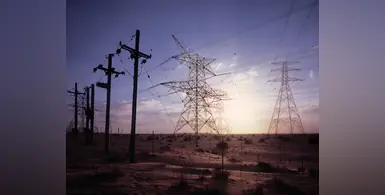
Dubai Electricity and Water Authority (DEWA) has channelled more than AED 10 billion—equivalent to US$2.72bn—into comprehensive electricity transmission network projects.
Dubai’s skyline is synonymous with boundless ambition and rapid urban evolution.
Behind the gleaming architecture and the sprawling metropolitan landscape lies a complex, unseen heartbeat: an electrical grid that must continuously adapt to power one of the world’s most dynamic cities. As Dubai steadily marches toward a more sustainable future while maintaining its rapid pace of economic expansion, the absolute necessity for a resilient and robust power infrastructure has never been more paramount.
Rising to this formidable challenge, the Dubai Electricity and Water Authority (DEWA) has channelled more than AED 10 billion—equivalent to US$2.72bn—into comprehensive electricity transmission network projects. This capital injection reinforces the emirate's energy grid, ensuring it remains capable of accommodating surging power consumption driven by industrial growth, residential communities, and the clean energy transition.
The scale of this investment underscores a proactive approach to urban management. The Managing Director and Chief Executive Officer of DEWA, Saeed Mohammed Al Tayer, recently shed light on the authority’s extensive infrastructural accomplishments achieved during the initial six months of 2026. The utility successfully commissioned eight new 132-kilovolt (kV) transmission substations within this timeframe. Together, these state-of-the-art facilities provide a substantial combined conversion capacity of 1,200 megavolt-amperes (MVA). This meticulous undertaking also encompassed the successful laying of 20 kilometres of crucial transmission cables, carrying an estimated cost of AED 970 million.
The strategic vision propelling these massive engineering feats is firmly rooted in the broader economic and social frameworks established by Dubai’s visionary leadership. Articulating this foundational philosophy, Al Tayer stated: "In line with the objectives of the Dubai Economic Agenda D33 and the Dubai Social Agenda 33, we are committed to meeting current and future requirements, keeping pace with growing electricity demand and expanding our infrastructure,"
Beyond the standard municipal substations, DEWA has also made significant strides in its renewable energy integration. The utility commissioned a 400/132kV transmission substation at Saih Al Dahal, located within the Mohammed bin Rashid Al Maktoum Solar Park. This particular project represents an investment of AED 630 million and boasts a staggering total conversion capacity of 2,000 MVA. To seamlessly connect this solar powerhouse to the main grid, engineers constructed 117 kilometres of 400kV overhead transmission lines. Such endeavours are not achieved lightly; these collective infrastructural projects demanded more than nine million intensive working hours, executed under the highest international standards of reliability and safety.
Looking ahead, DEWA’s developmental blueprint for the immediate future reveals an unyielding momentum. Currently, the authority is actively overseeing the construction of an additional 65 fresh 132kV substations, alongside one major 400kV substation. Over the coming three years, this pipeline of development is poised to expand even further. The utility intends to formally solicit bids for more than 30 supplementary 132kV substations. Furthermore, engineers will lay down an astonishing 340 kilometres of underground transmission cables and erect two further 400kV substations, creating a dense web of power resilience across the entire emirate.
Hussain Lootah, DEWA’s Executive Vice President of Transmission Power, highlighted the immediate community benefits of these recently activated substations. The newly integrated facilities are strategically positioned to serve multiple rapidly developing zones throughout Dubai. Key districts benefiting from this enhanced power stability include Madinat Hind 4, Al Khairan First, Al Layan First, Nad Al Sheba First, the Sheikh Mohammed bin Rashid Gardens, Al Barsha South Fourth, Me’aisem Second, and Al Manara.
This deliberate placement ensures that residential and commercial consumers alike experience absolute grid stability without sudden disruption. By the close of the first half of 2026, DEWA officially operated a staggering 402 transmission substations across the grid. This impressive portfolio now comprises 28 major facilities operating at the high-capacity 400kV level, and 374 substations functioning at the 132kV tier.
The volume of ongoing developmental work is further evidenced by the contracts granted in the first six months of the year alone. DEWA officially awarded 21 distinct contracts for new 132kV substations distributed across vital districts, including Al Jaddaf, Jebel Ali, Airport City, and Umm Suqeim. Additionally, contracts were finalised to install 64 kilometres of transmission cables to link these new substations. These newly awarded contracts carry an aggregate value of roughly AED 3 billion.