








In The Spotlight

Brady Corporation has introduced the new i7500 RFID label printer, a device designed to eliminate consumable waste and streamline on-premise RFID encoding.
Brady Corporation leads zero-waste RFID printing
The integration of smart technologies, such as digital passports and automated inventory systems, requires robust labelling infrastructure.
Addressing this industry-wide need for sustainable and highly reliable printing, Brady Corporation has introduced the new i7500 RFID label printer, a device designed to eliminate consumable waste and streamline on-premise RFID encoding.
Eliminating consumable waste in calibration
Competitive printer models frequently waste between 10 and 30 labels following each consumable change during the calibration phase. This not only drives up material costs but also generates unnecessary industrial waste. The newly launched BradyPrinter i7500 Industrial RFID Label Printer addresses this challenge by ensuring that the very first RFID label is printed and encoded correctly, resulting in strictly zero label waste during the calibration process.
This technology limits the production of void labels and prevents significant time loss in demanding production environments. By eliminating calibration waste, the system offers an environmentally conscious and highly practical solution, particularly for users who may not be RFID technology experts.
Patent-pending technology and automated setup
One of the most complex aspects of industrial labelling is managing different tag types and specifications. Most conventional RFID printers require users to manually input data to locate chips and set parameters. In contrast, the i7500 RFID printer features patent-pending print and encoding technologies that automatically locate the RFID chips within the loaded labels.
-
Automatic Optimisation: The device autonomously selects the correct internal antenna and optimal power level required to encode the specific UHF RFID labels currently loaded into the system.
-
Precision Recognition: The automated technology accurately recognises RFID chips even on extremely small labels, operating effectively on widths as narrow as 15 mm.
-
Rapid Changeovers: The automated setup process for diverse label types—including large, small, off-metal, and on-metal UHF RFID labels (up to 2mm thick), can be completed in under three minutes.
This material setup speed makes the printer 25 to 2 times faster than most competitive models on the market. The device actively protects industrial operational throughput, operating at a print and encode speed of just three seconds per label. It is designed to keep production lines moving, significantly reduces unplanned downtime, limits support interventions and prevents component scrap and production bottlenecks.
High accuracy data and global standards
The i7500 RFID printer includes a built-in automated UHF RFID label encoding verification system, ensuring high accuracy across everything from small component tags to large pallet labels. Beyond standard encoding, the printer supports versatile legacy applications by simultaneously adding human-legible text alongside tiny machine-readable barcodes and QR-codes, available in crisp 300 and 600 dpi resolutions.
For seamless operational integration, data can be directly sourced from internal company systems and transmitted to the printer via multiple connectivity options, including:
-
Ethernet
-
USB
-
Wi-Fi
-
Bluetooth
Also, the device fully supports common global data standards, allowing users to print and encode item-level barcodes and GS1 standards for worldwide unique RFID EPC codes.
Next-level track and trace connectivity
This printer is a foundational element for next-generation facility management, bringing on-premise RFID printing to a wider range of industries. By giving any asset, item, or product a unique digital identity that can be read from a distance without a direct line of sight, organisations can completely overhaul their operational tracking.
When integrated into a broader workflow, the encoded labels can trigger Internet of Things (IoT) events and automations upon being scanned, whether individually or in specific volume batches. This unlocks the ability to enable home-in applications on tagged assets, drastically improve just-in-time tracking, and strengthen overall supply chain compliance. Products can also be directly linked to their digital passports using RFID technology.
Forming part of a complete industrial RFID solution that includes reliable labels, software, and RFID readers, the BradyPrinter i7500 RFID delivers quality traceability for any industry seeking to modernise their operations.

The United Arab Emirates has taken a monumental leap forward in its technological evolution with the official launch of a strategic digital infrastructure project designed to expand international connectivity to more than 500 terabits per second (Tbps) by 2030.
UAE drives AI growth with 500 Tbps digital infrastructure upgrade
The United Arab Emirates has taken a monumental leap forward in its technological evolution with the official launch of a strategic digital infrastructure project designed to expand international connectivity to more than 500 terabits per second (Tbps) by 2030.
Witnessed by His Highness Sheikh Mansour bin Zayed Al Nahyan, Vice President, Deputy Prime Minister, and Chairman of the Presidential Court, this landmark initiative marks a twenty-fivefold increase over current network capacity. Operating in his capacity as Chairman of the Emirates Investment Authority (EIA), the main shareholder in etisalat group, Sheikh Mansour reviewed future projects aimed at strengthening the nation's readiness for accelerated artificial intelligence demands and cementing its status as a global technology hub.
Expanding international connectivity for the AI Era
As global data processing demands surge alongside exponential advancements in artificial intelligence, modern economies require robust, high-performance telecommunications architectures. The newly unveiled project addresses these growing challenges through diversified routing and advanced low-latency design. These engineering measures ensure that the country's connection to the global digital economy remains fast, direct, and resilient while simultaneously safeguarding digital sovereignty.
Jassem Mohamed Bu Ataba Alzaabi, Chairman of etisalat group, highlighted the strategic foresight behind the initiative during the launch event. He stated: “This project reflects our conviction that the UAE should not simply adopt AI, but govern it and build with it. That requires digital infrastructure at a scale that would prepare us for the future.”
He further elaborated on the massive technical scaling required to meet modern enterprise demands: “Moving international connectivity from 20 terabits per second to more than 500 is a strategic step to address the growing challenges facing global data processing and data flow, particularly given the tremendous advancements in AI, and enhances the flexibility and reliability of the infrastructure to meet the requirements of UAE's AI campuses, global cloud providers, and the group's operations and customers across its markets.”
Key project highlights and strategic figures
To understand the sheer scale and operational scope of this nationwide digital transformation, several key metrics and project features stand out:
-
Capacity Milestone: International connectivity capacity is scheduled to expand from 20 Tbps to over 500 Tbps by 2030.
-
Growth Factor: Represents a massive twenty-fivefold increase over current capacity levels.
-
Network Design: Utilises diversified routes combined with low-latency performance to ensure maximum reliability.
-
Global Footprint: etisalat group currently operates across 38 countries, serving more than 250 million subscribers worldwide.
-
Strategic Pillars: Anchored within a refreshed corporate vision built around four core business engines: telecommunications, artificial intelligence and business solutions, infrastructure, and financial technology.
Strengthening national competitiveness and global reach
Beyond domestic upgrades, the initiative extends national infrastructure directly into the global digital ecosystem. Because etisalat group maintains an expansive international footprint spanning 38 countries and serving upwards of 250 million subscribers, the project creates seamless digital bridges across multiple continents. This ensures that UAE-based institutions, global cloud providers, and regional enterprise campuses enjoy unparalleled connectivity resilience.
The undertaking also coincides with etisalat's fiftieth anniversary celebrations, marking five decades of continuous technological contribution to the nation. Reflecting on this milestone, Chairman Alzaabi noted: “This is the same commitment that has guided this group for fifty years. We marked that anniversary this week by setting out what the next era asks of us, and this project is our answer. In every generation of technology, etisalat has built the infrastructure the nation depends on, ensuring high flexibility and resiliency across all our markets. AI is the defining technology of this generation, and the principle has not changed.”
This ambitious development reinforces the UAE's overarching vision to cultivate a knowledge-based, innovation-driven economy. By providing public and private institutions with dependable, high-capacity digital highways, the nation is well-positioned to pioneer advanced technology deployment on a global scale.
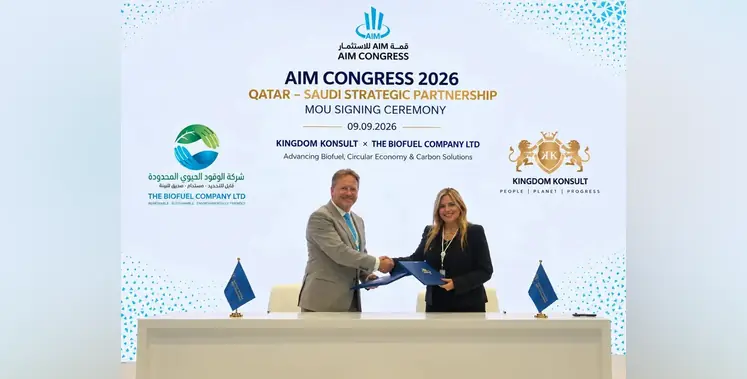
Kingdom Konsult of Qatar and The Biofuel Company of Saudi Arabia have joined forces to officially bring B100 biofuel to the Qatari market.
Powering Qatar's green transition with B100 biofuel
Global energy markets are experiencing a profound transformation, driven by an urgent need for decarbonisation and geopolitical resilience.
Against this backdrop of energy diversification, a groundbreaking exclusive partnership has emerged to accelerate the transition to sustainable alternative fuels in the Middle East. Announced recently during the prestigious AIM Congress 2026 in Dubai, Kingdom Konsult of Qatar and The Biofuel Company of Saudi Arabia have joined forces to officially bring B100 biofuel to the Qatari market. This historic collaboration signifies a major leap forward for environmental resilience in the Gulf region.
The strategic shift towards biofuels
Expanding the range of available energy solutions is a strategic priority for modern economies. Biofuels provide a highly practical pathway to decarbonise operations that are currently dependent on traditional diesel, ultimately strengthening regional supply chains and ensuring operational continuity. This Qatar–Saudi partnership marks a significant milestone in regional alternative energy adoption, moving beyond theoretical frameworks into tangible, real-world deployment.
Miss Katina Aghayan, Chairman and Founder of Kingdom Konsult, explains the broader significance: “We are proud to pioneer bringing B100 biofuel to Qatar through this strategic partnership with The Biofuel Company of Saudi Arabia. Biofuel and alternative energy today are not only about sustainability and reducing emissions; they are increasingly connected to energy security, geopolitical resilience and the need for diversified and reliable energy solutions. This partnership creates a strong bridge between Saudi biofuel expertise and the Qatar market, demonstrating how GCC cooperation can turn the energy transition into practical implementation.”
Aligning with national sustainability goals
The introduction of B100 biofuel directly supports the environmental development objectives outlined in the Qatar National Vision 2030, as well as Qatar’s Third National Development Strategy 2024–2030. Specifically, it heavily aligns with the state's ambitious target to reduce greenhouse gas emissions by 25% by the year 2030, demonstrating a firm commitment to sustainable national development.
Mr. Abdullah Al Otaibi, CEO of The Biofuel Company of Saudi Arabia, said: “We are delighted to partner with Kingdom Konsult to bring The Biofuel’s B100 to the Qatar market. This collaboration combines our biofuel production and technical capabilities with Kingdom Konsult’s market expertise and stakeholder engagement in Qatar. We believe B100 can provide organisations with a practical alternative fuel solution while supporting wider ambitions for decarbonisation, energy diversification and resilience.”
Sector-wide practical implementation
This exclusive collaboration divides responsibilities to ensure smooth integration across multiple sectors. Kingdom Konsult will spearhead market development, stakeholder engagement, and commercial opportunities within Qatar. In tandem, The Biofuel Company of Saudi Arabia will supply the B100 biofuel alongside the necessary technical expertise, certifications, and deployment support.
The partnership targets a comprehensive range of sectors across the nation. Key target areas for B100 biofuel deployment include:
- Government and semi-government entities
- Transportation and logistics
- Industrial operations and infrastructure
- Education, construction, and hospitality
- Sports facilities and major events
To facilitate adoption, both organisations plan to launch biofuel pilot projects and demonstrations, paving the way for commercial-scale deployments.
Mr. Gary Hubbard FCILT, SVP Commercial & Operations of The Biofuel Company Ltd, added: “The energy transition requires solutions that can move from ambition to real-world application. B100 biofuel provides an opportunity for organisations to reduce the carbon footprint of diesel-dependent operations while maintaining operational practicality. Together with Kingdom Konsult, we look forward to developing the Qatar market and demonstrating the commercial, operational and environmental value that biofuel can deliver.”
The power of GCC-to-GCC cooperation
This initiative illustrates the vital role of cross-border collaboration in cultivating a lower-carbon regional energy ecosystem. Both organisations bring unique strengths to the table:
The Biofuel Company of Saudi Arabia's Capabilities:
- Operates as the largest high-quality biodiesel refinery in the GCC with a monthly capacity of 3KT.
- Produces sustainable B100 fuel from locally collected used cooking oil, meeting stringent EN14214 standards.
- Actively supplies international markets and Saudi Giga projects.
Kingdom Konsult's Expertise:
- Operates as a global boutique consultancy specialising in the circular economy and sustainability strategy.
- Connects technology with corporate operations to drive ESG reporting and decarbonisation efforts.
- Introduces patented green innovations in recycling and clean energy to the regional market.
By merging these operational and consulting strengths, this alliance establishes a robust framework for energy diversification, providing organisations with reliable, sustainable fuel solutions that reflect the future of the Gulf's evolving energy landscape.
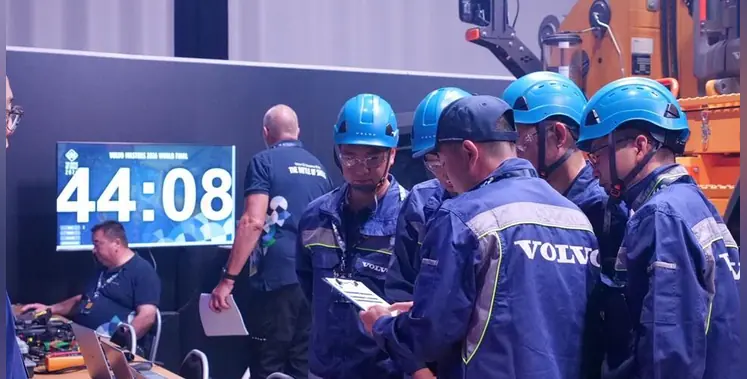
The Volvo CE Masters World Final recently concluded, celebrating the very best talent within the sector.
Poland wins 2026 Volvo CE Masters
Manufacturers increasingly rely on global aftersales networks to support customers with exceptional technical expertise.
The Volvo CE Masters World Final recently concluded, celebrating the very best talent within the sector. In a thrilling conclusion to the 2026 competition, Volvo Maszyny Budowlane Poland emerged victorious, defeating the world's premier aftersales teams to become the Volvo CE Masters World Champion.
The 2026 Global Final in Sweden
Staged in front of a live audience at the Volvo Construction Equipment (Volvo CE) Customer Center in Eskilstuna, Sweden, the global final unfolded between the 14th and 16th of September 2026. The high-stakes event brought together elite service professionals from across the globe, uniting talent from Europe, Asia, China, North America, Latin America, India, and the broader international region.
This year’s competition marked a significant milestone for the industry. Now in its 35th year, the Volvo CE Masters is recognised as one of the largest and most prestigious technical skills competitions within the global construction equipment sector.
Key figures and event details from the 2026 edition demonstrate the immense scale of the programme:
-
Initial participation saw nearly 3,000 individuals enter the qualification stages worldwide, marking record attendance for the event.
-
The final battle hosted 14 elite teams representing the absolute pinnacle of their respective global regions.
-
For the very first time, an individual championship was introduced to run parallel to the traditional team competition.
-
The entire event was executed live, allowing the audience to watch each rigorous diagnostic challenge unfold in real time.
The Golden Boys Secure the Crown
The victorious team from Volvo Maszyny Budowlane, aptly named the 'Golden Boys', arrived in Eskilstuna carrying serious momentum. Comprising Michał Pietrzak, Piotr Lebda, Michał Motycki, Remigiusz Piątek, and Paweł Olkowski, the squad had already secured the European Regional Final championship after a commanding performance at the Volvo CE facility in Konz, Germany.
Their ultimate triumph in Sweden represents the culmination of a gruelling journey that commenced with stringent online qualification rounds and concluded at the apex of the global leaderboard. The achievement is a testament to the comprehensive training and rigorous standards upheld by the Polish delegation.
Kamila Czaja, Head of Retail Operations at Volvo Maszyny Budowlane, reflected on the momentous victory:
"This is an incredibly proud moment for all of us. Becoming Volvo Masters World Champions is a remarkable achievement, but what makes it truly special is the team behind it. Their expertise, passion, commitment and trust in one another made this success possible. I am extremely proud of what they have achieved together and sincerely grateful to everyone who contributed along the way."
Testing the Skills That Matter Most
The Volvo CE Masters is not merely a theoretical exercise or a highly sanitised corporate showcase. Instead, it places technicians in the crucible, testing the precise capabilities that hold the most value on active construction sites. The competition is designed to evaluate the speed and accuracy of machine diagnostics, demanding deep, comprehensive product knowledge across the extensive Volvo CE equipment catalogue.
Furthermore, the structure of the challenges forces participants to work efficiently and effectively as a cohesive unit under extreme pressure. These abilities are entirely transferable to real-world scenarios. In the field, these are the exact competencies that enable service teams to diagnose complex faults rapidly, minimise costly machine downtime, and maximise on-site productivity for clients.
Anna Fröjdfeldt, Head of Aftermarket Learning Portfolio at Volvo CE, emphasised the real-world significance of the competition:
"Volvo CE Masters exists to celebrate the people who keep the world's construction projects moving. What the Golden Boys from Poland have achieved here represents the highest standard in our global dealer network. Every customer they serve should know that."
A Benchmark for Global Aftersales
The 2026 Volvo CE Masters World Final served as more than just a trophy presentation. It provided a vivid demonstration of the technical superiority, teamwork, and customer-focused expertise that modern construction operations demand. As machinery becomes increasingly sophisticated, the reliance on world-class service personnel will only grow. For the newly crowned champions from Poland, this global accolade confirms their position at the very forefront of the industry, setting a formidable benchmark for aftersales support worldwide.
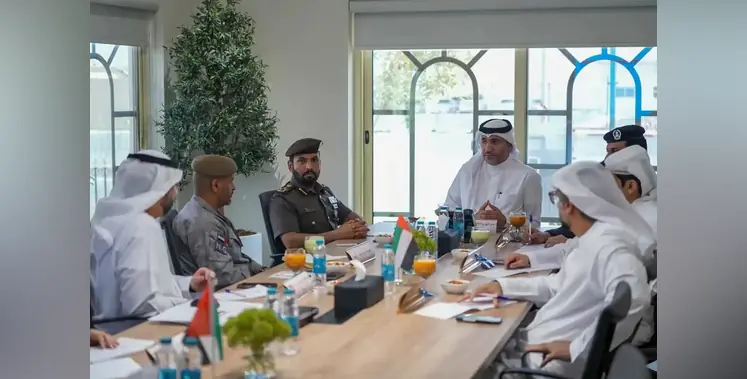
The session was chaired by H.E. Mohammed Ibrahim Al Raisi, Director of Ports and Border Points Affairs at the Sharjah Ports, Customs and Free Zones Authority, and Chairman of the Committee.
Elevating border security and efficiency across Sharjah
Modern ports and land borders must operate as seamless logistical hubs, accommodating exponential growth while maintaining rigorous security protocols.
At the forefront of this operational evolution is the Emirate of Sharjah, which is actively advancing its cross-agency integration to fortify its vital infrastructure. In a significant move to streamline operations, the Organisational Committee of Ports and Border Points in Sharjah recently convened to implement comprehensive efficiency upgrades across the emirate.
The 9th Strategic Leadership Meeting
Held at the Khatmat Malaha Border, the 9th meeting of 2026 brought together key government and security entities. The session was chaired by H.E. Mohammed Ibrahim Al Raisi, Director of Ports and Border Points Affairs at the Sharjah Ports, Customs and Free Zones Authority, and Chairman of the Committee. A central focus of the assembly was to review the latest developments across Sharjah’s expansive network of maritime and land borders.
Opening the session, Al Raisi welcomed newly appointed members, whose selection followed the issuance of Sharjah Executive Council Decision No. (39) of 2026. This recent mandate amended the earlier Executive Council Decision No. (30) of 2020, which regulates the Committee. He also conveyed greetings from Sheikh Khaled bin Abdullah bin Sultan Al Qasimi, Chairman of the Sharjah Ports, Customs and Free Zones Authority, wishing the team continued success in their duties.
Balancing Rapid Transit with Rigorous Security
A primary theme of the discussions was the absolute necessity of working as a unified team. Al Raisi stressed the importance of intensifying collective efforts to continuously develop the border points system. Operational and security readiness must align perfectly with the emirate’s overarching trajectory of growth.
Addressing the complex dynamics of modern border management, Al Raisi stated: "Ports and border points serve as vital gateways for both Sharjah and the UAE. Continued growth in passenger and commercial traffic places a responsibility on the entities operating at these facilities to continue developing their operational systems, improve procedural efficiency and strengthen coordination and integration. These efforts are essential to balancing smooth movement with faster processing while maintaining the highest standards of security, oversight and safety."
Key Operational Enhancements
To achieve these ambitious targets, the committee reviewed its updated mandate under the new regulatory decision. The agenda highlighted multiple pathways to strengthen integration among the diverse entities operating at these checkpoints.
The committee was briefed extensively on recent developments, discussing critical operational matters raised by stakeholders. Key focus areas identified to enhance services for travellers and commercial entities include:
- Refining Inspection Procedures: Developing more sophisticated methods for processing cargo and travellers safely.
- Boosting Checkpoint Efficiency: Upgrading the operational capacity of individual inspection points to reduce wait times.
- Strengthening Oversight: Enhancing overall security measures without compromising the speed of transit.
- Information Exchange: Fostering closer field coordination and the rapid sharing of vital expertise between operational teams.
- Actioning Recommendations: Ensuring that strategic measures proposed in previous meetings are swiftly translated into tangible field operations.
Cross-Agency Alignment and Future Readiness
In a move to further solidify the leadership structure governing these efforts, Brigadier Abdulaziz Sarhan Al Zaabi, Director of Land Ports at the General Directorate of Ports, was officially selected as Vice-Chairman of the Committee.
The immense scale of this cross-agency integration was reflected in the diverse array of senior attendees at the meeting. Alongside the Chairman and Vice-Chairman, the session included Colonel Sultan bin Taliah, Director of the Land and Sea Ports Department at Sharjah Police General Headquarters; Lieutenant Colonel Staff Mohammed Al Shamsi, Commander of the Northern Sector at the Border Guard Group of the National Guard Command; and Abdullah Al Badwawi, Director of the Customs Risk and Ports Security Department at the General Directorate of Customs and Ports Security. Representatives from the State Security Department (SSD) and Abdullah Abdulrahman Al Kindi of the Sharjah Ports, Customs and Free Zones Authority were also present.
By translating strategic recommendations into practical, on-the-ground measures, Sharjah is building an agile infrastructure capable of anticipating the future demands of global transit.

Dubai Municipality has officially joined the Digital Twin Consortium (DTC).
Dubai Municipality joins Global Digital Twin Consortium
The rapid evolution of modern urban planning is fundamentally changing how major global hubs manage their physical environments and infrastructure.
At the heart of this transformation is the integration of advanced geospatial technologies and the concept of a digital twin—a dynamic, highly accurate digital representation of real-world urban spaces.
Dubai Municipality has officially joined the Digital Twin Consortium (DTC). This strategic membership expands the organisation’s engagement with a vast international network of technology innovators, urban planning experts, and digital transformation specialists. By aligning itself with a global community dedicated to advancing these systems, the municipality is set to accelerate its pioneering “Dubai Digital Twin” initiative. The overarching ambition is clear: to leverage cutting-edge geospatial technology to solidify Dubai’s position among the smartest, most advanced, and sustainably developed cities in the world
Global Collaboration in Geospatial Technologies
The announcement of this prestigious membership directly followed the participation of Dubai Municipality—represented by its Geographic Information Systems (GIS) Centre—in the recent DTC Members’ Meeting held in Orlando, Florida, in the United States. This high-level event brought together prominent members of the Consortium to discuss the latest advancements in the field. The gathering served as a vital forum for exchanging expertise, reviewing best practices in geospatial data applications, and comparing various strategic approaches to digitising urban landscapes. Participants from ten different countries were in attendance, presenting their unique experiences, technologies, and applications, thus providing a comprehensive overview of emerging international practices.
During the extensive sessions at the meeting, the GIS Centre delegation provided a detailed presentation on Dubai’s unique journey in utilising these advanced technologies.
Practical Applications and Operational Successes
To illustrate the practical capabilities of its initiatives, Dubai Municipality showcased several impressive milestones and operational successes.
-
Extensive 3D Modelling: The successful creation of high-fidelity 3D models encompassing more than 195,000 buildings across the emirate, providing an unparalleled digital blueprint of the city’s architectural landscape.
-
System Integration: The seamless technical integration between the municipality’s digital twin platform and the No Objection Certificate (NOC) system.
-
Utility Collaboration: The development of these integrated systems in close collaboration with various utility entities operating across Dubai.
-
Infrastructure Coordination: The enhanced ability to support complex infrastructure coordination and streamline interactions between different government and private sector bodies.
-
Scenario Simulation: The capacity to accurately simulate real-world conditions, allowing planners to test potential impacts before implementing physical changes.
These robust capabilities demonstrate precisely how an advanced digital infrastructure can strengthen overall urban planning and fundamentally improve public service delivery. By connecting disparate data streams into a unified visual and analytical platform, the municipality can pre-emptively address the logistical challenges of rapid urban expansion.
Managing Continued Urban Development
Dubai Municipality’s active membership in the Digital Twin Consortium is a core component of its wider strategic efforts to expand international collaboration. As the emirate continues its trajectory of rapid growth, the application of these advanced digital solutions will be instrumental in managing its continued urban development. By exchanging knowledge on a global stage and continually refining its geospatial technologies, Dubai is setting a powerful benchmark for what the smart cities of tomorrow can achieve.

Parker Hannifin, a Fortune 250 global leader specialising in motion and control technologies, has announced the launch of its new Viking Xtreme ISO valve series.
Parker launches Viking Xtreme ISO valves for harsh environments
Industrial automation and mobile electrification require components that can withstand increasingly demanding operational environments.
Across sectors such as railway transit, agriculture, and oil and gas, modern machinery relies on robust pneumatic control systems to ensure consistent, uninterrupted performance. Addressing these complex engineering challenges head-on, Parker Hannifin, a Fortune 250 global leader specialising in motion and control technologies, has announced the launch of its new Viking Xtreme ISO valve series. This compact, ISO-standard subbase valve platform is specifically engineered to handle the rigours of general, mobile-related, and harsh industrial applications.
To maximise installation flexibility and operational performance, engineers can deploy these valves in varied configurations to suit their specific infrastructure. Key installation and operational features include:
-
The ability to install the valve on a single subbase or integrate it into a stackable manifold.
-
Stackable manifold installations that effectively support pressure zoning within centralised applications.
-
Internal or external pilot configurations that can be conveniently adjusted in the field to meet precise application requirements.
Advanced Core Technology for Extreme Conditions
At the core of this newly launched platform is Parker’s advanced over-moulded spool technology. This specific engineering choice supports a long service life, broad operating capabilities, and a reliable, high-performance output even under continuous strain. The bi-directional, over-moulded spool is designed to function seamlessly in extreme temperatures, operating efficiently from -40°C to +70°C (-40°F to +158°F). In addition to its impressive temperature resilience, the system accommodates an operating pressure range that spans from a vacuum up to 10 bar. For pneumatic remote pilot variants, this pressure threshold extends even further to 16 bar. The platform also boasts exceptional flow performance, delivering flow rates ranging from 540 Nl/min (0.55 Cv) up to a substantial 5900 Nl/min (6.01 Cv).
Mobile-related applications and harsh environmental conditions present unique threats to machinery, notably through constant vibration, sudden impacts, and corrosive external elements. To combat these recurring issues, the Viking Xtreme ISO valve series offers various solenoid voltages paired with either standard or mobile-rated coils, alongside remote pilot valve options. The mobile versions of this valve have successfully passed rigorous shock and vibration testing, comprehensively meeting the stringent IEC 6173:1999, category 1, class B standards.
To further protect against corrosion in highly challenging and exposed settings, the valves incorporate durable materials throughout their entire construction. Essential durability features include:
-
The strategic utilisation of stainless steel for end fasteners, internal springs, and solenoid armatures.
-
An impressive salt spray qualification that exceeds 1000 hours of continuous testing.
-
A robust construction that fully supports operation in demanding salt spray applications.
Strategic Consolidation for Machinery Design
These modern advancements allow plant managers and machinery designers to rethink their pneumatic infrastructure entirely. The new series is explicitly designed to help operators consolidate their existing ISO non-plug-in valve inventories. Depending on the specific application, the versatile platform may enable a one-size reduction. This potential downsizing can significantly help to lower overall operational costs, reduce footprint dimensions, and decrease equipment weight, all without sacrificing the required system performance.
Speaking on the strategic launch of this robust new platform, Patrick Berdal, European Product Manager for Controls within the Electric Motion & Pneumatic Division at Parker Hannifin, highlighted the industry's constantly evolving needs.
“Customers are looking for compact, reliable pneumatic valve solutions that help simplify machine design while performing in demanding operating conditions,” said Berdal. “The Viking Xtreme ISO valve series reflects Parker’s commitment to engineering solutions that improve productivity, uptime, and operational efficiency for customers across key industrial and mobile markets.”.
As a fundamental part of the broader Motion Systems Group, Parker's Electric Motion and Pneumatic Division continues to design and manufacture components that actively improve system safety, efficiency, and performance across both heavy industrial applications and modern mobile electrification.