vb

Renewables

Türkiye is definitively transforming into a clean energy and synthetic fuels powerhouse, serving as the essential green bridge for the EU-MENAT region.

The global transition towards zero-emission energy has reached a critical juncture, with nations racing to establish secure, sustainable supply chains.

Positioned at the geographical and economic crossroads of the world, the corridor connecting the European Union with the Middle East and North Africa (MENA) is rapidly emerging as a focal point for renewable infrastructure. Within this highly strategic landscape, a major development has been spotlighted. According to recent insights published by Dii Desert Energy, Türkiye is definitively transforming into a clean energy and synthetic fuels powerhouse, serving as the essential green bridge for the EU-MENAT region.

Historically recognised as a pivotal transit hub for fossil fuels, Türkiye is now aggressively rewriting its energy narrative. The nation is moving swiftly to capitalise on its vast wind and solar resources, aiming to pivot from a net energy importer to a formidable exporter of low-emission power. This transformation is not merely a domestic ambition; it is a critical enabler for European markets seeking reliable, decarbonised energy alternatives to meet stringent net-zero targets.

The 120 GW National Energy Plan

At the core of this monumental shift is Türkiye’s highly ambitious National Energy Plan. Realising the urgent need to decarbonise and achieve energy independence, the government has set a definitive trajectory for the coming decade. The plan focuses extensively on scaling up domestic generation, fundamentally altering the national energy mix.

By the year 2035, the country aims to reach an impressive 120 gigawatts (GW) of installed renewable capacity. To achieve this, the nation plans to quadruple its current solar and wind generation capabilities. Local wind production, in particular, is slated to take a leading role in this rapid expansion. By harnessing its natural meteorological advantages, Türkiye intends to significantly diminish its historical reliance on imported carbon-intensive fuels, ensuring a resilient and sustainable domestic grid while unlocking export potential.

Upgrading the Grid: A $28 Billion Investment

Generating immense volumes of renewable energy is only the first step; transmitting and storing it requires robust, modernised infrastructure. Dii Desert Energy highlights that integrating this unprecedented scale of wind and solar into regional power systems demands meticulous coordination. To support the 2035 targets, Türkiye has outlined a comprehensive $28 billion grid modernisation programme.

Key components of this massive infrastructure overhaul include:

  • Battery Energy Storage Systems (BESS): The deployment of 7.5 GW of large-scale battery capacity. This is the primary enabler for grid stability, managing the inherent intermittency of renewable sources and ensuring a consistent power supply.

  • Green Hydrogen Electrolysers: The development of 5 GW of electrolyser capacity, which will establish the necessary foundation for a thriving, domestic green hydrogen economy.

  • Common User Infrastructure (CUI): The strategic rollout of shared infrastructure to de-risk giga-scale renewable developments. This approach significantly lowers entry barriers for commercial project developers and accelerates deployment.

Pioneering the Synthetic Fuels Market

Beyond the direct transmission of green electricity, Türkiye is strategically positioning itself as a global leader in the low-emission molecules sector. By marrying its expanding renewable capacity with advanced electrolyser technology, the country is laying the groundwork for the large-scale commercial production of green hydrogen and synthetic fuels.

To navigate the complex regulatory and financial landscape of this nascent industry, Türkiye has engaged in high-level international collaborations. Working alongside institutions such as the World Bank, the nation is actively developing a comprehensive national hydrogen roadmap. This strategic framework is designed to overcome existing hurdles related to commercial offtake agreements and create an exceptionally favourable environment for international investment, ensuring that long-term green fuel projects are bankable and secure.

Uniting the EU-MENA Energy Divide

Ultimately, Türkiye’s greatest asset remains its unique geopolitical positioning. As the European Union accelerates its decarbonisation efforts, the demand for cross-border clean energy imports is surging at an unprecedented rate. Meanwhile, the MENA region offers some of the most favourable conditions globally for low-cost renewable generation.

Through its $28 billion grid overhaul and unwavering commitment to green hydrogen, Türkiye is cementing its role as the indispensable link between these two vital markets. By facilitating the seamless transfer of zero-emission power and synthetic fuels across continents, the nation is not just upgrading its own grid—it is actively driving the industrial green transformation of the entire region.
Abu Dhabi Future Energy Company PJSC (Masdar), which has released its 13th Annual Sustainability Report. This momentous increase successfully avoided 19.5 million tonnes of carbon dioxide equivalent (CO₂e) emissions globally.

The global transition towards sustainable infrastructure is accelerating at an unprecedented pace, with 2025 marking a defining year for international decarbonisation efforts.

Leading this expansion is Abu Dhabi Future Energy Company PJSC (Masdar), which has released its 13th Annual Sustainability Report. This momentous increase successfully avoided 19.5 million tonnes of carbon dioxide equivalent (CO₂e) emissions globally.

This upward trajectory reflects the continued expansion of the company’s global operating projects. Including a further 20.7GW from secured developments or those nearing final investment approval, the total portfolio reached 66.5GW by the end of 2025.

The 2025 reporting boundary was broadened to include Saeta Yield and TERNA ENERGY for the first time. Key highlights include: It establishes a vital global blueprint, demonstrating how combined solar and battery storage can provide continuous, reliable power at a commercial scale.

Attracting Green Finance and International Investment

Financial markets responded enthusiastically to these global sustainability initiatives.$1 billion green bond in May. This issuance was oversubscribed by 6.6 times, attracting investor orders totalling US$6.6 billion, with international investors securing 85 per cent of the bonds.

This brought the total value of outstanding green bonds to US$2.75 billion. Biodiversity protection was significantly strengthened via the Integrated Biodiversity Assessment Tool (IBAT), encompassing 23 targeted surveys and three conservation partnerships. Meanwhile, the Emiratisation rate reached approximately 46 per cent (excluding international operations), and teams globally completed 250,000 hours of health, safety, and environmental training.

GE Vernova Inc. has officially announced a new services agreement aimed at providing Rotor Life Extension (RLE) solutions for five of its 9F gas turbines in Egypt.

GE Vernova Inc. has officially announced a new services agreement aimed at providing Rotor Life Extension (RLE) solutions for five of its 9F gas turbines in Egypt.

This comprehensive project actively supports the overall rotor lifecycle by thoroughly utilising GE Vernova’s vast technical expertise to determine the full residual life of various components.

“This agreement reflects EEHC’s continued focus on preserving the long-term performance and reliability of important generation assets across our fleet,” said Eng. Gaber El-Desouki, Chairman of the Board of Directors & CEO, Egyptian Electricity Holding Company (EEHC). “By working with GE Vernova and our generation companies, we are taking practical and proactive steps that can help protect strategic assets, support efficient and reliable power production, and contribute to Egypt’s broader electricity and energy objectives.”

The sentiment is echoed by other key stakeholders who recognise the operational value of maintaining current infrastructure rather than pursuing expensive overhauls.

“Extending the life of these gas turbines across our generation companies is expected to support grid stability and the continued availability of dispatchable power, while helping us increase the value of existing infrastructure and avoid premature, capital-intensive replacement,” said Eng. Mahmoud Al-Naqeeb, Full-time Board Member for Electricity Production Companies Affairs.

A Legacy of Strategic Collaboration

This agreement underscores the robust, ongoing collaboration between GE Vernova, the EEHC, and its various generation affiliates.

By continuously reinforcing its role in meeting the nation's energy demands through advanced technology, GE Vernova is helping ensure that Egypt remains well-powered for decades to come.

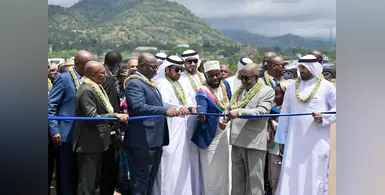
The project was inaugurated by H.E. Azali Assoumani, President of the Union of the Comoros.

Island nations across the globe face unique vulnerabilities when powering their economies, often relying heavily on imported fossil fuels that expose them to severe price volatility and supply chain disruptions.

Transitioning toward sustainable energy infrastructure has become an urgent priority for island archipelagos seeking true energy independence and climate resilience. In a landmark development for regional sustainability, the Union of the Comoros has officially inaugurated three major UAE-financed solar power plants, marking a transformative milestone for the nation's electricity grid and long-term socioeconomic progress.

The high-profile inauguration was led by H.E. Azali Assoumani, President of the Union of the Comoros, alongside high-ranking officials from both nations. The comprehensive initiative reflects the UAE's longstanding commitment to supporting a more sustainable future and expanding the deployment of renewable energy solutions globally, showcasing how clean energy expertise can strengthen international energy security.

The ambitious project was financed by the Abu Dhabi Fund for Development (ADFD), implemented by the Abu Dhabi Future Energy Company PJSC (Masdar), and managed by Global South Utilities (GSU). By uniting these key entities, the project successfully bridges international development finance with cutting-edge technical execution to deliver tangible benefits to local communities.

Project Specifications and Technical Figures

The infrastructure initiative represents an investment of approximately AED 84.4 million, deploying advanced solar photovoltaic technology across the archipelago's main islands. Key project details include:

  • Total Installed Capacity: Approximately 20 MW distributed across three primary solar photovoltaic facilities.

  • Island Breakdown: 12.86 MW located on Grande Comore, 4.05 MW on Anjouan, and 3.1 MW on Mohéli.

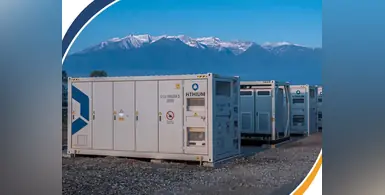
  • Energy Storage Systems: 16 megawatt-hours (MWh) of battery storage capacity with an 8 MW power output across Grande Comore and Anjouan.

  • Grid Integration: Approximately 30 kilometres of 20-kilovolt (kV) medium-voltage overhead transmission lines.

  • Annual Clean Energy Generation: Estimated at approximately 33.75 GWh annually.

  • Household Reach: Clean electricity sufficient to meet the energy needs of around 17,500 households.

  • Environmental Impact: Avoidance of approximately 20,900 tonnes of carbon dioxide emissions each year.

Overcoming Severe Energy Deficits

This new solar capacity arrives at a critical juncture for the Comorian electricity sector, which has historically struggled with acute structural challenges and a heavy reliance on imported diesel. During 2024, imported diesel accounted for an overwhelming 91% of the country's total energy mix. At the same time, national electricity demand reached 254 GWh against an actual generation output of only 150 GWh, resulting in roughly 3,000 power outages throughout the year.

The newly commissioned solar generation is expected to account for approximately 13.3% of total electricity demand and 22.5% of actual generation recorded in 2024. By diversifying the national energy mix, the initiative directly reduces exposure to imported fuel fluctuations and enhances system reliability.

Commenting on the milestone, H.E. Azali Assoumani, President of the Union of the Comoros, stated: "I extend my sincere appreciation to His Highness Sheikh Mohamed bin Zayed Al Nahyan, President of the UAE, for his continued support in advancing our development priorities and strengthening the partnership between our two countries, guided by a oving the reliability of electricity that businesses, public services and communities depend o

With robust battery storage and enhanced grid infrastructure, the Comoros is laying a firm foundation for a cleaner, more resilient economic future.

More Articles …